Physical Address
304 North Cardinal St.
Dorchester Center, MA 02124
Physical Address
304 North Cardinal St.
Dorchester Center, MA 02124

Learn how to convert British Thermal Units (BTU) to tons of refrigeration with our comprehensive guide. One ton equals exactly 12,000 BTU per hour - the fundamental conversion for air conditioning sizing.
Converting British Thermal Units (BTU) to tons of refrigeration is essential for sizing air conditioning systems properly. One ton of cooling capacity equals exactly 12,000 BTU per hour, representing the amount of heat required to melt one ton of ice over 24 hours.
This simple conversion—12,000 BTU equals 1 ton—forms the foundation of HVAC sizing and helps homeowners select the right air conditioner for their space. Understanding this relationship ensures optimal cooling performance and energy efficiency in your home or office.
Whether you’re shopping for a new AC unit or trying to understand your current system’s capacity, mastering BTU to ton conversion will help you make informed decisions about cooling equipment. Our guide breaks down the formulas, provides practical examples, and addresses common questions about these important measurements.
A British Thermal Unit (BTU) is the amount of heat required to raise the temperature of one pound of water by one degree Fahrenheit. In air conditioning, BTU measures cooling capacity—the amount of heat an AC unit can remove from a space per hour.
BTU ratings help consumers understand an air conditioner’s power. Higher BTU values indicate greater cooling capacity. For residential use, BTU ratings typically range from 5,000 for small rooms to 24,000+ for whole-house systems.
When shopping for air conditioners, you’ll often see BTU ratings prominently displayed. These numbers directly correlate with the room size the unit can effectively cool. BTU per square foot calculations help determine the appropriate capacity for your specific space.
A ton of refrigeration represents the amount of cooling power required to freeze one ton (2,000 pounds) of water at 32°F into ice at the same temperature over 24 hours. This historical measurement originated from the ice-making industry before modern refrigeration became widespread.
In modern HVAC terminology, one ton of refrigeration equals exactly 12,000 BTU per hour of cooling capacity. This standardized measurement allows for consistent comparison between different air conditioning systems and helps professionals communicate cooling capacity effectively.
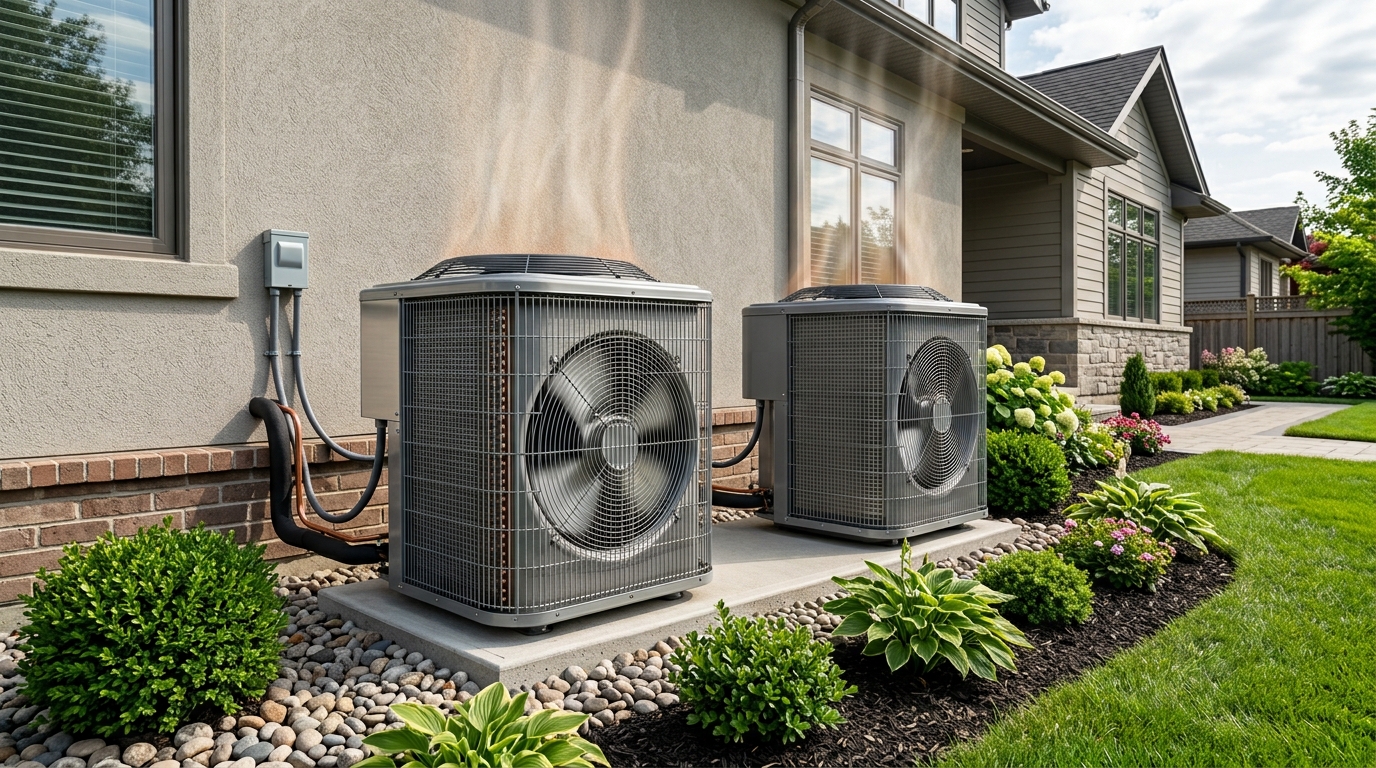
Residential air conditioners typically range from 1.5 to 5 tons, with each ton providing approximately 400-600 square feet of cooling capacity depending on climate conditions, insulation quality, and other factors affecting heat transfer.
The conversion between BTU and tons follows a straightforward mathematical relationship. To convert BTU per hour to tons, divide the BTU value by 12,000. To convert tons to BTU per hour, multiply the ton value by 12,000.
BTU to Ton Formula: Tons = BTU ÷ 12,000
Ton to BTU Formula: BTU = Tons × 12,000
For example, an 18,000 BTU air conditioner equals 1.5 tons (18,000 ÷ 12,000 = 1.5). Similarly, a 3-ton AC unit provides 36,000 BTU of cooling capacity (3 × 12,000 = 36,000).
These formulas work consistently across all air conditioning applications, from small window units to large central systems. The 12,000 BTU conversion factor remains constant regardless of system type, efficiency rating, or manufacturer.
Understanding common BTU to ton conversions helps when comparing different air conditioning options or calculating cooling needs for various spaces. The following table shows the most frequently encountered conversions in residential applications.
| BTU per Hour | Tons | Typical Room Size | Common Applications |
|---|---|---|---|
| 6,000 | 0.5 | 150-250 sq ft | Small bedroom, office |
| 9,000 | 0.75 | 250-350 sq ft | Large bedroom, small living room |
| 12,000 | 1.0 | 400-600 sq ft | Small apartment, large bedroom |
| 18,000 | 1.5 | 600-900 sq ft | One-bedroom apartment |
| 24,000 | 2.0 | 800-1,200 sq ft | Small home, large apartment |
| 30,000 | 2.5 | 1,000-1,500 sq ft | Medium home |
| 36,000 | 3.0 | 1,200-1,800 sq ft | Large home, first floor |
| 48,000 | 4.0 | 1,600-2,400 sq ft | Two-story home |
| 60,000 | 5.0 | 2,000-3,000 sq ft | Large home |
When selecting an air conditioner, consider factors beyond room size, including ceiling height, insulation quality, window exposure, and climate conditions. 8000 BTU air conditioners (0.67 tons) work well for smaller spaces, while 12000 BTU air conditioners (1 ton) provide adequate cooling for medium-sized rooms.
For larger areas, 14000 BTU air conditioners (1.17 tons) or higher capacity units may be necessary. Always consult with an HVAC professional for precise sizing calculations, especially for whole-house systems.
Online BTU to ton calculators simplify the conversion process and help determine appropriate cooling capacity for specific spaces. These tools typically require inputs such as room dimensions, insulation quality, window area, and climate zone to calculate recommended BTU requirements.
For manual calculations, start with your room’s square footage and multiply by 20-25 BTU for standard conditions. Adjust this base calculation upward for rooms with high ceilings, poor insulation, or extensive south-facing windows. Convert the final BTU requirement to tons by dividing by 12,000.
Professional HVAC contractors use detailed load calculations that account for additional factors including local climate, building orientation, occupancy levels, and heat-generating appliances. While online calculators provide good estimates, professional calculations ensure optimal system sizing and efficiency.
Remember that bigger isn’t always better—oversized air conditioners cycle on and off frequently, reducing efficiency and failing to properly dehumidify indoor air. Proper sizing based on accurate BTU to ton conversion ensures comfort and energy efficiency.
⚠️ Important: Always consider additional factors beyond square footage when calculating BTU requirements, including ceiling height, insulation quality, window exposure, and local climate conditions.
One ton of air conditioning capacity equals exactly 12,000 BTU per hour. This conversion remains constant across all HVAC applications and represents the amount of heat required to melt one ton of ice over 24 hours.
A 2-ton AC unit provides 24,000 BTU of cooling capacity (2 × 12,000 = 24,000). This size typically cools areas between 800-1,200 square feet, depending on insulation, ceiling height, and climate conditions.
A 1.5-ton air conditioner provides 18,000 BTU of cooling capacity (1.5 × 12,000 = 18,000). This size works well for apartments or homes between 600-900 square feet with average insulation.
A 3-ton AC unit provides 36,000 BTU of cooling capacity (3 × 12,000 = 36,000). This size typically cools areas between 1,200-1,800 square feet and is common for larger homes or two-story houses.
The 12,000 BTU per ton standard originated from the early refrigeration industry when cooling capacity was measured by how much ice a system could produce. One ton of refrigeration represents the heat absorption required to melt one ton of ice over 24 hours.
Understanding BTU to ton conversion is fundamental for selecting the right air conditioning system. The 12,000 BTU per ton standard provides a reliable foundation for comparing different units and calculating cooling requirements.
For most residential applications, start with basic square footage calculations and adjust for specific conditions affecting heat gain. Consider factors like ceiling height, insulation quality, window exposure, and local climate when determining appropriate capacity.
Remember that proper sizing ensures both comfort and energy efficiency. When in doubt, consult with HVAC professionals who can perform detailed load calculations and recommend appropriately sized systems based on your specific needs.
For more information on specific BTU capacities and air conditioner options, explore our guides on best air conditioners and 10000 BTU air conditioners for your specific cooling needs.