Physical Address
304 North Cardinal St.
Dorchester Center, MA 02124
Physical Address
304 North Cardinal St.
Dorchester Center, MA 02124

Exploring your roots through genetic testing has become one of the most fascinating ways to connect with your heritage in 2026. As DNA testing technology advances, understanding how migration groups map your ancestral journey offers more insight than ever before. Whether you are curious about which regions your ancestors called home or how they moved across continents over millennia, DNA test migration groups provide a unique window into your personal history.
These tests analyze specific genetic markers to trace where your forebears lived and traveled. Results reveal patterns stretching back hundreds of generations, showing connections to historical populations and migration routes. While no test can pinpoint your great-grandfather’s exact village, the genetic signatures you carry tell a broader story about human movement and settlement across time.
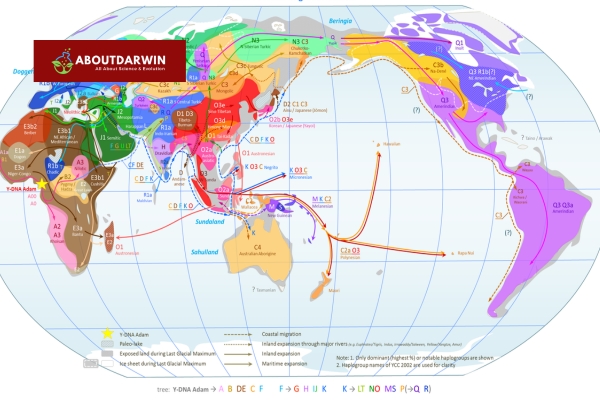
DNA test migration groups offer fascinating insights into our ancestral origins, tracking where our ancestors lived and how they moved across the globe over thousands of years. By examining specific markers in your autosomal DNA, these tests can reveal historical migration patterns that contribute to your unique genetic makeup.
Here is what you can discover through migration group analysis:
These insights not only enhance personal understanding of one’s heritage but also connect individuals with broader human history through the lens of genetic evidence. Your results become part of the larger story of human dispersal and settlement across the planet.
Also Read: How can DNA Results help you in Optimizing Your Journey?
Beyond recent ancestry, DNA tests can reveal your deep genetic history through haplogroups. These are genetic family trees that trace specific lineages back tens of thousands of years, predating recorded history and connecting you to the earliest human migrations out of Africa.
Your mitochondrial DNA passes down exclusively from mother to child, unchanged except for occasional mutations. This maternal lineage allows scientists to trace your direct maternal line back to “Mitochondrial Eve,” a theoretical common ancestor who lived approximately 150,000 to 200,000 years ago in Africa.
mtDNA haplogroups are designated by letters such as H, U, K, T, J, V, and X for European lineages, while African lineages include L and its subclades. Each letter represents a branch on the human family tree, showing how your maternal ancestors migrated across continents over millennia.
For those with Y chromosomes, Y-DNA testing traces the direct paternal line from father to son. This lineage leads back to “Y-DNA Adam,” the most recent common paternal ancestor who lived approximately 200,000 to 300,000 years ago. Y-DNA haplogroups like R1b, I, J, E, and others map the migration routes of your paternal forefathers.
These paternal haplogroups provide insights into prehistoric movements, showing whether your paternal ancestors participated in the expansion into Europe, migrated across Asia, or remained in Africa. Each mutation in the Y-DNA sequence acts as a genetic timestamp, marking when your lineage branched from others.
For those with European ancestry, DNA tests often identify one of seven major mitochondrial haplogroups: H, J, K, T, U, V, and X. These groups represent distinct maternal lineages that entered Europe at different times during the Paleolithic and Neolithic periods. Haplogroup H is the most common across Europe, while others like X and V are found in more specific regional distributions.
Understanding your haplogroup assignment adds depth to your ancestry results, connecting you to specific prehistoric populations and their movements across ancient landscapes. This deep ancestry context complements the more recent migration group results, creating a complete picture of your genetic heritage from ancient times to the present.

The process of determining group-based results in DNA ancestry testing involves examining an individual’s genetic markers and comparing them to reference populations. Different companies use distinct methodologies to analyze your DNA and assign you to migration groups or ancestral communities.
Below is a comprehensive comparison of how the three major testing companies approach migration group analysis:
| Feature | 23andMe | AncestryDNA | MyHeritage |
|---|---|---|---|
| Migration Group Name | Recent Ancestor Locations | Genetic Communities | Genetic Groups |
| Time Period Covered | Last 200 years | 75-300 years ago | Up to 500+ years |
| Database Size | 14+ million | 20+ million | 6+ million |
| Geographic Specificity | Country and region level | Specific regions and migrations | Province and district level |
| Methodology | DNA segments + survey data | DNA + family tree patterns | Microclusters + genetic signatures |
| Confidence Levels | Not specified | 20-95% confidence range | High confidence thresholds |
| Updates Frequency | Annual ethnicity updates | Regular community additions | Periodic refinements |
Each company brings unique strengths to migration group analysis. AncestryDNA leverages its massive database and family tree integration to identify communities with high confidence. MyHeritage excels at pinpointing specific geographic locations through its genetic groups technology. 23andMe focuses on recent ancestry with its recent ancestor locations feature.
23andMe identifies regions where your forebears likely resided within the past two centuries. The company analyzes shared DNA segments between you and reference population members, then conducts focused assessments to confirm genetic overlap with individuals from specified locations.
However, users should note the significant industry changes in 2026. 23andMe filed for Chapter 11 bankruptcy in March 2025, raising concerns about data security and company stability. While testing services continue currently, the long-term future of the platform and data protection policies remain uncertain.
AncestryDNA pinpoints ties to historical groups dating back anywhere from 75 to 300 years. The platform groups individuals into communities based on shared genetic markers, then utilizes family tree patterns within each community to reveal common historical narratives.
The confidence levels for AncestryDNA communities range from 20% to 95%, with higher percentages indicating stronger evidence of connection to that particular group. This transparency helps users understand the reliability of their assigned communities.
MyHeritage matches users with notable historical or migratory populations through unique genetic signatures. The platform detects microclusters of genetically similar individuals to form genetic groups, then examines common threads via family trees and ethnicity results amongst these clusters.
These methodologies depict a spectrum ranging from exclusive reliance on genetic data to more comprehensive approaches integrating genealogical insights. Together, these strategies aim to enhance the accuracy of geographical and ancestral origin analysis based on collective genetics.
Also Read: Best Genetic Genealogy Websites: Your Ultimate Guide
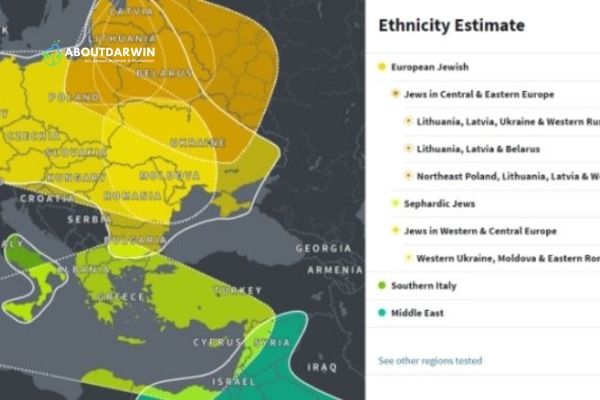
DNA testing for tracing migration patterns provides fascinating ancestral insights, offering glimpses into forebears’ journeys across continents and through millennia. Despite its remarkable ability to connect us with our past, this technology faces several important constraints that users must understand.
The precision of migration routes depends heavily on the database size and diversity to which your DNA is compared. If the testing company’s database lacks broad and varied genetic samples from specific regions or populations, results may be less accurate or overly generalized. Reference populations from certain parts of the world remain underrepresented, affecting results for people with ancestry from those areas.
DNA tests typically highlight migrations that happened thousands of years ago through haplogroup analysis, but may not capture more recent familial movements within the last few hundred years. This can leave gaps in understanding one’s complete migratory history, particularly for families who relocated recently.
Results may oversimplify complex human migration patterns into more digestible narratives. While appealing for presentation, this simplification might overlook intricate histories of movement and interaction among different groups, including admixture events and gradual blending of populations over centuries.
In March 2025, 23andMe filed for Chapter 11 bankruptcy, creating uncertainty for millions of users who entrusted their genetic data to the platform. This development highlights a critical limitation: genetic testing companies may not exist indefinitely, raising questions about long-term data storage, privacy protection, and access to your results.
Users should consider downloading their raw DNA data and storing it securely. Third-party tools like GEDmatch and DNA Painter can analyze this data independently, providing continued access to migration insights even if your original testing company changes ownership or ceases operations.
Engaging in DNA testing involves sharing sensitive genetic information with third parties. The 23andMe bankruptcy case has amplified concerns about how genetic data might be handled during corporate transitions, acquisitions, or liquidations. There is inherent risk associated with how this information is stored, used, or potentially shared with other entities.
By familiarizing yourself with these limitations, you can approach DNA test results with an informed perspective that balances enthusiasm for ancestral discovery with a critical appreciation of the science’s boundaries.
Also Read: Sentiment Through Preserving and Organizing Family Photos
Understanding your DNA migration group results requires context and patience. When you receive your ethnicity estimate and migration group assignments, start by examining the confidence levels provided by your testing company. Higher percentages indicate stronger genetic connections to that particular region or community.
Consider your results as probabilities rather than absolutes. A result showing 15% Scandinavian ancestry suggests genetic similarity to that region, but does not mean exactly 15% of your ancestors were from Scandinavia. Ethnicity estimates are statistical approximations based on comparing your DNA to reference populations.
Look for patterns across multiple family lines. If several DNA matches share the same unexpected region, it may indicate a genuine ancestral connection worth investigating through traditional genealogy research. Combine your genetic results with historical records, family stories, and documented family trees for the most accurate understanding of your heritage.
DNA tests provide estimates of your ancestral origins, not precise locations because countries’ borders have changed over time and populations have mixed. Your results show genetic similarity to reference populations from specific regions, but cannot pinpoint your family’s exact village or town of origin.
Take time to process new information before reacting. Consider speaking with family members or a professional counselor to navigate sensitive discoveries such as unexpected parentage, unknown siblings, or hidden family history. Remember that DNA results reveal biological facts, but your family relationships and identity extend beyond genetics.
Yes, as databases grow and science advances, interpretations of DNA results may be updated to reflect new understandings of genetic genealogy. Testing companies regularly refine their reference populations and algorithms, which can shift your ethnicity percentages and migration group assignments.
Review privacy policies carefully and think about potential implications for family privacy before sharing genetic information publicly. Consider that your DNA data reveals information about your relatives as well as yourself. Once shared, genetic data cannot be fully retracted from databases or research studies.
While some DNA tests offer health-related information as separate reports, the primary function of migration group analysis is to explore ancestry rather than medical diagnostics. However, certain haplogroups have been associated with geographic patterns of genetic traits and disease susceptibilities in research studies.
The seven major European mitochondrial DNA haplogroups are H, J, K, T, U, V, and X. These represent distinct maternal lineages that entered Europe during the Paleolithic and Neolithic periods. Haplogroup H is most common across Europe. For Y-DNA paternal lineages, major haplogroups include R1b, I, J, E, G, N, and others that map different paternal migration routes.
23andMe filed for Chapter 11 bankruptcy in March 2025 due to declining consumer interest in ancestry testing and challenges monetizing their health data platform. The company is restructuring its business operations and debt. Testing services continue currently, but the long-term future remains uncertain. Users should download their raw DNA data as a precaution.
Approximately 1% ethnicity typically represents about 6-8 generations back, or roughly 150-200 years. However, this varies based on how DNA was inherited. Small percentages could represent more distant ancestors whose genetic contribution happened to survive through random recombination, or they could indicate very small amounts of DNA shared with more recent ancestors from that region.
All major DNA testing companies provide ethnicity estimates. AncestryDNA offers the largest database with over 20 million testers. 23andMe provides detailed regional breakdowns with recent ancestor locations. MyHeritage excels at identifying specific genetic groups. FamilyTreeDNA and Living DNA also offer ethnicity testing with varying regional specificity.
Autosomal DNA testing typically reveals ancestry back 5-7 generations (150-200 years) with confidence. Y-DNA and mitochondrial DNA testing can trace paternal and maternal lines back tens of thousands of years to prehistoric times. Migration groups generally focus on the last 200-500 years, while haplogroups trace ancient migrations from the Paleolithic era.
Also Read: Shared Centimorgans Project: DNA Matches for Genealogy
DNA test migration groups can unveil fascinating chapters in our ancestral lore, painting a picture with broad strokes about where we come from. It is a tool that offers us tantalizing glimpses into our past, suggesting patterns and probabilities rather than hard-and-fast truths.
As we ponder what DNA test migration groups have sketched out for us in 2026, it is important to remember the color and detail come from the rich tapestry of history. Documents, oral traditions, and cultural heritage cannot be captured by science alone.
So while we embrace the science of where our DNA might have journeyed through the ages, let us not forget to cherish and explore the stories that truly define our personal histories. The combination of genetic insights and traditional genealogical research creates the most complete picture of who we are and where we came from.