Physical Address
304 North Cardinal St.
Dorchester Center, MA 02124
Physical Address
304 North Cardinal St.
Dorchester Center, MA 02124

Investigating family trees? Learn to count generations accurately in your lineage, uncover hidden connections, and ensure your family history's authenticity.
Learning how to count generations in your family tree opens a fascinating window into your past. Whether you are just beginning your genealogical journey or organizing decades of research, understanding generational structure helps you map relationships accurately and estimate how far back your documented ancestry extends. Many researchers start with a simple question: where do I begin counting, and how do the numbers expand as I work backward through time?
The mathematics of generational counting reveals exponential growth patterns that surprise most beginners. Starting from yourself, each step backward doubles the number of direct ancestors you possess. This doubling effect means that by the time you reach your fifth generation of forebears, you are already tracking thirty-two distinct individuals. Understanding these patterns helps you set realistic research goals, estimate the scope of your project, and identify gaps where documentation might be missing.
This guide provides proven techniques for counting generations accurately, distinguishing between blood relatives and marriage connections, and using the right tools to verify your findings. You will learn how professional genealogists calculate ancestor numbers, what charts can help visualize your progress, and how to handle complex family situations including adoptions and blended families.
Counting generations requires a consistent starting point and clear rules about what constitutes a generational level. Most genealogists count themselves as generation one, their parents as generation two, and continue backward with each ancestral level representing one generation. This standardized approach helps maintain consistency when sharing research with other family historians or uploading data to genealogy platforms.
However, some researchers prefer counting themselves as generation zero, making their parents generation one. While either method works for personal research, the genealogy community generally accepts the first method where you are generation one. This convention aligns with standard pedigree charts and family tree software that automatically assign generation numbers based on this counting system.
Your family tree consists of multiple generational layers, each representing a step backward in time. The first generation includes you and your siblings, forming the foundation of your research. The second generation encompasses your parents and their siblings, creating the next tier of relationships that connect you to earlier ancestors.
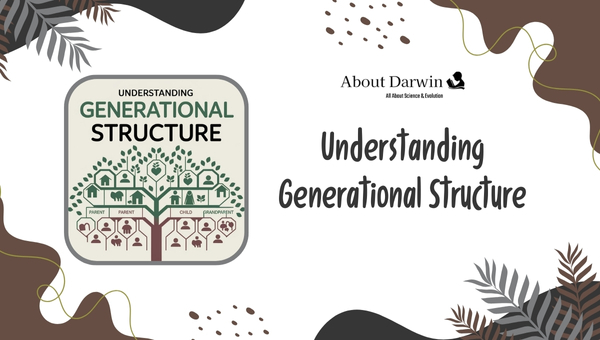
The third generation brings your grandparents into view, while the fourth generation introduces your great-grandparents. Each subsequent generation adds another “great” to the title, following a predictable naming pattern that helps you describe relationships precisely. Great-great-grandparents occupy the fifth generation, and great-great-great-grandparents the sixth, extending your tree further into history.
Understanding this hierarchical structure helps you organize research materials, label photographs correctly, and communicate findings clearly to relatives. When you can identify which generational level an ancestor occupies, you can also estimate the historical period they lived in and the types of records that might document their lives.
Blood relatives form the backbone of your family tree and follow strict mathematical patterns when counting generations. Your direct ancestors include parents, grandparents, great-grandparents, and earlier forebears who connect to you through an unbroken chain of biological parentage. Each generation of direct ancestors doubles in number, creating an expanding pyramid of relations as you move backward through time.
Collateral relatives, such as aunts, uncles, and cousins, branch off from your direct line at each generational level. These blood relatives share common ancestors with you but do not form part of your direct ancestral chain. Understanding the difference helps you focus research efforts on documenting direct lines while using collateral relatives to verify information and fill gaps where direct records are missing.
Accurate identification of blood relationships becomes essential when using DNA testing to confirm genealogical connections. Autosomal DNA matches typically share ancestors within five to seven generations, making generational counting a practical tool for estimating how closely related you might be to a genetic match. Understanding generational relationships also helps you identify cousin connections. Use our cousin relationship chart to decode complex family relationships.
Marriage connections extend your family tree beyond blood relatives, incorporating step-relations, in-laws, and adopted family members. These relationships add complexity to generational counting because they introduce family ties that do not follow biological inheritance patterns. A step-parent married to your biological parent occupies the same generational level as that parent but connects to you through marriage rather than blood.
Half-siblings share one biological parent with you but may have other parentage from their other side. When counting generations for half-siblings, you follow the same rules as full siblings because you share common ancestors at the parental generation level. The key distinction lies in understanding which ancestral lines branch differently for half-siblings compared to your full siblings.
Adoption creates unique situations in generational counting. Some genealogists document both biological and adoptive lines, effectively creating parallel family trees. Others focus exclusively on either biological or adoptive ancestry depending on their research goals. Consistent labeling helps prevent confusion when sharing research or uploading data to genealogy websites that support multiple parental relationships.
Marriage connections also affect how you count generations when families intermarry multiple times. When two siblings from one family marry two siblings from another, the resulting cousin relationships create double first cousins who share all four grandparents. These complex marriage patterns require careful tracking to avoid counting the same ancestors multiple times within a single generation.
The mathematics of ancestral doubling follows a simple formula: each generation backward doubles the number of direct ancestors you possess. Starting with yourself as generation one, your two parents represent generation two with two individuals. Your four grandparents occupy generation three, followed by eight great-grandparents at generation four, and sixteen great-great-grandparents at generation five.
This doubling pattern continues exponentially, creating increasingly large numbers of ancestors as you move backward in time. By generation six, you have thirty-two great-great-great-grandparents. Generation seven contains sixty-four ancestors, and generation eight holds one hundred twenty-eight direct forebears spanning roughly two hundred years of family history.
However, these theoretical numbers often exceed the ancestors you can actually document. Pedigree collapse occurs when cousins marry, causing the same ancestors to appear multiple times in your tree. This phenomenon reduces the actual number of unique individuals below the theoretical maximum, particularly as you trace lines back into small, isolated communities where intermarriage was common.
Genealogists use generational reference tables to track their progress and identify gaps in research. The following chart shows how many direct ancestors theoretically exist at each generational level, along with their relationship titles and approximate time spans based on a thirty-year average generation length.
Generation 1: 1 person (you), starting point
Generation 2: 2 people (parents), approximately 30 years back
Generation 3: 4 people (grandparents), approximately 60 years back
Generation 4: 8 people (great-grandparents), approximately 90 years back
Generation 5: 16 people (great-great-grandparents), approximately 120 years back
Generation 6: 32 people (3x great-grandparents), approximately 150 years back
Generation 7: 64 people (4x great-grandparents), approximately 180 years back
Generation 8: 128 people (5x great-grandparents), approximately 210 years back
Generation 9: 256 people (6x great-grandparents), approximately 240 years back
Generation 10: 512 people (7x great-grandparents), approximately 270 years back
Practical researchers typically focus on documenting five to seven generations thoroughly, as records become scarcer and verification more challenging beyond that range. DNA testing can help confirm connections at deeper generational levels, though matches become less reliable beyond fifth cousins, who typically share great-great-great-grandparents at generation six.
Modern genealogy research benefits from a wide range of digital tools and resources that help you document generational relationships accurately. Online databases provide access to birth certificates, marriage records, census data, and death certificates essential for verifying each ancestor’s placement in your family tree. Census records prove particularly valuable for confirming parent-child relationships across multiple generations.
Family tree software helps visualize generational structures and automatically calculates ancestor numbers. Programs like Legacy Family Tree, RootsMagic, and Gramps offer fan chart views that display your ancestors in concentric circles, making it easy to spot generation gaps at a glance. These visualization tools help you see exactly where your research needs attention.
DNA testing services from AncestryDNA, 23andMe, and MyHeritage provide genetic evidence to confirm paper trail research. By comparing your DNA with matches in their databases, you can verify that documented generational connections reflect biological reality. Shared centimorgan amounts help estimate the generational distance between you and a match, assisting with cousin classification.
For those seeking free resources, FamilySearch.org offers extensive record collections and collaborative family tree features. Cemetery records can provide valuable generational data, including birth and death dates that help verify generation lengths. Learn more about this research method in our guide to cemetery genealogy research. For a comprehensive list of no-cost options, explore these free genealogy websites.
Discover additional software and resources in our guide to the top genealogy tools available for family historians today. Proper organization becomes essential as your tree grows. Learn how to organize your genealogy research effectively to keep your generational documentation clear and accessible.
Eight generations spans approximately 210 to 240 years, depending on the average generation length in your family line. Using the commonly accepted standard of 30 years per generation, eight generations would place your earliest ancestors around the year 1800. Some genealogists prefer using 25-year generation averages, which would place eight generations about 200 years back. To calculate more precisely for your specific family, determine the average age at which parents had children across multiple generations in your documented ancestry.
To determine the number of generations between yourself and a specific ancestor, count yourself as generation one, then count each successive ancestral level backward until you reach that ancestor. For example, your parents are generation two, grandparents generation three, and great-grandparents generation four. Continue counting until you reach the target ancestor. You can also calculate by dividing the estimated year gap by 25 to 30 years to approximate generational distance, then verify with documented parent-child relationships in genealogical records.
Five generations in a family includes yourself, your parents, your grandparents, your great-grandparents, and your great-great-grandparents. This generational span theoretically encompasses 31 direct ancestors (1 + 2 + 4 + 8 + 16) and covers approximately 120 years of family history. In practical terms, five generations often spans from the present day back to ancestors born in the late 1800s or early 1900s. Many family historians find that five generations represents an achievable research goal where documentation remains readily available.
Most family historians aim to document three to five generations thoroughly, as this range provides substantial historical context while remaining achievable with available records. Three generations (you, parents, grandparents) offers basic family structure, while five generations extends back to great-great-grandparents born roughly 120 years ago. Serious researchers may pursue seven to ten generations, though documentation becomes increasingly scarce beyond the fifth generation. The practical limit for most researchers falls between five and seven generations, with DNA testing helping verify connections at deeper levels where paper records are sparse.
Calculate generation length by determining the age at which parents in your family line typically had children. Start with documented birth dates of parents and their children in your tree. Subtract the parent’s birth year from the child’s birth year to find the generation interval. Average these intervals across multiple generations to find your family’s typical generation length. Most genealogists find that 30 years provides a more accurate average than 25 years, though this varies by culture, time period, and individual family patterns. Larger families often show greater variation in generation length between first-born and last-born children.
Generation gaps occur when you cannot find documentation connecting one generation to the next. To handle these gaps, search for indirect evidence including census records showing parent-child relationships, church baptism records, obituaries naming survivors, and will or probate records listing heirs. DNA testing can help bridge gaps by confirming genetic relationships to documented cousins on the other side of the missing generation. When gaps cannot be closed, mark them clearly in your research notes and family tree software, preserving what you know while acknowledging uncertainty. Return to these gaps periodically as new records become digitized and available.
Mastering how to count generations in your family tree provides the foundation for accurate genealogical research and meaningful family history documentation. By understanding the mathematical doubling pattern of ancestors, distinguishing between blood and marriage connections, and applying consistent counting methods, you create a reliable framework for exploring your heritage. The generational reference table provides a quick guide for estimating how many ancestors theoretically exist at each level and how far back those generations extend.
Remember that theoretical ancestor numbers often exceed what you can actually document, and pedigree collapse means some ancestors appear multiple times in your tree. Focus on building accurate connections for five to seven generations, using DNA testing to verify relationships and fill gaps where paper records fall short. As you build your family tree, proper organization becomes essential. Learn how to organize your genealogy research effectively to keep your generational documentation accessible and accurate for future generations.
With the tools and techniques outlined in this guide, you can confidently navigate your ancestral connections and build a family tree that accurately reflects your generational heritage. Start with what you know, work methodically backward, and enjoy discovering the rich history contained in each generation of your family.