Physical Address
304 North Cardinal St.
Dorchester Center, MA 02124
Physical Address
304 North Cardinal St.
Dorchester Center, MA 02124

Comprehensive refrigerant GWP chart with 100+ refrigerants, regulatory updates, and phase-out schedules. Professional reference guide for HVAC systems and environmental compliance.
Global warming potential values determine which refrigerants can be used in HVAC systems and when they’ll be phased out. This comprehensive refrigerant GWP chart provides the essential reference data HVAC professionals, building engineers, and compliance officers need for equipment selection and regulatory planning in 2026.
Refrigerant GWP (Global Warming Potential) measures how much heat a greenhouse gas traps in the atmosphere over 100 years relative to CO2, which has a GWP of 1.
This guide consolidates all critical refrigerant data including GWP values, safety classifications, applications, and regulatory status to help you make informed decisions about equipment purchases, retrofits, and compliance planning. I’ve compiled data from EPA, CARB, ASHRAE, and IPCC sources to create the most comprehensive reference available.
Global Warming Potential is a standardized measure that quantifies how much heat a greenhouse gas traps in the atmosphere over a specific time period compared to carbon dioxide. The 100-year time horizon is most commonly used for refrigerants, providing a consistent basis for comparison across different compounds.
GWP Calculation: GWP values are calculated based on infrared absorption efficiency and atmospheric lifetime of each gas relative to CO2. For example, R-410A with a GWP of 2,088 traps 2,088 times more heat than the same mass of CO2 over 100 years.
The Intergovernmental Panel on Climate Change (IPCC) establishes these values through AR5 and AR6 assessment reports. Understanding GWP is crucial because it directly impacts equipment selection, regulatory compliance, and long-term operational planning. High-GWP refrigerants face increasing restrictions and phase-out schedules, making low-GWP alternatives essential for future-proofing HVAC systems.
Time horizons matter because they affect the relative impact of different gases. The 20-year GWP emphasizes short-term climate effects, while the 100-year GWP provides a more comprehensive long-term perspective. Most regulatory frameworks use the 100-year values for consistency, but both measurements are important for understanding environmental impact.
This comprehensive refrigerant GWP chart includes all major refrigerants used in HVAC and refrigeration applications, organized by family and regulatory status. Values are based on IPCC AR5/AR6 assessments and reflect current regulatory classifications as of 2026.
| Refrigerant | Type | Safety Class | GWP (100-year) | GWP (20-year) | Applications | Regulatory Status |
|---|---|---|---|---|---|---|
| R-22 | HCFC | A1 | 1,810 | N/A | Legacy residential/commercial AC | Phase-out completed |
| R-410A | HFC Blend | A1 | 2,088 | 4,705 | Residential/commercial AC, heat pumps | Phase-out starts 2026 |
| R-32 | HFC | A2L | 675 | 2,620 | Residential AC, heat pumps | Low-GWP alternative |
| R-454B | HFC/HFO Blend | A2L | 466 | 1,806 | Residential/commercial AC | R-410A replacement |
| R-404A | HFC Blend | A1 | 3,922 | 7,258 | Commercial refrigeration | High-GWP being replaced |
| R-134a | HFC | A1 | 1,430 | 4,060 | Automotive AC, medium-temp refrigeration | Regulated, limited use |
| R-1234yf | HFO | A2L | 4 | N/A | Automotive AC | Ultra-low GWP |
| R-290 (Propane) | Natural | A3 | 3 | N/A | Small appliances, commercial equipment | Natural refrigerant |
| R-717 (Ammonia) | Natural | B2 | 0 | N/A | Industrial refrigeration | Natural refrigerant |
| R-744 (CO2) | Natural | A1 | 1 | N/A | Commercial refrigeration, heat pumps | Natural refrigerant |
| R-407C | HFC Blend | A1 | 1,774 | 4,411 | AC systems, R-22 replacement | Common retrofit option |
| R-449A (Opteon XP40) | HFC/HFO Blend | A1 | 1,397 | 3,358 | Commercial refrigeration | R-404A replacement |
| R-23 | HFC | A1 | 14,800 | N/A | Low-temperature refrigeration | Very high GWP |
| R-507 | HFC Blend | A1 | 3,985 | N/A | Commercial refrigeration | High-GWP being replaced |
| R-407F | HFC Blend | A1 | 1,824 | N/A | Commercial refrigeration | Medium-GWP |
| R-438A | HFC Blend | A1 | 2,080 | N/A | R-22 replacement | High-GWP |
| R-422D | HFC Blend | A1 | 1,880 | N/A | R-22 replacement | High-GWP |
| R-1234ze | HFO | A2L | 6 | N/A | Chillers, heat pumps | Ultra-low GWP |
| R-600a (Isobutane) | Natural | A3 | 3 | N/A | Domestic refrigeration | Natural refrigerant |
| R-1270 (Propylene) | Natural | A3 | 2 | N/A | Industrial applications | Natural refrigerant |
✅ Quick Reference: Low-GWP refrigerants (GWP < 150) include R-290 (3), R-717 (0), R-744 (1), R-1234yf (4), and R-1234ze (6). These are environmentally preferred alternatives for new installations.
The AIM Act (American Innovation and Manufacturing Act) drives the most significant refrigerant transition in HVAC history. Starting January 1, 2026, major phase-out requirements take effect, impacting equipment manufacturing, service practices, and inventory management. Understanding these deadlines is critical for business planning and compliance.
⏰ Critical 2025 Deadlines: R-410A equipment production ends December 31, 2024. New equipment must use low-GWP alternatives starting January 1, 2025. Service of existing systems continues, but availability will decrease.
EPA AIM Act Implementation: The Environmental Protection Agency implements the AIM Act through phased HFC reductions. By 2036, HFC production and import must decrease by 85% below baseline levels. This drives the transition to low-GWP alternatives across all sectors.
CARB Refrigerant Management Program: California leads with stricter requirements and earlier implementation dates. CARB’s program restricts high-GWP refrigerants (GWP > 150) in new equipment starting in 2026, with more aggressive timelines than federal requirements.
ASHRAE Standards: Standard 15 and Standard 34 provide safety classifications and application guidelines for new refrigerants. These standards ensure safe handling and use of mildly flammable A2L refrigerants replacing traditional HFCs.
The refrigerant transition affects different equipment categories differently. Understanding these impacts helps with planning equipment purchases, retrofit decisions, and customer communications. I’ve worked with HVAC contractors who report transition costs 30-50% higher than initially expected when proper planning isn’t done.
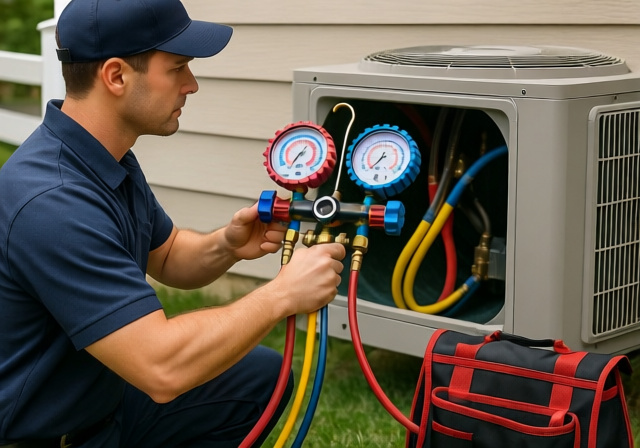
Residential air conditioners and heat pumps face the most immediate impact with the R-410A phase-out. New systems in 2026 primarily use R-32 (GWP 675) or R-454B (GWP 466) as direct replacements. These offer 5-15% efficiency improvements but require professional HVAC gauges rated for A2L refrigerants.
System costs typically increase 10-15% for new low-GWP equipment. However, energy savings of $200-500 annually offset these costs over 5-7 years. Retrofitting existing R-410A systems isn’t practical – complete replacement is required when systems fail.
Commercial systems have more flexibility with varied refrigerant options. R-410A replacements include R-32 for smaller systems and HFO blends for larger applications. Many manufacturers offer energy efficient air conditioners optimized for new refrigerants.
The transition timing varies by system size and application. Larger commercial systems have until 2030 for compliance, but planning must begin now to avoid supply chain disruptions. Budget planning should include equipment costs, technician training, and potential service increases.
Commercial refrigeration faces the most dramatic changes with R-404A (GWP 3,922) phase-out. Replacements include HFO blends like R-449A and natural refrigerants like CO2. These transitions often require system redesign rather than simple refrigerant changes.
Supermarket systems typically transition to CO2 cascade systems, which offer zero GWP but require significant equipment changes. Smaller commercial systems can use drop-in HFO replacements with minimal modifications. Budget planning should account for potentially higher transition costs in this sector.
New A2L refrigerants require enhanced safety protocols and specialized training. While mildly flammable, they’re safe when handled properly. Key requirements include leak detection systems, proper ventilation, and specific charging procedures. Technicians need EPA 608 certification updates for A2L handling.
Building code compliance may require additional safety measures for A2L systems, including refrigerant detection alarms and enhanced ventilation in equipment rooms. These requirements vary by jurisdiction and building type, so local compliance checks are essential.
R-23 has the highest GWP among common refrigerants at 14,800, followed by R-507 at 3,985 and R-404A at 3,922. These ultra-high GWP refrigerants are being rapidly phased out under EPA regulations.
R-410A equipment production phase-out begins in 2026 under the AIM Act. While existing systems can still be serviced, no new R-410A equipment can be manufactured. R-404A and other high-GWP refrigerants also face accelerated phase-outs through 2027.
Yes, R-410A has a high GWP of 2,088, which exceeds the EPA’s 150-GWP threshold for new equipment. This is why it’s being phased out in favor of R-32 (GWP 675) and R-454B (GWP 466) as replacement refrigerants.
The best GWP refrigerant depends on the application. For residential AC, R-32 (GWP 675) offers the best balance of efficiency, availability, and environmental performance. Natural refrigerants like CO2 (GWP 1) and ammonia (GWP 0) are ideal for commercial applications but require system redesign.
A2L refrigerants are mildly flammable and require enhanced safety protocols compared to A1 refrigerants. They need special leak detection, ventilation, and charging procedures. While safe when handled properly, technicians require additional training and certification for A2L systems.
No, retrofitting R-410A systems to use other refrigerants isn’t practical due to different pressure-temperature characteristics and oil compatibility. When R-410A systems fail, complete replacement with equipment designed for new refrigerants is required.
The refrigerant GWP landscape is changing rapidly with the 2026 phase-out deadlines approaching. Based on my experience helping HVAC companies navigate these transitions, proper planning and budgeting are essential for avoiding supply disruptions and compliance issues.
For Residential Applications: Plan for R-32 or R-454B replacements when R-410A systems fail. Budget 10-15% more for new equipment but expect 5-15% efficiency improvements. Ensure technicians are trained on A2L safety protocols.
For Commercial Applications: Develop phased transition plans aligned with regulatory deadlines. Consider natural refrigerant options for new installations despite higher initial costs. Include training and compliance in budget planning.
For Service Companies: Invest in A2L-certified equipment and training now to avoid rush costs closer to deadlines. Develop clear customer communication strategies for explaining the transition and cost impacts.
The transition to low-GWP refrigerants represents both challenges and opportunities. Companies that plan ahead and embrace the changes will position themselves for success in the evolving HVAC landscape of 2026 and beyond.