Physical Address
304 North Cardinal St.
Dorchester Center, MA 02124
Physical Address
304 North Cardinal St.
Dorchester Center, MA 02124

Discovering where you come from has never been more accessible. In this comprehensive Ancestry DNA review, I share my firsthand experience with the world’s largest consumer DNA database and explore whether it lives up to its reputation in 2026. With genetic testing becoming a mainstream tool for genealogy enthusiasts and curious individuals alike, understanding what AncestryDNA offers—and its limitations—is essential before investing your time and money.
My journey with AncestryDNA began as a quest to fill gaps in my family tree. What I discovered went far beyond simple ethnicity percentages. The service connected me with distant relatives I never knew existed and painted a vivid picture of my ancestors’ migration patterns across continents. Whether you are searching for biological family, verifying genealogical research, or simply curious about your heritage, this review covers everything you need to know.
I have spent months exploring every feature AncestryDNA offers, from the basic ethnicity estimate to advanced tools like ThruLines and SideView. This review reflects my actual testing experience, the results I received, and honest assessments of what works well and what falls short.
Before diving into the detailed review, here is a quick overview of what AncestryDNA does well and where it could improve. This summary helps you decide if this service matches your specific needs.
AncestryDNA represents the consumer-facing genetic testing division of Ancestry, the genealogy powerhouse that has helped millions trace their family histories since 1983. Launched in 2012, the DNA testing service has grown exponentially and now maintains the world’s largest consumer genetic database with over 22 million DNA samples as of 2026. This massive collection of genetic data gives AncestryDNA users an unparalleled advantage when searching for biological relatives or seeking detailed ethnicity estimates.
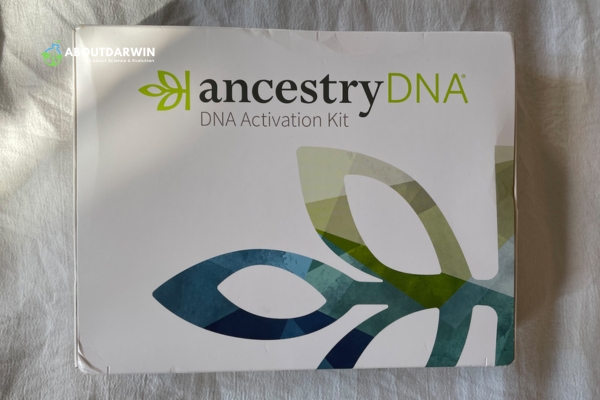
The service operates on a direct-to-consumer model, meaning anyone can order a test kit online, collect a saliva sample at home, and receive detailed genetic reports through a secure online portal. Unlike medical genetic testing that requires physician involvement, AncestryDNA focuses entirely on ancestry and genealogy—helping you understand where your ancestors came from and connecting you with living relatives who share segments of your DNA.
What sets AncestryDNA apart from competitors is the seamless integration between genetic data and traditional genealogical records. When you combine your DNA results with an Ancestry subscription, you gain access to over 30 billion historical records, allowing you to build comprehensive family trees that bridge genetic connections with paper trail documentation. This combination of DNA science and archival research creates the most complete picture of your heritage available to consumers today.
AncestryDNA employs microarray-based autosomal DNA testing, which analyzes your entire genome at over 700,000 specific locations called single nucleotide polymorphisms (SNPs). This method examines all 22 pairs of your non-sex chromosomes, capturing genetic information from both your paternal and maternal lines simultaneously. The comprehensive nature of autosomal testing provides the broadest possible view of your ancestral history compared to older methods that only traced direct paternal (Y-DNA) or maternal (mtDNA) lines.
The testing process follows a straightforward sequence designed for convenience. First, you order a kit online from AncestryDNA’s official website for a price typically ranging between $59 and $99, though frequent sales can bring the cost lower. The kit arrives within about a week and includes a saliva collection tube, a screw-on cap with stabilization fluid, detailed instructions, and a prepaid return mailer.
Before providing your sample, you must register the kit online using the unique activation code included in the package. This critical step links your physical sample to your Ancestry account. The collection itself requires filling the tube with saliva to a marked line—something that takes most people 2-3 minutes—then closing the funnel lid to release the stabilizing liquid that preserves your DNA during shipping.
Once your sample reaches the AncestryDNA laboratory, technicians perform quality checks to ensure sufficient DNA quantity and quality for analysis. Failed samples trigger a free replacement kit. After passing quality control, your DNA undergoes processing on Illumina scanning chips, and results become available in your online account within approximately 3-5 weeks from when the lab receives your sample.
Choosing the right DNA testing service depends on your specific goals. Here is how AncestryDNA compares to its main competitors across key factors:
| Feature | AncestryDNA | 23andMe | MyHeritage DNA |
|---|---|---|---|
| Database Size | 22+ million | 14+ million | 6+ million |
| Primary Focus | Genealogy & ethnicity | Health + ancestry | International records |
| DNA Test Type | Autosomal only | Autosomal + traits | Autosomal only |
| Ethnicity Regions | 1,800+ | 2,000+ | 2,100+ |
| Chromosome Browser | No | Yes | Yes |
| Health Reports | No | Yes (carrier status) | Yes (limited) |
| Traits Report | Yes ($10 add-on) | Yes (included) | Yes (included) |
| Price Range | $59-$99 | $99-$199 | $49-$79 |
| Subscription Required | For full features | No | For full features |
| SideView Technology | Yes | No | No |
AncestryDNA clearly dominates for genealogy research thanks to its massive database and family tree integration. However, if health insights are your priority, 23andMe offers comprehensive carrier status and health predisposition reports. For those with European ancestry specifically, MyHeritage provides strong international record collections. For a detailed head-to-head comparison, see our complete 23andMe vs AncestryDNA guide.
My personal journey with AncestryDNA began when traditional genealogical research hit a brick wall. I had traced my family tree back several generations using census records and immigration documents, but gaps remained where paper trails went cold. I hoped DNA testing might reveal connections I had missed through conventional research methods.
The entire experience—from ordering to receiving results—proved remarkably smooth, though not without a few surprises. Here is my step-by-step account of what you can actually expect when testing with AncestryDNA.
Placing my order took less than five minutes. I visited AncestryDNA’s official website, selected the standard ancestry kit (they also offer a traits add-on for an additional cost), and created an account. The checkout process accepted major credit cards and PayPal. Within minutes, I received an order confirmation email with an estimated delivery date.
The kit arrived in exactly six days—a small, sleek box that easily fit through my mailbox. Inside, everything was neatly organized: a clear plastic tube with a funnel top, a screw-on cap containing blue stabilization liquid, a collection bag, step-by-step instructions with illustrations, and a prepaid return envelope. The packaging felt professional and thoughtfully designed, which increased my confidence in the service.
Collecting my DNA sample proved simpler than expected, though the saliva collection process requires some preparation. The instructions emphasize not eating, drinking, smoking, or brushing your teeth for at least 30 minutes before collection. This ensures no foreign substances contaminate your sample.
Before spitting into the tube, I activated my kit online using the 15-digit code printed on the collection tube. This step is crucial—samples received without activation get discarded. The activation process linked my physical sample to my account and triggered email notifications about my test status.
The collection itself required producing enough saliva to reach a fill line about one-quarter inch from the top of the tube. I found gently rubbing my cheeks helped stimulate production. Once I reached the line, I unscrewed the funnel and replaced it with the cap containing stabilization fluid. The cap clicked securely, releasing the blue liquid into my saliva to preserve the DNA during transit.
I sealed the tube in the provided biohazard bag, placed it in the prepaid return envelope, and dropped it in my mailbox. AncestryDNA received my sample three days later according to the tracking notification, and processing began shortly after.
Exactly 22 days after the lab received my sample, I received an email announcing my results were ready. Logging into my Ancestry account revealed a transformed dashboard filled with colorful charts, interactive maps, and a list of DNA matches that immediately captured my attention. The results exceeded my expectations in some areas while raising new questions in others.
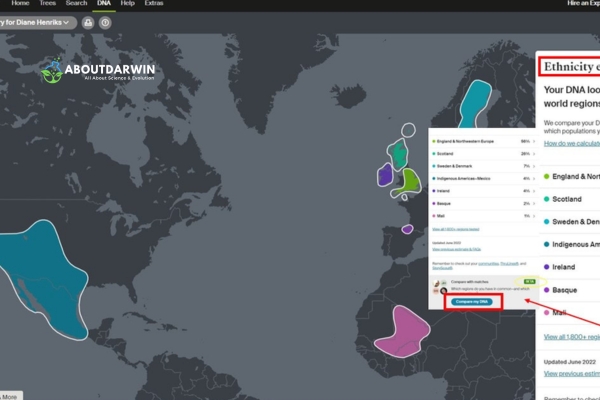
The centerpiece of AncestryDNA results is the ethnicity estimate, presented as a visually striking pie chart with corresponding percentages. My results broke down my genetic heritage across 18 distinct regions spanning Europe, the Americas, and small traces from other continents. The specificity amazed me—rather than broad categories like “European,” the report identified precise subregions like “Ireland & Scotland” and “Germanic Europe.”
Beyond simple percentages, AncestryDNA provides historical context for each region. Clicking on “Ireland & Scotland” revealed migration patterns, historical population movements, and even potential timeframes when my ancestors likely lived in those areas. This storytelling approach transforms raw genetic data into a narrative about your family’s journey through history.
The Ancestral Communities feature adds another layer of specificity. These groups represent clusters of people with similar genetic patterns who likely descend from common historical populations. I was placed in two communities: “Early Virginia African Americans” and “Irish in New York & New Jersey.” These designations felt remarkably accurate based on my documented family history and provided clues about where to focus future research.
One of AncestryDNA’s newest and most innovative features is SideView technology, which launched in 2022 and represents a significant advancement in consumer genetic testing. Traditionally, determining which DNA came from your mother versus your father required testing your parents or other close relatives. SideView accomplishes this separation computationally, without requiring parental samples.
The technology works by analyzing patterns across your DNA matches. By examining how thousands of your genetic relatives connect to each other, SideView’s algorithms can distinguish DNA segments inherited from your maternal line versus your paternal line. The results display as two separate ethnicity profiles—one showing only your mother’s ancestry, the other showing only your father’s.
In my case, SideView revealed something surprising: while my overall ethnicity estimate showed roughly 50% British Isles ancestry, the parental breakdown showed this came almost entirely from my paternal side. My maternal line displayed a completely different pattern dominated by Eastern European and Indigenous American ancestry. This separation helped me understand which family branches contributed specific genetic elements and clarified where to focus my genealogical research.
SideView also enhances the DNA Matches feature by labeling each match as “Mother’s side,” “Father’s side,” or “Both sides.” This automatic classification saved me countless hours of manual analysis trying to determine how unknown matches connected to my tree. When examining a mystery match, knowing immediately which parental line they belong to significantly narrows the search scope.
The DNA Matches section delivered the most emotionally impactful results. Upon opening this tab, I discovered over 12,000 individuals who share measurable segments of DNA with me—meaning we are related through common ancestors. The matches sort by relationship closeness, with close family and first cousins appearing at the top.
Each match displays a predicted relationship (like “3rd cousin” or “distant cousin”), the amount of shared DNA measured in centimorgans, and how many segments you share. Understanding centimorgans helps gauge relationship probability—higher numbers indicate closer connections. My highest match outside known family shared 485 centimorgans, indicating a likely second cousin relationship.
ThruLines proved to be the most valuable tool for integrating DNA matches with traditional genealogy. This feature analyzes both your DNA and your family tree, then suggests how matches might connect to specific ancestors already in your tree. ThruLines predicted connections to several 4th and 5th great-grandparents, showing me exactly which ancestral couple linked me to distant cousins I had never heard of.
The Shared Matches feature helps triangulate unknown connections. When I encounter a match whose relationship I cannot determine, I examine who we both match in common. If we share matches from my maternal grandmother’s line, for example, I know this unknown match also connects through that branch, significantly narrowing my search focus.
AncestryDNA offers an optional Traits add-on that explores how your genes might influence physical characteristics and sensory preferences. This feature costs extra beyond the standard ancestry test but provides interesting insights into genetic influences on traits like eye color, earlobe type, cilantro preference, and sun sensitivity.
My Traits report confirmed several characteristics I already knew—I do indeed have attached earlobes and a strong dislike of cilantro (linked to a specific genetic variant). The report also predicted I likely have straight hair and intermediate skin pigmentation, both accurate. While not medically significant, these predictions demonstrated the test’s ability to detect genetic patterns linked to observable traits.
It is important to understand that AncestryDNA’s traits analysis is separate from health screening. Unlike 23andMe’s health reports, which include carrier status for genetic conditions, AncestryDNA focuses purely on non-medical characteristics. If health information is your primary goal, 23andMe remains the better choice.
AncestryDNA’s digital platform offers a comprehensive suite of tools designed to make complex genetic data accessible to non-scientists. The interface balances depth of information with usability, though newcomers may initially feel overwhelmed by the sheer volume of data presented.
Your DNA results dashboard serves as mission control for exploring your genetic heritage. The main page presents your ethnicity estimate as an interactive color-coded pie chart, with clickable segments that drill down into regional details. Below this summary, cards highlight your DNA matches, ThruLines discoveries, and any new features or updates.
The DNA Story section adds narrative context to your genetic results, presenting your ethnicity breakdown as a timeline showing when different ancestral populations likely entered your family line. For example, my DNA Story suggests my Irish ancestors arrived during the great migration waves of the mid-1800s, which aligns perfectly with my documented family history.
Interactive maps visualize your ancestral origins, showing concentration heat maps for each region in your ethnicity estimate. You can toggle between viewing all your ancestry or isolating specific regions. The map view helped me understand the geographic proximity between my Scottish and Irish roots—regions separated by only a narrow sea that historically saw significant population movement.
The true power of AncestryDNA emerges when combined with an Ancestry.com subscription. While your DNA results remain accessible without subscribing, connecting them to the platform’s 30 billion historical records transforms raw genetic data into actionable genealogical research.
The family tree builder integrates seamlessly with DNA results. As you construct your tree, Ancestry suggests potential ancestors based on record hints and DNA connections. ThruLines then compares your tree against trees built by your DNA matches, suggesting common ancestors you might share.
Record hints appear as shaking leaf icons next to names in your tree, indicating potential matches in Ancestry’s record collections. These hints range from census records and birth certificates to newspaper obituaries and immigration documents. Clicking a hint displays the record alongside your tree data, letting you confirm whether the record actually belongs to your ancestor.
For dedicated researchers, the search interface provides advanced filtering by record type, date range, location, and keyword. I have used this feature to locate immigration manifests, military draft cards, and marriage licenses that filled decades-long gaps in my family knowledge. For a complete review of Ancestry’s subscription service and records access, read our Ancestry.com review.
Understanding the methodology behind AncestryDNA helps evaluate result reliability and set appropriate expectations. While consumer genetic testing cannot provide the precision of forensic or medical testing, the science underlying AncestryDNA represents the current state of the art for ancestry analysis.
AncestryDNA’s accuracy derives from several technical factors working together. The microarray chip analyzes approximately 700,000 genetic markers across your autosomal chromosomes. This dense sampling provides sufficient data points to identify patterns matching reference populations while filtering out random noise.
The reference database—containing samples from thousands of individuals with well-documented ancestry in specific regions—serves as the comparison baseline. AncestryDNA’s algorithms compare your genetic patterns against these references, calculating probability scores for each region. The ethnicity percentages represent statistical likelihoods, not absolute certainties.
DNA matches work through a different mechanism. When you and another tester share significant DNA segments above a certain size threshold, the system flags you as relatives. Shared segments measured in centimorgans indicate relationship closeness—higher numbers suggest closer family connections. AncestryDNA’s matching algorithm requires segments be at least 8 centimorgans long and statistically significant to reduce false positives.
It is important to understand that ethnicity estimates carry inherent uncertainty. As AncestryDNA updates its reference panels with more samples from diverse populations, your percentages may shift. My own ethnicity estimate has changed twice over two years as the science improved, with some percentages shifting by several points. These updates represent refined accuracy, not errors in the original analysis.
One significant limitation of AncestryDNA compared to competitors like 23andMe, MyHeritage, and FamilyTreeDNA is the absence of a chromosome browser. This tool allows users to visually see exactly which DNA segments they share with matches, including the specific chromosome locations and segment lengths.
Without a chromosome browser, advanced genetic genealogists cannot perform “triangulation”—confirming that multiple matches share the exact same DNA segment, which proves they descend from a common ancestor. This limitation frustrates experienced researchers who want to map specific DNA segments to specific ancestral lines.
AncestryDNA has indicated they may add this feature in the future, but as of 2026, it remains unavailable. Users needing chromosome-level analysis must download their raw DNA data and upload it to third-party tools like GedMatch or FamilyTreeDNA, which offer browser functionality but involve privacy trade-offs.
Understanding AncestryDNA’s pricing structure helps evaluate the total investment required for your genealogical research. The company uses a tiered model with the DNA test as the entry point and subscription services unlocking advanced features.
The standard AncestryDNA ancestry kit typically costs between $59 and $99, depending on current promotions. Frequent sales, particularly around holidays like Mother’s Day, Father’s Day, and Black Friday, often reduce the price to $49 or even lower. The kit price includes the test, processing, and permanent access to your ethnicity estimate and DNA matches.
The optional Traits add-on costs an additional $10 when purchased with the ancestry kit or $20 when added later. This one-time fee provides permanent access to the 35+ traits reports exploring genetic influences on physical characteristics and preferences.
AncestryDNA subscriptions unlock the full research potential by connecting your DNA to historical records. Subscription tiers include AncestryDNA Plus ($10/month) for enhanced DNA features, and World Explorer ($25/month) or All Access ($50/month) for complete record access. These ongoing fees represent the hidden cost many users do not anticipate when purchasing the initial kit.
It is worth noting that you can use AncestryDNA without any subscription—you keep your ethnicity results and DNA matches indefinitely. However, building family trees, accessing historical records, and using ThruLines requires an active subscription. If you are budget-conscious, consider subscribing for one month, building your tree intensively, then canceling until you need record access again.
Before submitting your DNA to any testing service, understanding privacy implications is essential. Genetic data is uniquely identifiable and permanent—unlike a credit card number, you cannot change your DNA if a breach occurs.
AncestryDNA states they will not share your personal information with third parties without consent, with one critical exception: legal compliance. The company will provide data when served with valid court orders or subpoenas. This policy gained attention during the Golden State Killer investigation, when law enforcement used genetic genealogy databases to identify suspects through distant relative matches.
In 2019, AncestryDNA confirmed they received a search warrant requesting genetic data and complied with it. While the company emphasizes they resist broad requests and evaluate each legal demand individually, the precedent concerns privacy advocates. Users uncomfortable with potential law enforcement access should carefully consider whether to test.
AncestryDNA offers several privacy controls users should activate. You can opt out of DNA matching entirely, preventing relatives from finding you in the database while still receiving ethnicity results. You can also delete your DNA data permanently, though this removes access to matches and cannot be undone. Additionally, you can choose whether to allow law enforcement matching—turning this off prevents your DNA from being used in criminal investigations while still allowing genealogical matching.
AncestryDNA ethnicity estimates are generally accurate at the continental level but become less precise for specific regions. The 700,000 genetic markers analyzed provide reliable broad ancestry patterns, with accuracy improving continuously as the reference database grows beyond 22 million samples. However, small percentage estimates under 5% should be viewed as hints rather than facts, as these traces may represent statistical noise or ancient shared ancestry rather than recent lineage.
As of 2026, AncestryDNA results typically arrive within 3-5 weeks from when the lab receives your sample. Most users report receiving results in approximately 3-4 weeks during non-peak periods. Holiday seasons may extend processing times due to higher volume. You can track your sample’s progress through your Ancestry account, which shows when the kit was received, when processing began, and when results are ready.
No, AncestryDNA does not test for BRCA genes or provide health screening reports. The service focuses exclusively on ancestry and genealogy. If you need health-related genetic testing, including carrier status for conditions like BRCA1/BRCA2, 23andMe offers FDA-authorized health reports. AncestryDNA previously offered a health product but discontinued it in 2026. The current Traits add-on only covers non-medical characteristics like eye color and taste preferences.
No, pregnancy does not affect AncestryDNA results. The test analyzes your DNA, not hormones or biological states that change during pregnancy. However, pregnant women may find saliva collection more uncomfortable or difficult due to increased saliva production and potential nausea. If providing a sample while pregnant, the 30-minute no-eating-or-drinking restriction may be particularly challenging. Consider testing before pregnancy or waiting until after delivery if you anticipate difficulties.
AncestryDNA faced a class-action lawsuit in 2020 alleging the company shared customer DNA data with third parties without proper consent. The plaintiffs claimed Ancestry violated privacy laws by sharing genetic information with outside companies. Ancestry denied wrongdoing but settled the case for an undisclosed amount. The company maintains they never sold DNA data and have strengthened privacy policies since the lawsuit. Users concerned about data security should review current privacy settings and opt out of data sharing they are uncomfortable with.
No ongoing fee is required to access your AncestryDNA results. Once you purchase the kit, your ethnicity estimate and DNA matches remain available permanently without subscription. However, advanced features like ThruLines, family tree building, and historical record access require an Ancestry subscription starting at $10/month. Many users purchase the DNA test alone and subscribe only when actively researching. You can also download your raw DNA data for free and upload it to other genealogy databases.
AncestryDNA encrypts user data both in transit and at rest, implements strict access controls limiting employee data access, and provides user-controlled privacy settings. You can delete your DNA data permanently, opt out of law enforcement matching, or disable DNA matching entirely while keeping your ethnicity results. The company publishes transparency reports detailing government data requests. However, AncestryDNA will comply with valid legal orders requesting genetic information, as confirmed during the 2019 search warrant compliance.
Yes, finding biological relatives is one of AncestryDNA’s primary functions. The service matches you with other testers who share DNA segments, indicating common ancestry. With over 22 million people in the database, many users find close relatives including parents, siblings, and children. Even adoptees and those with unknown parentage often discover biological family through DNA matches. The predicted relationship feature estimates how closely related you are to each match, helping identify unknown parentage scenarios.
AncestryDNA results are based on statistical probability rather than absolute certainty. Ethnicity estimates can be imprecise, particularly for small percentages under 5%. The test accurately identifies biological relationships through DNA matching, but the predicted relationship categories (like 3rd cousin versus 4th cousin) represent estimates that may vary by a generation. Results update periodically as science improves and reference populations expand. If results seem incorrect, consider that unexpected ethnicity may reveal unknown ancestry or historical events like adoption or misattributed parentage.
AncestryDNA is better for genealogy and finding relatives, with the largest database of 22+ million samples and robust family tree integration. 23andMe excels for health insights, offering FDA-authorized carrier status and health predisposition reports that AncestryDNA lacks. Choose AncestryDNA if building your family tree is the priority. Choose 23andMe if health information matters most. For the most complete picture, many genealogists test with both services and upload results to databases that accept transfers. See our detailed 23andMe vs AncestryDNA comparison for more guidance.
After thoroughly testing AncestryDNA and exploring every feature it offers, I can confidently recommend it as the best choice for anyone serious about genealogical research. The combination of the world’s largest DNA database—now exceeding 22 million samples—with powerful tools like ThruLines and SideView creates an unmatched resource for discovering your heritage and connecting with biological relatives.
This Ancestry DNA review reflects my genuine experience: the service delivered insights that years of traditional research never uncovered. I found distant cousins who shared family photos from the 1920s I had never seen. SideView revealed which branches of my family contributed specific ethnic backgrounds, helping me focus my archival searches. The ethnicity estimate, while not perfectly precise, provided a compelling narrative about my ancestors’ journeys across continents and centuries.
That said, AncestryDNA is not perfect for everyone. The lack of a chromosome browser frustrates advanced genetic genealogists. The absence of health reports means those seeking medical insights should look to 23andMe instead. Subscription costs for full record access add up over time. And privacy-conscious users may reasonably hesitate given the company’s history of complying with law enforcement requests.
If your primary goal is building a comprehensive family tree, breaking through brick walls in your research, or finding biological relatives, AncestryDNA stands as the clear market leader in 2026. The 3-5 week processing time, reasonable kit pricing between $59-$99, and ever-improving features justify the investment for anyone curious about their genetic heritage. Just enter with realistic expectations—DNA testing reveals possibilities and probabilities, not absolute certainties—and take time to configure your privacy settings appropriately.
If you are exploring other DNA testing options, be sure to check out our guide to the best genetic genealogy websites for a comprehensive overview of available services.