Physical Address
304 North Cardinal St.
Dorchester Center, MA 02124
Physical Address
304 North Cardinal St.
Dorchester Center, MA 02124

Navigate the fascinating world of autosomal DNA tests to uncover your lineage and connect with distant relatives—what secrets will your DNA reveal?
Autosomal DNA tests have transformed how we explore our heritage, connecting millions of people with their biological roots through a simple cheek swab or saliva sample. In 2026, these tests represent the most accessible and comprehensive form of genetic genealogy available, analyzing approximately 700,000 to 1 million genetic markers to reveal family connections spanning five to nine generations. Whether you are seeking unknown relatives, confirming family legends, or building out your family tree, understanding how autosomal DNA tests work is the first step toward unlocking your genetic story.
The popularity of autosomal DNA testing has exploded over the past decade, with major databases now containing over 50 million combined profiles from curious individuals worldwide. These tests examine the 22 pairs of autosomes inherited from both parents, offering a complete picture of your ancestry that neither Y-DNA nor mitochondrial testing can provide alone. From identifying second cousins you never knew existed to breaking through decades-old genealogy brick walls, autosomal DNA testing has become an indispensable tool for both amateur family historians and professional genealogists.
This guide explains everything you need to know about autosomal DNA tests, from the science behind chromosomal inheritance to practical tips for choosing the right testing provider. You will learn how testing companies calculate relationship predictions, what accuracy levels to expect for different family connections, and how to interpret your ethnicity estimates with confidence.
Autosomal DNA refers to the genetic material contained within the 22 pairs of autosomes, the non-sex chromosomes that make up the majority of your genome. Unlike the X and Y sex chromosomes that determine biological sex, autosomes carry the vast majority of genetic information responsible for your physical traits, inherited characteristics, and ancestral connections. Every person inherits one copy of each autosome from their mother and one from their father, creating 44 total autosomal chromosomes that shuffle and recombine with each new generation.
The 22 autosomal pairs are numbered from 1 to 22 based on their size, with chromosome 1 being the largest and chromosome 22 the smallest. Chromosome 1 contains approximately 2,400 genes, while chromosome 22 contains roughly 500 genes. Together, these autosomes house about 20,000 to 25,000 protein-coding genes that influence everything from eye color to disease susceptibility. When you take an autosomal DNA test, the laboratory analyzes hundreds of thousands of specific positions called Single Nucleotide Polymorphisms (SNPs) scattered across these 22 pairs.
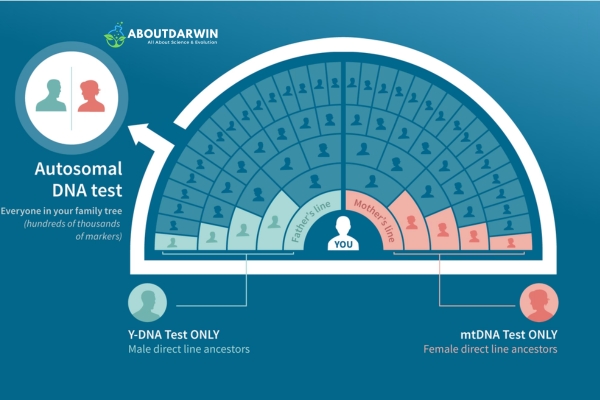
Understanding the distinction between autosomes and sex chromosomes is crucial for interpreting your DNA results. While autosomes recombine freely during reproduction, mixing genetic material from both parents, the Y chromosome passes almost unchanged from father to son, and mitochondrial DNA transmits exclusively from mother to all children. This makes autosomal DNA uniquely powerful for genealogy because it traces lineages from both sides of your family simultaneously, unlike Y-DNA which only follows the direct paternal line or mtDNA which only follows the direct maternal line.
The concept of centimorgans (cM) is essential for understanding autosomal DNA test results. A centimorgan represents a unit of genetic linkage, measuring the probability that a segment of DNA will recombine during meiosis. When testing companies report that you share 1,700 centimorgans with a match, they are indicating the amount of identical DNA you inherited from common ancestors. Higher centimorgan values indicate closer relationships, with parent-child pairs sharing approximately 3,400 cM and distant fifth cousins sharing only 15-30 cM.
Random recombination during gamete formation means siblings inherit different mixtures of parental DNA, typically sharing about 50% of their autosomal DNA but receiving unique combinations from grandparents. This randomness explains why two siblings can receive different ethnicity estimates and why testing multiple family members often reveals connections that a single test might miss. The 0.1% of DNA that varies between humans contains the genetic signatures that autosomal DNA tests use to identify relationships and trace ethnic origins across multiple generations.
Also Read: Can DNA Tests Put Your Personal Information at Risk?
Autosomal DNA testing follows a sophisticated laboratory process that transforms your biological sample into a comprehensive genetic profile. The journey begins when you collect either a saliva sample or a cheek swab, both of which contain thousands of cells with intact DNA. Most testing companies now prefer saliva collection because it yields higher DNA concentrations and reduces the risk of contamination, though cheek swabs remain popular for elderly testers or young children who struggle with saliva production.
Once your sample arrives at the laboratory, technicians extract DNA from the cells and prepare it for analysis using a microarray chip. This chip contains hundreds of thousands of microscopic beads or probes, each designed to detect specific genetic variants at predetermined positions across your autosomes. The testing process examines approximately 700,000 to 1.2 million SNP positions, providing sufficient resolution to identify close relatives while keeping costs affordable for consumers.
The measurement of shared DNA in centimorgans forms the foundation of relationship prediction algorithms. When comparing your DNA against another tester, the software looks for continuous segments of identical DNA that exceed specific length thresholds, typically 7 centimorgans or larger. These segments are termed Identical By Descent (IBD), meaning they were inherited from a shared ancestor rather than coincidentally matching due to population-level similarities. Testing companies sum the total centimorgans shared across all matching segments to estimate relationship probability.
Reference panels play a critical role in ethnicity estimation. Testing companies compare your DNA patterns against curated groups of individuals with documented ancestry from specific geographic regions. AncestryDNA currently uses over 70 reference populations, while 23andMe employs more than 200 regional groups. These panels undergo continuous refinement as more testers with verified ancestry join the databases, leading to periodic updates of ethnicity estimates that sometimes shift percentages as algorithms improve.
The entire testing process typically takes four to eight weeks from sample arrival to results availability. During this period, the laboratory performs quality control checks at multiple stages to ensure accurate genotyping. Raw data files generated from autosomal DNA tests contain your genetic information at each tested SNP position, which advanced users can download for third-party analysis through tools like GEDmatch, DNA Painter, or Promethease for health-related interpretations.
While autosomal DNA testing focuses primarily on the 22 non-sex chromosome pairs, the X chromosome deserves special attention due to its unique inheritance patterns. The X chromosome is one of the two sex chromosomes, with females carrying two copies (XX) and males carrying one copy (XY). Unlike the autosomes that recombine between both parents for all children, X chromosome inheritance follows distinct rules that can provide valuable genealogical clues when properly understood.
Fathers pass their entire X chromosome to every daughter but cannot pass any X chromosome DNA to their sons, since sons receive the Y chromosome instead. Mothers, however, pass X chromosome DNA to all children, though the transmission involves random recombination similar to autosomes. This means a male tester’s X chromosome DNA comes exclusively from his maternal line, passing from his mother, to her mother, to her mother, tracing a direct matrilineal path that complements mitochondrial DNA testing.
For female testers, the X chromosome analysis becomes more complex because they inherit one X from each parent. The paternal X comes intact from their father, who inherited it from his mother. The maternal X recombines, mixing DNA from both of her maternal grandparents. This asymmetrical inheritance pattern makes the X chromosome particularly useful for identifying matches on specific family lines, as shared X-DNA with another tester automatically eliminates certain branches of your family tree from consideration.
Autosomal DNA tests have revolutionized genealogical research by providing concrete biological evidence to complement traditional paper records. The applications extend far beyond simple curiosity about ethnicity, offering practical tools for solving family mysteries, confirming research hypotheses, and connecting with living relatives who share segments of your genetic inheritance. Understanding these applications helps you maximize the value of your DNA testing investment and approach your results with realistic expectations.
The question of whether DNA tests can build your family tree has a nuanced answer. While DNA alone cannot construct a complete family tree without documentary evidence, it provides powerful clues that can break through research barriers. When you receive your autosomal DNA results, you may wonder: can DNA tests build your family tree? The answer depends on how you use the matches and tools provided. DNA testing works best when integrated with traditional genealogical methods, using genetic matches to confirm documentary research or guide new research directions.
Autosomal DNA tests enable you to trace family lineage across approximately five to seven generations with reliable accuracy, covering ancestors born roughly 150 to 250 years ago. This timeframe corresponds to the period when most genealogical records exist, making autosomal testing particularly valuable for connecting with documented ancestors and their descendants. The tests analyze shared DNA segments to identify genetic connections with relatives who have also tested, revealing branches of your family tree that paper records might never document.
The process of tracing ancestry through autosomal DNA involves comparing your genetic profile against massive databases containing millions of tested individuals. AncestryDNA alone maintains over 27 million profiles, while the combined databases of all major testing companies exceed 50 million testers. When the algorithms detect matching DNA segments above specific thresholds, they predict the most likely relationship between you and your genetic match, ranging from parent-child connections to distant fifth or sixth cousins.
Ethnic ancestry insights provide another dimension of lineage tracing, offering approximate percentages of heritage from various global regions. These ethnicity estimates derive from comparing your DNA patterns against reference populations representing distinct geographic and cultural groups. While the continent-level estimates typically achieve 90% or higher accuracy, regional breakdowns within continents vary in precision depending on the genetic distinctiveness of populations and the number of reference samples available for comparison.
For genealogists working with traditional records, autosomal DNA serves as a verification tool that can confirm or challenge documentary evidence. When paper trails suggest a relationship, DNA testing provides independent biological confirmation. Conversely, when DNA results contradict documented relationships, they signal the need for additional research to resolve discrepancies, potentially revealing adoption, name changes, or other family secrets hidden in the historical record.
The identification of genetic relatives represents one of the most exciting applications of autosomal DNA testing, connecting you with cousins who share common ancestors across multiple generations. Testing companies calculate the amount of shared DNA in centimorgans to predict relationships, with typical ranges helping distinguish between close family members and more distant connections. Understanding exactly how much DNA siblings share and other family relationships can help you interpret your match results more accurately.
Parent-child relationships show approximately 3,400 to 3,700 shared centimorgans across 22 to 25 matching DNA segments, providing unambiguous identification of immediate family connections. Full siblings typically share 2,300 to 3,000 centimorgans, while half-siblings share roughly 1,300 to 2,300 centimorgans. These ranges occasionally overlap, requiring additional analysis or parental testing to distinguish between full and half-sibling relationships with certainty.
More distant relationships follow predictable patterns that help genealogists identify the generational distance to common ancestors. Second cousins, who share great-grandparents, typically share 150 to 400 centimorgans of DNA. Third cousins, sharing great-great-grandparents, usually match with 30 to 200 centimorgans. Beyond third cousins, the amount of shared DNA decreases dramatically, with fourth cousins sharing 0 to 100 centimorgans and fifth cousins often sharing no detectable DNA at all due to the random recombination process.
The databases continue growing exponentially, with AncestryDNA alone adding millions of new testers annually. This expansion increases the probability of finding meaningful matches, particularly for individuals with ancestry from well-represented populations. Testing multiple family members significantly enhances match discovery, as siblings inherit different DNA segments from shared ancestors. A sibling might match a distant cousin that you do not, simply due to the randomness of genetic inheritance.
Ethnic ancestry insights from autosomal DNA tests provide fascinating windows into your heritage, revealing the geographic origins of your ancestors through statistical analysis of genetic patterns. Testing companies compare your DNA against reference panels containing thousands of individuals with documented ancestry from specific regions, identifying similarities that indicate ancestral connections to those populations.
The ethnicity estimates typically display results as percentages across geographic categories ranging from continental levels to specific countries or subregions. AncestryDNA currently provides estimates for over 80 regions worldwide, while 23andMe offers ancestry composition breakdowns across more than 150 populations. These estimates update periodically as reference panels expand and algorithms improve, sometimes resulting in significant changes to reported percentages as the science advances.
Reference populations form the foundation of ethnicity estimation, representing groups of individuals with deep ancestry in specific geographic areas. Companies recruit participants whose families have lived in the same region for multiple generations, creating genetic profiles that serve as benchmarks for comparison. The accuracy of ethnicity estimates depends heavily on the size and diversity of these reference panels, with European populations typically represented by larger sample sizes than African, Asian, or Indigenous American groups.
Genetic communities represent a more recent development in ethnicity analysis, identifying groups of testers who share DNA and have ancestors from the same specific regions or migration groups. Unlike broad ethnicity estimates, genetic communities can pinpoint ancestry to particular areas within countries or even specific immigrant groups, such as Acadians, Pennsylvania Dutch, or Irish from County Cork. These communities update dynamically as more testers join the databases, potentially revealing connections to ancestral homelands with surprising specificity.
While ethnicity estimates capture the imagination of many testers, genealogists emphasize that DNA matching with relatives provides more concrete value for family tree building. Ethnicity percentages offer interesting insights into heritage but come with confidence ranges and potential errors, particularly for mixed ancestry or admixed populations. The most reliable results occur at the continental level, with progressively greater uncertainty as estimates drill down to regional or country-specific percentages.
Also Read: Debunking DNA Myths and Facts About DNA and Genealogy
Understanding the accuracy and limitations of autosomal DNA tests helps set realistic expectations and interpret results appropriately for your genealogical goals. These tests achieve remarkable precision for close relationships while becoming increasingly probabilistic as the generational distance to common ancestors grows. Knowledge of these boundaries prevents misinterpretation of results and guides effective testing strategies.
Close familial relationships demonstrate extremely high accuracy with autosomal DNA testing. Parent-child relationships show 99.99% accuracy, with virtually no possibility of false positives due to the large amount of shared DNA. Full sibling identification achieves similar accuracy when both parents are available for comparison, though the ranges for half-siblings and full siblings sometimes overlap, creating rare ambiguous cases that require additional analysis.
Second cousin relationships maintain strong reliability with approximately 95% accuracy when supported by appropriate centimorgan sharing. Second cousins typically share between 150 and 400 centimorgans, and matches falling within this range with proper segment length distribution almost certainly represent genuine second cousin connections. The accuracy remains high for third cousins as well, though the reduced DNA sharing increases the probability of missing matches due to the random inheritance of DNA segments.
Beyond third cousins, accuracy decreases significantly due to the small amounts of DNA shared between distant relatives. Fourth cousins share great-great-great-grandparents and typically match with 0 to 100 centimorgans of DNA, with many fourth cousins sharing no detectable DNA at all. False positives also become more common at this distance, as coincidentally matching DNA segments from population-level similarities can mimic distant cousin relationships. Testing companies address this by requiring longer minimum segment lengths for distant matches.
The limitations of autosomal DNA testing extend beyond relationship prediction to include the fundamental constraint of genetic recombination. Each generation, DNA shuffles randomly, meaning ancestors contribute unequal amounts of DNA to their descendants. By five or six generations back, ancestors may have passed down no detectable DNA to specific descendants, creating genealogical brick walls that DNA cannot solve despite documented paper trails proving the relationship existed. This explains why autosomal tests cannot reliably identify matches beyond approximately five to seven generations.
Ethnicity estimates carry their own accuracy limitations tied to reference panel composition and population genetics. Continental-level estimates achieve roughly 90% accuracy, but regional and country-specific estimates vary widely in precision depending on the genetic distinctiveness of populations. Admixed ancestry from multiple populations complicates estimates further, sometimes producing percentage allocations that shift significantly between algorithm updates. Users should treat ethnicity estimates as approximate guides rather than definitive statements of heritage.
Health-related findings from autosomal DNA tests require particular caution. Direct-to-consumer health reports screen for genetic variants associated with disease risk, but these represent probabilities rather than certainties. A positive result for a pathogenic variant does not guarantee disease development, while a negative result does not eliminate risk entirely. Clinical confirmation through medical-grade testing remains essential before making health decisions based on consumer DNA test results.
Also Read: 23andMe vs FamilyTreeDNA: Comprehensive Comparison
Selecting the right autosomal DNA testing provider requires evaluating multiple factors including database size, available features, privacy policies, and pricing. The testing landscape in 2026 includes several major providers, each offering distinct advantages depending on your specific genealogical or health-related goals. Understanding these differences helps you make an informed decision that maximizes your testing investment.
When deciding between the two largest providers, read our detailed guide comparing 23andMe and AncestryDNA to understand which test better suits your needs. AncestryDNA maintains the largest database with over 27 million users, making it the optimal choice for cousin matching and genealogy research. Their integrated family tree platform and ThruLines feature help visualize how DNA matches connect to your documented ancestry. Check out our comprehensive AncestryDNA review for detailed insights into their testing process and features.
23andMe offers the most detailed health and trait reports among major testing companies, providing FDA-cleared genetic risk assessments for conditions like late-onset Alzheimer’s and Parkinson’s disease. Their ancestry composition includes detailed breakdowns across over 200 populations and a chromosome painting feature that visualizes ancestry segments. The Health and Ancestry package costs more than ancestry-only testing but delivers comprehensive genetic health screening unavailable elsewhere.
MyHeritage DNA provides strong value for international testers, particularly those with European or Jewish ancestry. Their database exceeds 7 million users and includes robust tools for family tree building and record matching. MyHeritage offers chromosome browser functionality and clustering tools that help organize matches by ancestral lines. The company also permits raw DNA uploads from other testing companies for a small fee, allowing access to their matching database without retesting.
FamilyTreeDNA offers the most comprehensive suite of genetic genealogy tools, including advanced chromosome browsers, matrix tools for comparing multiple matches, and the ability to view matching segment details. They also provide mtDNA and Y-DNA testing alongside autosomal tests, making them ideal for serious genealogists pursuing deep ancestry research. Their Family Finder test includes ancientOrigins analysis showing genetic contributions from ancient European populations.
Pricing for autosomal DNA tests in 2026 ranges from approximately $49 to $199 depending on the provider and test type. AncestryDNA and MyHeritage typically charge $99 for ancestry testing, with frequent sales reducing prices to $49 or $59 during holidays. 23andMe offers an Ancestry-only kit for $99 and a Health and Ancestry kit for $199. FamilyTreeDNA’s Family Finder costs $79, making it the most affordable option among the major providers.
The following comparison highlights key differences between major autosomal DNA testing providers to help you select the best option for your needs:
AncestryDNA: Database size exceeds 27 million users, making it ideal for finding cousins. Best-in-class family tree integration with ThruLines and SideView technologies. Price typically $99, with frequent sales at $49-$59. No chromosome browser available. Focus on genealogy rather than health reports.
23andMe: Offers the most comprehensive health and trait reports with FDA-cleared genetic risk tests. Ancestry composition covers 200+ populations with chromosome painting. Database size approximately 14 million users. Ancestry-only kit costs $99, Health and Ancestry $199. No integrated family tree platform.
MyHeritage DNA: Strong European database with 7+ million users. Excellent family tree tools and historical record integration. Accepts raw DNA uploads from other companies. Advanced clustering tools for match organization. Price typically $79, with frequent promotions. Chromosome browser included.
FamilyTreeDNA: Most advanced genetic genealogy tools including chromosome browser and matrix features. Offers all three test types: autosomal, Y-DNA, and mtDNA. Smaller database at approximately 2 million users but serious genealogist community. Price $79 for Family Finder. AncientOrigins analysis included.
Living DNA: Focus on detailed British and Irish ancestry with 21 subregional breakdowns. Smaller database limits cousin matching. Good for heritage exploration rather than genealogy research. Price approximately $99. Includes mtDNA and Y-DNA haplogroup information at subclade level.
The landscape of autosomal DNA testing continues evolving rapidly, with 2026 marking significant advances in technology, database growth, and integration with healthcare systems. These developments promise to expand the utility of genetic testing while raising important questions about privacy, data security, and the responsible use of genetic information. Understanding these trends helps you anticipate how DNA testing capabilities might change in the coming years.
Artificial intelligence and machine learning algorithms now enhance relationship prediction accuracy and ethnicity estimation. Testing companies increasingly employ neural networks to analyze complex DNA patterns, improving the ability to distinguish between close relatives and reducing false positive matches. These algorithms also help identify endogamous populations and adjust relationship predictions accordingly, addressing long-standing challenges for testers with ancestry from culturally isolated communities.
Healthcare integration represents perhaps the most significant trend shaping the future of autosomal DNA testing. Major providers now partner with pharmaceutical companies and research institutions to study genetic contributions to disease. 23andMe has developed several FDA-cleared genetic health risk reports and continues expanding their health screening capabilities. AncestryHealth, though discontinued as a standalone product, signaled the industry’s direction toward combining ancestry exploration with preventive health insights.
The expansion of DNA databases continues accelerating, with combined global testing databases approaching 100 million profiles. This growth exponentially increases the probability of finding meaningful genealogical matches, particularly for individuals from underrepresented populations. As databases diversify, ethnicity estimates improve, and the ability to trace ancestry to specific regions becomes more precise for testers worldwide.
Raw DNA data portability has improved significantly, with most major providers now permitting free downloads of genetic data. Third-party analysis tools continue expanding, offering specialized insights ranging from health interpretation to advanced genealogy matching through platforms like GEDmatch and DNA Painter. These tools enable sophisticated analysis impossible within standard testing company interfaces, though users must navigate privacy considerations when uploading data to third-party services.
Ethical and regulatory frameworks surrounding genetic testing remain works in progress. Genetic Information Nondiscrimination Act (GINA) protections in the United States prevent health insurance and employment discrimination based on genetic data, but gaps exist in life insurance and other contexts. Privacy concerns about law enforcement access to genetic databases have prompted policy changes at several testing companies, with some providers now requiring explicit opt-in for law enforcement matching.
Whole genome sequencing costs continue declining, with companies like Nebula Genomics offering 30x whole genome sequencing for under $300. While autosomal SNP chip testing remains the standard for genealogy due to cost and database size advantages, whole genome sequencing provides complete genetic information that becomes increasingly valuable as analysis tools improve. This technology may eventually replace SNP chip testing for serious genealogists and health-focused testers.
Yes, 23andMe is an autosomal DNA test that analyzes your 22 pairs of autosomal chromosomes inherited from both parents. The test examines approximately 700,000 genetic markers to provide ancestry composition breakdowns across over 200 populations and, with the Health and Ancestry kit, delivers FDA-cleared genetic health risk reports. 23andMe also includes mitochondrial DNA and Y-DNA haplogroup information, but the primary ancestry and health insights come from autosomal DNA analysis. Results typically include ethnicity estimates, DNA relative matching, and trait predictions based on your genetic profile.
The best autosomal DNA test depends on your specific goals. For genealogy and finding relatives, AncestryDNA is the top choice with over 27 million users in their database and excellent family tree integration tools. For health insights and detailed trait analysis, 23andMe offers the most comprehensive reports including FDA-cleared genetic risk assessments. MyHeritage DNA provides strong value for European ancestry and accepts raw DNA uploads from other companies. FamilyTreeDNA offers the best genetic genealogy tools including chromosome browsers and matrix features for serious researchers. Consider database size, available features, and whether you want health reports when making your selection.
Autosomal DNA comes from the 22 pairs of non-sex chromosomes inherited from both parents, while Y-DNA is passed exclusively from father to son along the direct paternal line. Autosomal DNA tests trace ancestry from all family lines simultaneously and can identify relatives on both maternal and paternal sides up to approximately five to seven generations. Y-DNA testing follows only the direct father-to-son lineage and can trace paternal ancestry thousands of years into the past through haplogroup identification. Autosomal DNA is best for finding recent cousins and exploring overall ethnicity, while Y-DNA is ideal for deep paternal ancestry research, surname studies, and connecting with very distant paternal relatives who share the same direct male line.
Autosomal DNA testing analyzes the 22 pairs of chromosomes inherited from both parents to identify relatives across all family lines and provide ethnicity estimates. Mitochondrial DNA (mtDNA) testing examines the DNA passed exclusively from mother to all children, tracing only the direct maternal line deep into ancient history. Autosomal tests connect you with relatives up to five to seven generations back and show contributions from all ancestors, while mtDNA tests reveal deep maternal ancestry through haplogroups but provide limited information about recent relatives. Autosomal DNA is the standard choice for genealogy research and cousin matching, while mtDNA testing serves specific purposes like confirming maternal lineage, adoption research focusing on the birth mother, or exploring deep maternal ancestry migration patterns thousands of years ago.
Autosomal DNA test pricing in 2026 ranges from approximately $49 to $199 depending on the provider and test type. AncestryDNA and MyHeritage typically charge $99 for standard ancestry testing, with frequent promotional sales reducing prices to $49 or $59 during holidays and special events. 23andMe offers an Ancestry-only kit for $99 and a comprehensive Health and Ancestry kit for $199 that includes FDA-cleared genetic health risk reports. FamilyTreeDNA’s Family Finder autosomal test costs $79, making it one of the most affordable options. Living DNA charges approximately $99. Additional costs may include shipping fees, optional subscription services for enhanced features, or fees for uploading raw DNA data to certain third-party platforms for advanced analysis.
Autosomal DNA tests reliably trace ancestry approximately five to seven generations back, covering ancestors born roughly 150 to 250 years ago or around the early 1800s to mid-1700s. This timeframe corresponds to the period when most genealogical records exist and when most testers can expect to find documented matches. The limitation exists because DNA recombines randomly each generation, meaning ancestors contribute decreasing amounts of DNA to their descendants. By five or six generations back, some ancestors have passed down no detectable DNA to specific descendants despite having documented descendants in the family tree. Beyond this timeframe, Y-DNA and mitochondrial DNA testing become more useful for tracing direct paternal and maternal lines thousands of years into the past through haplogroup analysis.
Autosomal DNA testing achieves over 99.99% accuracy for identifying close familial relationships like parent-child connections and full siblings when both parents are available for comparison. Second cousin relationships demonstrate approximately 95% accuracy with reliable identification when supported by appropriate centimorgan sharing ranges. Third cousin accuracy remains reasonably high, though the reduced DNA sharing increases the chance of missing matches entirely. Accuracy decreases significantly for fourth cousins and beyond due to small shared DNA amounts and increased probability of false positives from coincidentally matching segments. Ethnicity estimates show approximately 90% accuracy at the continental level, but regional and country-specific percentages vary widely in precision depending on reference panel composition and population genetics.
A 2% DNA ethnicity estimate typically corresponds to ancestry from a great-great-great-grandparent or a sixth-generation ancestor, meaning someone who lived approximately 150 to 200 years ago. This percentage represents roughly one thirty-second of your ancestry, tracing back to one specific ancestor among 32 fifth-great-grandparents. However, ethnicity percentages should be interpreted cautiously as statistical estimates with confidence ranges rather than precise measurements. Small percentages below 5% sometimes reflect genetic noise or distant population-level similarities rather than specific recent ancestry. Ethnicity estimates update periodically as reference panels improve, and small percentages may shift significantly between algorithm updates. Documentary genealogy research combined with DNA matching provides more concrete evidence of ancestry than ethnicity percentages alone.
Autosomal DNA comes from both your mother and your father equally. You inherit one copy of each of the 22 autosomal chromosome pairs from each parent, meaning 50% of your autosomal DNA derives from your mother and 50% from your father. This equal inheritance from both parents distinguishes autosomal DNA from Y-DNA, which comes exclusively from the father, and mitochondrial DNA, which comes exclusively from the mother. The random recombination of autosomal DNA during reproduction means siblings inherit different mixtures of parental DNA, with each child receiving approximately 25% of their autosomal DNA from each grandparent on average, though actual percentages vary due to the random shuffling process. This dual-parent inheritance makes autosomal DNA uniquely valuable for genealogy, as it traces lineages from both maternal and paternal sides simultaneously.
Also Read: How to Convince a Relative to Take a DNA Test?
Autosomal DNA tests represent the most powerful and accessible tool available for exploring your genetic heritage in 2026. By analyzing the 22 pairs of autosomes inherited from both parents, these tests connect you with relatives across all family lines, reveal ethnic ancestry across multiple generations, and provide insights that complement traditional genealogical research. Whether you seek to break through brick walls in your family tree, confirm documented relationships, or simply understand your heritage more deeply, autosomal DNA testing offers concrete biological evidence to support your journey.
The accuracy of autosomal DNA testing for close relationships exceeds 99%, making it invaluable for confirming parent-child connections, identifying siblings, and finding cousins within five to seven generations. While limitations exist for more distant relationships and ethnicity estimates require careful interpretation, the databases continue growing exponentially, increasing match probabilities daily. With over 50 million tested individuals across major databases, the chances of finding meaningful genetic connections have never been higher.
Choosing the right testing provider depends on your specific goals, whether finding relatives through AncestryDNA’s massive database, exploring health insights with 23andMe, or utilizing advanced tools at FamilyTreeDNA. Pricing ranges from $49 to $199, making autosomal DNA testing accessible for most budgets. As technology advances and databases expand, the applications of autosomal DNA testing will only grow, offering deeper insights into our shared human heritage and the genetic connections that bind us together across generations.
Embracing autosomal DNA testing opens doors to discovering your biological story, connecting with relatives you never knew existed, and understanding the complex genetic inheritance that makes you uniquely who you are. The autosomal DNA tests available today provide an unprecedented window into your ancestry, one that becomes clearer and more comprehensive with each passing year as the science and databases continue their rapid advancement.