Physical Address
304 North Cardinal St.
Dorchester Center, MA 02124
Physical Address
304 North Cardinal St.
Dorchester Center, MA 02124

No, siblings do not have the same DNA. While full siblings share approximately 50% of their DNA on average, they inherit different combinations of genetic material from their parents. This means each brother or sister receives a unique genetic blueprint that makes them distinct individuals, even when raised in the same family.
Understanding why siblings have different DNA requires exploring how genetic inheritance works. When parents create sperm and egg cells through meiosis, their chromosomes undergo recombination and shuffle genetic segments randomly. Each child receives roughly half their DNA from their mother and half from their father, but the specific segments passed down vary significantly between siblings.
The science behind sibling DNA sharing reveals fascinating insights about family connections, genetic diversity, and what makes each person unique. From identical twins to half-siblings, the patterns of DNA inheritance shape our physical traits, health risks, and even our ancestry results.
The genetic connections between siblings provide insights into family relationships and ancestry. When examining how much DNA we share with family members, siblings represent one of the most interesting cases because of the significant yet variable genetic overlap.
Siblings typically share a substantial portion of their DNA due to their shared parents, but the exact percentage can vary. This variability is influenced by several factors, including whether siblings are full or half-siblings and the genetic recombination process during reproduction. Understanding these measurements helps explain why DNA testing companies sometimes report slightly different percentages.
Full siblings generally share about 50% of their DNA. This figure represents the average amount inherited from both parents, but it can range from approximately 37.5% to 65% due to genetic recombination, where chromosomes exchange genetic material during the formation of gametes (sperm and egg cells).
Genetic genealogists measure DNA sharing using a unit called centimorgans (cM). Full siblings typically share between 2,600 and 3,300 centimorgans of autosomal DNA. This measurement provides a more precise way to quantify genetic relationships than percentage alone. You can learn more about centimorgans shared between siblings in our detailed guide.
Half-siblings share about 25% of their DNA, as they only inherit genetic material from one common parent. They receive half of their DNA from the shared parent and half from their respective other parents. In centimorgans, half-siblings typically share between 1,300 and 2,300 cM.
The genetic relationship between half-siblings is similar to that between double first cousins who share 25% DNA. Both relationships involve one quarter of the genome being identical by descent from shared ancestors.
The reason full siblings do not share exactly 100% of their DNA is due to genetic recombination. During reproduction, each parent contributes half of their genetic material, but the specific DNA segments passed on can differ between siblings. This process results in unique combinations of genes for each sibling, leading to variations even among full siblings.
The 23 pairs of chromosomes in each parent’s cells undergo crossing over during meiosis. Homologous chromosomes exchange segments, creating recombinant chromosomes that carry a mix of maternal and paternal genetic material. When these chromosomes segregate into gametes, each egg or sperm receives a random assortment, ensuring that siblings inherit different combinations of DNA segments from their parents.
DNA testing companies may report different percentages of shared DNA based on their methodologies. For example, some might show that full siblings share 38% instead of 50%, depending on whether they count fully identical regions of DNA once or twice. Testing platforms like 23andMe and AncestryDNA analyze different numbers of SNPs (Single Nucleotide Polymorphisms) and use varying algorithms to calculate genetic similarity.
Despite these discrepancies, the biological reality remains that full siblings typically share around 50% of their genetic makeup. This half-identical sharing pattern explains why siblings look similar yet distinct, and why they may inherit different predispositions to certain health conditions.
A common source of confusion about sibling DNA involves understanding the difference between overall human genetic similarity and sibling-specific sharing. You may have heard that all humans are 99.9% genetically identical. So why do we say siblings only share 50% of their DNA?
The answer lies in what we are measuring. The 99.9% figure refers to the entire human genome, which contains approximately 3 billion base pairs of DNA. These base pairs (adenine, thymine, cytosine, and guanine) form the building blocks of our genetic code. Nearly all humans share 99.9% of these base pairs in the same order because we are the same species with the same basic biological functions.
However, the 50% sibling figure refers to the portion of DNA that two people inherited from the same recent ancestors, their parents. While all humans share most of their genome, siblings specifically share DNA segments that came from their mother and father. These identical by descent (IBD) segments are what make family relationships detectable through genetic testing.
The 0.1% of DNA that varies between all humans contains approximately 3 million base pair differences. This genetic variation creates our unique traits, appearances, and ancestral markers. When siblings share 50% of their DNA, they share about half of these variable positions, meaning they have inherited many of the same genetic variants from their parents.
Digging into your DNA can reveal fascinating insights about your ethnicity, even though it won’t exactly match that of your siblings. Here’s why:
So remember, while you share a family tree with your sibling, the branches may look quite different!
Also Read: What Is A Fourth Cousin? How Are They Connected To You?
Discovering your DNA matches can be an exhilarating experience, connecting you with long-lost relatives and tracing your family lineage. Advances in genetic science have made it easier and more accurate to find these connections.
By comparing DNA, individuals can uncover their genetic ancestry, exploring both paternal and maternal lineages. This process involves analyzing specific regions of the genome to identify common ancestors and potentially distant cousins. Such connections not only enrich your understanding of your heritage but also enhance your sense of belonging within a broader familial context.
Moreover, this exploration often leads to significant discoveries in family tree tracing, revealing forgotten branches of one’s ancestry. Genetic testing services utilize various methods, such as autosomal DNA tests, mitochondrial DNA (mtDNA) tests, and Y-chromosome (Y-DNA) tests, to facilitate these connections. Autosomal tests can yield numerous matches across both genders, providing estimates of relatedness that can range from close family ties to distant cousins.
When analyzing DNA matches, genetic genealogists look at the amount of shared DNA measured in centimorgans. Full siblings will show up as sharing approximately 2,600-3,300 cM, while half-siblings share roughly 1,300-2,300 cM. These measurements help distinguish between different relationship types and confirm biological connections.
The world of playing cards serves as an excellent metaphor for understanding genetics and inheritance. Imagine that each parent’s genome is represented by a complete deck of 52 playing cards. Each card represents a chromosome or genetic segment, with half the deck representing DNA inherited from their own mother (the maternal grandmother or grandfather) and half from their own father.
Before having children, each parent’s deck undergoes a thorough shuffling process. This shuffling represents the genetic recombination that happens during meiosis. The cards from both grandparents get mixed together, creating new combinations that differ from what the parent originally inherited.
When parents have a child, it resembles dealing a hand of 26 cards from each parent’s shuffled deck to create the child’s complete deck of 52 cards. The first child might receive the Ace of Spades, King of Hearts, and Queen of Diamonds from the father, while the second child receives the Two of Spades, Jack of Hearts, and Ten of Diamonds instead. Both children receive 26 cards from each parent, but the specific cards differ.
This process explains why full siblings share approximately 50% of their DNA on average. Just as two players dealt hands from the same shuffled decks will likely have some cards in common but many different ones, siblings inherit overlapping but distinct genetic material from their parents.
Half-siblings, in this analogy, receive 26 cards from only one shared parent’s deck. They receive their other 26 cards from a completely different deck (the other parent). This explains why half-siblings share only 25% of their DNA, inheriting roughly half the cards from the shared parent’s shuffled deck.
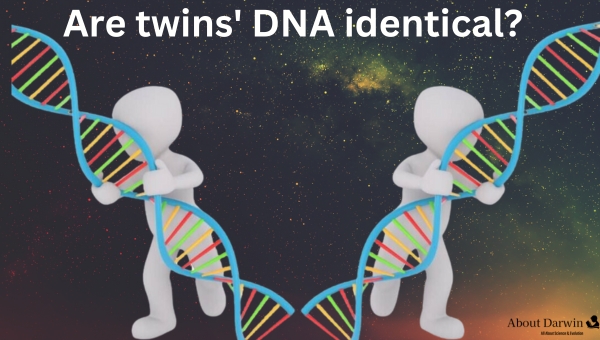
Identical twins represent a special case in this analogy. Instead of dealing two separate hands, identical twins occur when one dealt hand is magically duplicated, resulting in two players with exactly the same 52 cards. This is why monozygotic twins share nearly 100% of their DNA.
The playing cards analogy helps visualize why the question “do siblings have the same DNA?” can be answered with nuance. While siblings inherit from the same parental card decks, they receive different combinations in their hands, creating genetic diversity even within the same family.
Twins can be classified into two primary types: identical (monozygotic) and fraternal (dizygotic). Understanding the difference between these twin types illuminates important concepts about genetic inheritance.
While identical twins originate from a single fertilized egg that splits into two embryos, leading to nearly identical genetic material, they are not completely genetically identical by the time they are born. This is due to various factors, including mutations that can occur during early development. The genetic similarities and differences between identical twins reveals fascinating insights into human genetics.
| Aspect | Identical Twins (Monozygotic) | Fraternal Twins (Dizygotic) |
|---|---|---|
| Definition | Result from the division of a single fertilized egg | Develop from two separate eggs fertilized by different sperm |
| Genetic Similarity | Nearly identical DNA; share about 95-100% of their genetic material | Share approximately 50% of their genetic material |
| Formation | Occurs within the first week after fertilization | Occurs when two eggs are fertilized during the same cycle |
| Sex | Can be the same sex only | Can be the same sex or different sexes |
| Genetic Differences | Minor mutations (about 5-10 differences on average) can occur during development | More variability in traits and characteristics due to different genetic backgrounds |
| Appearance and Traits | Often very similar in appearance and personality | May look alike or be quite different, reflecting their unique genetic combinations |
While identical twins originate from a single zygote and share a high degree of genetic similarity, they are not genetically identical due to mutations that occur during development. Recent research suggests that identical twins may have an average of 5 to 10 genetic differences that arise after the embryo splits. These changes can affect physical traits and even disease susceptibility.
Fraternal twins arise from separate eggs and share only half of their genes, resulting in greater variability in traits and characteristics. They are essentially regular siblings who happened to be conceived at the same time, sharing the same 50% DNA overlap as any full siblings.
The genetic connections between siblings can provide fascinating insights into family traits and health. While many people may assume that siblings are nearly identical in their genetic makeup, the reality is more nuanced. The percentage of DNA shared between siblings plays a significant role in shaping who we are, influencing everything from physical characteristics to potential health risks.
Let’s explore this intriguing aspect of genetics further, including how DNA testing companies measure these relationships and what the numbers actually mean.
The 50% genetic overlap underscores family connections while highlighting individuality shaped by both genetics and life experiences. DNA testing platforms like 23andMe and AncestryDNA can detect these relationships by comparing thousands of genetic markers across the autosomal chromosomes.
Exploring how siblings can have different ethnicity percentages involves a basic grasp of DNA and genetic inheritance. While siblings share a significant amount of genetic material, the specific combinations of DNA they inherit from their parents can lead to variations in ethnicity estimates.
Your DNA is the blueprint of your biological identity, containing information about your ancestry and ethnic background. This information is often revealed through Single Nucleotide Polymorphisms (SNPs), which are variations at single positions in the DNA sequence among individuals.
SNPs serve as markers that can indicate ancestral origins, helping to create a genetic map that identifies ethnic groups with similar genetic traits. DNA testing companies analyze hundreds of thousands of SNPs across your genome to estimate your ancestral composition.
SNPs are crucial for understanding genetic diversity and individual uniqueness, even among siblings. Here are key aspects of SNPs:
The diversity highlighted by SNP mutations emphasizes the rich tapestry of human genetics. With approximately 3 billion base pairs in the human genome, even a small percentage of variation creates millions of unique genetic combinations.
DNA testing is a sophisticated process that unveils your genetic identity. It begins with the extraction of DNA from cells, followed by analysis to identify genetic markers. These markers act as indicators for ancestry analysis or health assessments.
This scientific exploration fosters a sense of unity by illustrating our shared human heritage through genetics while revealing the unique combination that makes each individual distinct.
Despite sharing the same parents, siblings often receive different ethnicity estimates due to several factors:
For example, one sibling might inherit more DNA associated with a particular ethnic group than another sibling, leading to differing results in their ancestry tests. These variations explain why two siblings with identical parents may report varying ethnic backgrounds even when using the same testing service.
Exploring the intricate mechanisms of inheritance and genetic variation reveals significant roles played by meiosis and chromosomal crossover. Understanding these biological processes helps explain why siblings have different DNA despite sharing the same parents.
Meiosis is a specialized form of cell division that produces four daughter cells, each containing half the number of chromosomes found in the original parent cell. This process is essential for sexual reproduction, ensuring that offspring inherit genetic material from both parents. Through meiosis, parents create gametes (sperm and egg cells) that contain a random assortment of their genetic material.
Chromosomal crossover occurs during meiosis when segments of DNA are exchanged between homologous chromosomes. This exchange is crucial for generating genetic diversity, a fundamental aspect of evolution and adaptation. The process ensures that each gamete carries a unique combination of genetic material.
Meiosis is a complex series of events that results in each sibling having a distinct genetic profile. On average, siblings share about 50% of their genetic material, but this can vary due to the random nature of inheritance. For instance, while identical twins share 100% of their DNA, fraternal siblings can share anywhere from 37% to 65% of their genetic variants depending on how genes are recombined during meiosis.
The stages of meiosis, particularly genetic recombination and the phenomenon of crossing over, are vital for creating this diversity. During these stages, chromosomes align at their centromeres and exchange segments of DNA, effectively reshuffling the genetic information for each individual. The centromeres play an essential role by holding sister chromatids together during this process.
The significance of meiosis extends beyond mere growth or repair; it is a beautifully intricate process that ensures each individual is genetically unique. Without this genetic shuffling, every child would be an exact clone of their parents, and genetic diversity would be impossible.
To further comprehend meiosis, it is essential to examine chromosomal crossover and its impact on genetic variation. This process contributes significantly to the uniqueness of an individual’s genetic makeup.
Chromosomal crossover provides insights into our individuality and familial connections. These intricate processes are fundamental to the uniqueness observed in every person. By examining how genetically similar siblings are, we can appreciate the complexities behind our shared traits and differences, factors that contribute to our sense of identity within our family tree.
Also Read: What Are Double First Cousins? Discover The Relationship
No, siblings do not have 100% of the same DNA. Full siblings typically share approximately 50% of their DNA, ranging from 37.5% to 65% in most cases. This variation occurs because each sibling inherits a random assortment of genetic material from their parents through the process of meiosis and chromosomal crossover.
Yes, siblings can have different ancestry DNA results even though they share the same parents. Each sibling inherits a unique combination of DNA segments from their parents. One sibling might receive more DNA segments associated with a particular ethnic region while another inherits different segments, leading to varying ethnicity percentages in their test results.
Your DNA differs from your sister’s because of genetic recombination during meiosis. When your parents created the egg and sperm cells that formed you and your sister, their chromosomes underwent crossing over and random assortment. This process ensures that each child receives a unique combination of approximately 50% of each parent’s genetic material, making every sibling genetically distinct.
Yes, siblings can absolutely have different blood types. Blood type is determined by specific genes inherited from parents, and the combination of alleles each sibling receives can vary. For example, parents with A and B blood types can have children with type A, B, AB, or O blood, depending on which alleles each child inherits.
Yes, gender can affect certain DNA similarities between siblings. Brothers share their Y chromosome, which is passed directly from father to son. Sisters, on the other hand, do not have a Y chromosome but inherit two X chromosomes. These sex-linked inheritance patterns create different genetic relationships between brothers versus sisters versus brother-sister pairs.
Yes, a DNA test can distinguish between half-siblings and full-siblings by measuring the amount of shared DNA. Full siblings typically share 2,600-3,300 centimorgans (cM) of autosomal DNA, while half-siblings share approximately 1,300-2,300 cM. Testing companies analyze these shared DNA segments to determine the likelihood of a full versus half-sibling relationship.
Full siblings typically share between 2,600 and 3,300 centimorgans (cM) of autosomal DNA. This measurement represents approximately 50% of their genetic material being identical by descent from their shared parents. The exact amount can vary due to random recombination during meiosis.
Identical twins share nearly 100% of their DNA, but they are not completely genetically identical. They originate from a single fertilized egg that splits, creating two embryos with the same genetic starting material. However, minor mutations can occur during development, resulting in approximately 5-10 genetic differences between identical twins by the time they are born.
The genetic relationship among siblings reveals intriguing insights into our shared and unique identities. While brothers and sisters typically share about 50% of their DNA, this percentage varies due to the random assortment of genes during reproduction. Full siblings share between 2,600-3,300 centimorgans of autosomal DNA, while half-siblings share approximately half that amount.
Consequently, siblings inherit different genetic traits, leading to distinct physical appearances and characteristics. This genetic diversity underscores that while we are connected through familial bonds, each individual possesses a unique genetic makeup shaped by both inheritance and environmental influences. Understanding how much DNA we share with family members enhances our appreciation of family relationships and individuality.
The science of genetic inheritance, from meiosis to chromosomal crossover, demonstrates why no two siblings are genetically identical (except identical twins). This biological diversity is what makes each person unique while maintaining the threads of connection that bind families together across generations.