Physical Address
304 North Cardinal St.
Dorchester Center, MA 02124
Physical Address
304 North Cardinal St.
Dorchester Center, MA 02124

Have you ever come across the term “double first cousin” and wondered what makes this family relationship unique? Double first cousins represent one of the most fascinating genetic connections in family genealogy, occurring when two siblings from one family marry two siblings from another family. Their children share all four grandparents, making them genetically closer than typical first cousins.
Understanding double first cousin relationships helps you navigate complex family trees and interpret DNA test results with greater clarity. These relatives share approximately 25% of their DNA, placing them genetically between regular first cousins and full siblings.
In this guide, you’ll discover exactly how double first cousin relationships form, how much DNA they share compared to other relatives, and what this means for genealogy research and genetic inheritance.
A double first cousin is a relative who shares both sets of grandparents with you. This unique relationship occurs when two siblings from one family marry two siblings from another family, and their children become double first cousins to each other.
Unlike regular first cousins who share only one set of grandparents, double first cousins are connected through both their mothers and their fathers. This dual connection is what makes their relationship “double” and explains why they share significantly more genetic material.
While the term may sound complex, the concept is straightforward. Think of two brothers from Family A marrying two sisters from Family B. The children from these marriages would be double first cousins to each other because they share grandparents on both sides of their family.
Double first cousins are relatives who share both sets of grandparents, resulting from two siblings from one family marrying two siblings from another family. This unique relationship means that the children of these couples are first cousins through both their fathers and their mothers simultaneously.
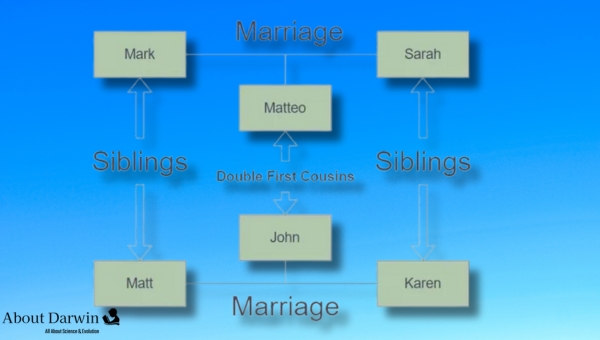
This dual cousin relationship creates a genetic bond that is approximately twice as strong as that between regular first cousins. While standard first cousins share about 12.5% of their DNA, double first cousins share roughly 25% of their genetic material.
The coefficient of relationship for double first cousins is 0.25, which is identical to that of half-siblings. This means they are genetically equivalent to half-brothers or half-sisters, even though their parents are not the same individuals.
Understanding your family tree requires familiarity with how cousin relationships work. The degree of cousinhood reflects how closely you share common ancestors, with the closer the relationship indicating higher genetic similarity between you and your relatives.
Cousin relationships are categorized by degrees (first, second, third) and removals (once removed, twice removed). These classifications help genealogists and geneticists map family connections and predict inheritance patterns across generations.
In the world of family relationships, recognizing the various types of cousins is essential for accurate genealogy research. First cousins share grandparents, while second cousins share great-grandparents. The degree number indicates how many generations back you need to go to find shared ancestors.
Double first cousins represent a special category that breaks the standard pattern. While regular first cousins connect through only one side of the family, double first cousins connect through both parents simultaneously. This creates a relationship that is genetically closer than typical first cousins but distinct from siblings.
Understanding these distinctions matters for both family history research and genetic analysis. When you’re tracing your lineage or interpreting DNA test results, knowing whether someone is a regular first cousin or a double first cousin affects how you interpret shared genetic material.
Exploring your family tree reveals layers of shared ancestry that bind you to relatives in intricate ways. Ancestry exploration through historical records, DNA testing, or genealogy platforms helps determine kinship and relationship degrees.
Exploring these elements helps foster a sense of belonging within your extended family network and ensures accurate relationship identification.
Having explored shared ancestry in cousin relationships, it is crucial to consider the genetic implications of these familial ties. Relationship analysis involves not only tracing your genealogy study but also understanding DNA breakdown and inheritance patterns.
Within double first cousin relationships, you’ll discover an even more profound genetic similarity. Because they share the same set of grandparents on both sides of their family tree, this unique setup dramatically amplifies the amount of shared DNA compared to typical first cousins.
Your relationship with double first cousins has significant impacts on genetics and inheritance patterns. It is a cohesive blend that connects you at a deeper level, fostering a sense of belonging within your extended family unit.
In your family tree, you’ll find that double first cousins share the same degree of kinship as half-siblings. This unique relationship is born from two siblings marrying another set of siblings and having children who share all four grandparents.
Understanding how much DNA you share with different relatives helps put the double first cousin relationship in perspective. The following table compares shared DNA percentages across various family relationships to illustrate where double first cousins fit in the genetic spectrum.
| Relationship | Shared DNA Percentage | Coefficient of Relationship |
|---|---|---|
| Identical Twins | 100% | 1.0 |
| Parent/Child | 50% | 0.5 |
| Full Siblings | 50% | 0.5 |
| Grandparent/Grandchild | 25% | 0.25 |
| Half Siblings | 25% | 0.25 |
| Aunt/Uncle and Niece/Nephew | 25% | 0.25 |
| Double First Cousins | 25% | 0.25 |
| First Cousins | 12.5% | 0.125 |
| First Cousins Once Removed | 6.25% | 0.0625 |
| Second Cousins | 3.125% | 0.03125 |
| Third Cousins | 0.781% | 0.00781 |
As the table shows, double first cousins share the same amount of DNA as half-siblings, grandparents and grandchildren, and aunts or uncles with their nieces and nephews. This 25% shared DNA places them in a unique genetic category that is distinct from regular first cousins but not equivalent to full siblings.
The range of shared DNA for double first cousins typically falls between 18% and 32% due to the randomness of genetic recombination. While the average is 25%, individual cases may vary higher or lower depending on which specific DNA segments were inherited from the shared grandparents.
Double first cousins are quite rare in most societies, largely due to the unique circumstances required for their occurrence. These types of cousin relationships need two sets of siblings to marry each other, creating a situation where your aunt and uncle are also your in-laws.
The familiarity dynamics within such families can be interesting yet complex. Inherited traits might become more pronounced due to shared genes from both parents’ sides. However, there can be legal implications as well, since many jurisdictions have regulations regarding marriages between close relatives.
Social perceptions around such relationships vary widely across different cultures and traditions. Some communities may accept them without concern, while others might view such close familial unions differently. It is vital to respect diversity and remember that every family has its own unique bonds and characteristics.
So yes, double first cousins are not something you encounter daily. When you do discover this relationship in your family tree, it offers an intriguing peek into the fascinating world of genetic relations and family history.
You might be wondering if these unique relatives mirror each other’s DNA like identical twins do. The answer involves both yes and no elements. Double first cousins share more genetic inheritance than regular first cousins due to their unique family tree structure, but they do not share identical DNA as identical twins do.
Double first cousins represent an intriguing case study in ancestry analysis and DNA mapping. While they share more commonalities in their genetic makeup compared to regular first cousins, approximately 25% similar genes on average, this does not mean they are genetic copies of each other.
This percentage is akin to sibling comparison in terms of shared genetic heritage. However, full siblings share 50% of their DNA on average, making double first cousins genetically halfway between regular first cousins and full siblings.
Your curiosity about your own family connections can lead you down interesting paths. Understanding these intricate relationships allows you to deepen your sense of belonging within your extended family network and appreciate the complexity of our human gene pool.
So while double first cousins possess more shared DNA than most relatives outside immediate families, remember that every individual retains unique genetic traits that set them apart, even within tightly woven familial bonds.
So, can these uniquely linked relatives be considered genetic siblings? The answer to that question is not as straightforward as you might think. It is a matter of perspective and depends on various factors such as genetic implications, family dynamics, and cultural perceptions.
Let’s break it down:
While there is a strong case for considering double first cousins akin to genetic half-siblings based on biological factors alone, this does not completely translate into them being universally legally or socially recognized as siblings. The concept varies widely across different societies and legal systems around the world.
An even more fascinating genetic scenario occurs when identical twins marry identical twins. If two identical twin brothers marry two identical twin sisters, their children would be double first cousins, but with an extraordinary twist. These cousins would share approximately 50% of their DNA, making them genetically equivalent to full siblings.
This happens because identical twins share 100% of their DNA with each other. When each set of twins has children, those children inherit DNA as if they came from the same parents. The genetic relationship becomes identical to that of brothers and sisters, even though the children are legally cousins.
DNA testing companies like AncestryDNA and 23andMe would classify these individuals as immediate family members rather than cousins. They would show up with shared DNA percentages in the 40-50% range, potentially confusing those who do not understand their unique family structure.
This rare situation demonstrates how family relationships and genetic relationships can diverge significantly. While the law and social convention view these individuals as cousins, their DNA tells a different story, one of sibling-level genetic connection.
It is worth noting that this scenario applies specifically to identical twins, not fraternal twins. Fraternal twins share the same amount of DNA as regular siblings (approximately 50%), so their children would be standard double first cousins with the typical 25% shared DNA.
When conducting genealogy research, discovering double first cousin relationships can initially cause confusion, especially when analyzing DNA test results. These relatives appear with unexpectedly high shared DNA percentages, sometimes leading researchers to suspect hidden half-sibling relationships or other close connections.
On platforms like AncestryDNA, double first cousins typically show up with shared centimorgans ranging from 1,300 to 2,200. This range overlaps significantly with half-siblings, who usually share between 1,200 and 2,300 centimorgans. Understanding these ranges helps distinguish between these relationship types.
When you encounter DNA matches in this range, consider these research steps. First, examine the shared matches to identify which side of the family the connection comes from. Double first cousins will show shared matches on both the maternal and paternal sides simultaneously.
Building out the family tree using traditional genealogical records becomes essential. Look for marriages between siblings in your ancestral lines. Census records, marriage certificates, and family histories can reveal these sibling marriages that created double first cousin relationships.
For those using cousin chart tools or relationship calculators, remember that most standard tools may not account for double first cousin relationships specifically. You may need to manually adjust your understanding of the genetic connection based on the unique 25% shared DNA figure.
No, double first cousins are not the result of inbreeding. Inbreeding occurs when close relatives such as siblings or parents and children have children together. Double first cousins result from two siblings from one family marrying two siblings from another family. While they share more DNA than typical cousins, their parents are not closely related to each other. The relationship is socially and legally distinct from incest, though some jurisdictions may have specific regulations about marriage between double first cousins.
When two brothers marry two sisters, their children are called double first cousins. This relationship is also sometimes referred to as cousins on both sides or dual first cousins. The term emphasizes that the children are cousins through both their fathers and their mothers simultaneously, sharing all four grandparents in common.
A double first cousin is a relative who shares both sets of grandparents with you. This occurs when two siblings from one family marry two siblings from another family. Unlike regular first cousins who share only one set of grandparents, double first cousins are connected through both parents. They share approximately 25% of their DNA, which is twice as much as regular first cousins and equivalent to the genetic relationship between half-siblings.
Double first cousins share approximately 25% of their DNA on average. This is twice the amount that regular first cousins share (12.5%) and equivalent to the DNA shared between half-siblings, grandparents and grandchildren, or aunts/uncles and their nieces/nephews. The actual range typically falls between 18% and 32% due to random genetic recombination. If the parents are identical twins, the DNA sharing can increase to approximately 50%, equivalent to full siblings.
The intricate relationships among family members reveal fascinating dynamics, particularly when it comes to double first cousins and regular first cousins. Double first cousins share a unique bond, having the same set of grandparents on both sides, which results in a higher percentage of shared DNA compared to regular first cousins.
This genetic closeness can lead to stronger familial ties, but it also raises questions about how we understand family relationships in the context of modern DNA testing and genealogy research. Whether you are exploring your ancestry out of curiosity or trying to make sense of surprising DNA test results, understanding the concept of double first cousins provides valuable insight into the complexity of human relationships.
As you continue exploring your family tree, consider how these connections shape your understanding of identity and belonging. What hidden stories lie within your own family tree waiting to be uncovered? The journey of genealogical discovery offers endless opportunities to learn about where you come from and the remarkable ways families connect across generations.