Physical Address
304 North Cardinal St.
Dorchester Center, MA 02124
Physical Address
304 North Cardinal St.
Dorchester Center, MA 02124

Have you ever been at a family reunion and heard someone refer to another guest as their “second cousin,” leaving you puzzled about exactly how you might be connected? Understanding these extended family relationships can feel overwhelming, especially when terms like “once removed” or “twice removed” enter the conversation. Yet knowing what is a second cousin and how these connections fit into your family tree can unlock fascinating insights about your heritage and genetic makeup.
Unlike first cousins who share grandparents, second cousins share great-grandparents and belong to the same generational level as you. This makes them an important bridge between your immediate family and more distant relatives in your genealogical network. Many people discover second cousins through DNA testing or genealogy research, opening doors to new family stories and connections they never knew existed.
In this comprehensive guide for 2026, we will break down exactly what makes someone your second cousin, explore how much DNA you share, clarify the meaning of “removed” relationships, and provide practical tools for identifying these relatives in your own family tree. Whether you are building your family history or simply curious about how these relationships work, this article will give you everything you need to know.
A second cousin is someone who shares the same great-grandparents as you but not the same grandparents. Put simply, second cousins are the children of your parent’s first cousins. You and your second cousin are in the same generation, meaning you are both the same number of generations removed from your common ancestors.
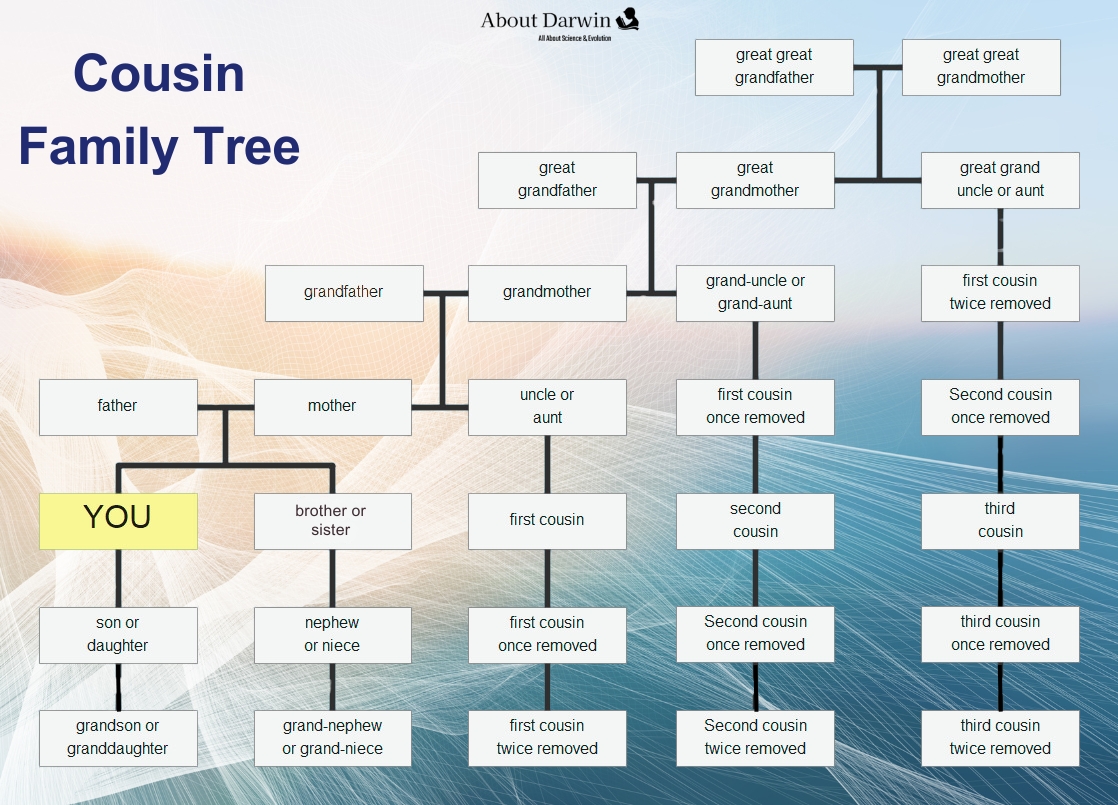
To visualize this relationship, imagine your grandparents had siblings. Those siblings had children, who are your parent’s first cousins. When those first cousins have children of their own, those children become your second cousins. This pattern continues through the generations, with third cousins sharing great-great-grandparents, fourth cousins sharing great-great-great-grandparents, and so on.
The term “second cousin” refers to a specific degree of kinship in genealogy. When genealogists talk about cousin degrees, they are counting the number of generations between cousins and their most recent common ancestors. For second cousins, that number is two generations back to the great-grandparents.
Here is a helpful trick for remembering this: count how many “greats” are in the ancestor’s title and add one. Your great-grandparents have one “great,” so one plus one equals two, meaning their descendants in your generation are second cousins. This “count the greats plus one” method works for any cousin relationship and makes it easy to determine cousin degrees on the fly.
Yes, second cousins are definitely blood-related. The shared DNA between second cousins serves as biological proof of their common ancestry. When two people are second cousins, they inherit segments of DNA from the same great-grandparents, creating measurable genetic overlap that genealogists and DNA testing companies can identify.
On average, second cousins share approximately 3.125% of their DNA. In genetic genealogy terms, this translates to about 212.5 centimorgans (cM), though the actual range can vary significantly. Second cousins typically share between 75 and 360 centimorgans of DNA, with some matches falling outside this range due to the random nature of genetic inheritance.
For comparison, first cousins share about 12.5% of their DNA (approximately 850 cM), while third cousins share roughly 0.78% (about 53 cM). Understanding these percentages helps genealogists identify how closely related they are to DNA matches and confirms suspected family connections through DNA sharing patterns.
The amount of shared DNA between second cousins is well above the threshold for confidently confirming a relationship. Most DNA testing companies will predict a second cousin relationship when matches share between 200-600 cM, though the exact algorithms vary by platform.
Also Read: First Cousin Defined: Who Are They in Your Family Tree?
Marriage between second cousins is legally permitted in all fifty United States and in most countries worldwide. From both legal and genetic standpoints, second cousin marriages do not pose significant concerns that would warrant prohibition. The shared DNA percentage of approximately 3.125% is considered low enough that genetic risks to offspring remain minimal.
While marriage between first cousins raises more significant genetic concerns due to their 12.5% shared DNA, second cousins are sufficiently distant that consanguinity laws generally do not apply. Some cultures and communities have historical taboos against cousin marriages of any degree, but these are social rather than biological or legal restrictions.
It is worth noting that attitudes toward cousin marriage vary significantly across different societies. What might be considered unusual in one culture could be historically common in another. Many prominent historical figures married their second cousins without social stigma, and such unions were fairly routine in many European royal families.
Let us walk through a concrete example to make the second cousin relationship crystal clear. Imagine your mother has a cousin named Robert. Robert is your mother’s first cousin because their mothers, your grandmother and your great-aunt, were sisters. Robert has a daughter named Sarah. Sarah is your second cousin because you both share the same great-grandparents, your great-grandmother and great-grandfather.
Here is another way to think about it. Your father has a first cousin named Michael. Michael has a son named David. David and you are second cousins because your grandparents, your father’s parents, were siblings with Michael’s parents, your great-uncle and great-aunt. You and David are in the same generation, both being the grandchildren of those original siblings.
The key identifier for second cousins is that you are in the same generation, and your parents are first cousins to each other. This differs from “removed” relationships, where there is a generational gap between the two people. Understanding this generational alignment helps distinguish true second cousins from more distant removed relationships.
Second cousins share great-grandparents, not grandparents. This is the fundamental distinction that separates second cousins from first cousins. When you look at your family tree, first cousins are connected through grandparents who were siblings, while second cousins trace their connection through great-grandparents.
To identify which great-grandparents you share with a second cousin, trace your lineage back two generations from your parents. Your parent’s parents are your grandparents. Your grandparent’s parents are your great-grandparents. Any descendant of those great-grandparents who is in your same generation is your second cousin.
It is helpful to compare this with other cousin relationships. First cousins share grandparents and are two generations removed from those shared ancestors. Third cousins share great-great-grandparents and are four generations removed from those ancestors. Each step up in cousin degree moves one generation further back in your family tree.
The term “once removed” indicates a generational difference between two people who would otherwise be cousins. When someone is your second cousin once removed, they are either one generation above or one generation below your second cousin relationship level. This means the connection spans an additional generation in either direction.
There are two possible second cousin once removed relationships you might encounter. First, your second cousin’s child is your second cousin once removed. They are one generation down from your second cousin, creating the “removed” designation. Similarly, your parent’s second cousin is also your second cousin once removed, as they are one generation up from you.
Let us illustrate with an example. Your mother has a first cousin named Patricia. Patricia has a son named James, who is your second cousin. If James has a daughter named Emma, Emma becomes your second cousin once removed because she is one generation removed from the second cousin relationship you share with James. Emma would be in the same generation as your children, making her your children’s second cousin.
Understanding removed relationships helps clarify why family reunions often include people from different age groups who are technically the same cousin degree to someone else. Your parent’s second cousin might be twenty years older than you, while your second cousin’s child might be significantly younger. Both are your second cousins once removed, just on opposite sides of the generational divide.
Also Read: What Does ‘Once Removed’ Mean? Uncover the Family Ties!
When someone is your second cousin twice removed, a two-generation gap exists between your relationship level and theirs. The term “twice removed” signals that two full generations separate you from the standard second cousin connection. This can occur in two directions: either two generations up or two generations down from your position.
Your second cousin’s grandchild represents the downward direction of twice removed. Following our previous example, if your second cousin James has a daughter Emma, and Emma has a son named Lucas, Lucas would be your second cousin twice removed. He sits two generations below your second cousin relationship with James, creating the double removal.
Alternatively, your grandparent’s second cousin is also your second cousin twice removed. This person would be two generations above you while maintaining the second cousin connection through your shared great-great-grandparents. They would typically be significantly older and might even be close to your grandparent’s age.
Removed relationships continue indefinitely. You could theoretically have second cousins three times removed, four times removed, and so on. Each removal represents another generational step away from the core cousin relationship. While these distant connections become less practically significant for daily life, they remain important for genealogy research and understanding extended family networks.
A half-second cousin is someone with whom you share only one great-grandparent rather than two. While full second cousins descend from two siblings who shared both parents, half-second cousins descend from half-siblings who share only one parent. This creates a slightly more distant genetic relationship.
The distinction arises when your great-grandparent had children with different partners. Perhaps your great-grandfather remarried after your great-grandmother passed away, or had children outside of marriage. The children from these different partnerships would be half-siblings to each other, making their descendants half-cousins rather than full cousins.
Determining whether someone is a half or full second cousin through DNA alone can be challenging. Half-second cousins typically share about half the DNA of full second cousins, but the ranges overlap significantly. Full second cousins share 75-360 cM, while half-second cousins usually share 30-215 cM. However, some half relationships show higher shared DNA, while some full relationships show lower amounts due to random inheritance patterns.
Genealogists often need to combine DNA evidence with traditional paper trail research to distinguish half from full cousin relationships. Building out both sides of the family tree and identifying all the siblings and half-siblings in previous generations helps clarify these connections.
Third cousins represent the next step in the cousin relationship progression. While second cousins share great-grandparents, third cousins share great-great-grandparents. This means your grandparents and your third cousin’s grandparents were first cousins to each other, creating the generational bridge that connects you.
The DNA shared between third cousins drops significantly from the second cousin level. Third cousins typically share about 0.78% of their DNA, or roughly 53 centimorgans. The range for third cousin relationships is approximately 0-200 cM, with many third cousins sharing no detectable DNA at all due to the randomness of genetic inheritance over multiple generations.
This explains why DNA testing sometimes fails to match people who are documented third cousins. The shared segments might be too small for detection, or recombination might have eliminated all shared DNA entirely. Despite the lack of genetic evidence, these individuals remain third cousins through their documented genealogical connection.
Understanding third cousins helps put second cousin relationships in context. The jump from second to third cousin roughly halves the expected DNA shared, just as the jump from first to second cousin did. This predictable halving pattern continues through fourth, fifth, and more distant cousins, though eventually the DNA shared becomes too small to measure reliably.
Second cousin relationships carry important implications beyond family reunions and genealogy research. In legal contexts, second cousins are considered distant relatives with specific rights and considerations regarding inheritance, lineage documentation, and citizenship claims. In medical contexts, these relationships matter for genetic counseling, organ donation matching, and understanding inherited health risks.
When someone dies without a will, inheritance laws typically prioritize closer relatives before considering second cousins. Most jurisdictions follow a hierarchy where spouses, children, parents, and siblings inherit first. Second cousins usually only inherit if no closer relatives exist, making them part of the “lateral kin” or collateral relatives who might receive property in complex estate situations.
Lineage societies and heritage organizations often require proof of specific ancestral connections. Second cousins can provide valuable documentation for these purposes, particularly when direct line descendants are unavailable. If you are applying for membership in a lineage society based on a great-grandparent’s achievements or service, your second cousins might possess family records, photographs, or documents that strengthen your application.
Dual citizenship claims sometimes depend on proving ancestry through collateral relatives when direct line documentation is incomplete. Second cousins might share ancestors who qualify you for citizenship by descent programs in countries like Ireland, Italy, or Poland. Working together with second cousins can help reconstruct the family history needed for these applications.
From a medical standpoint, second cousins share enough DNA that genetic risks merit consideration, though the probability remains relatively low. When both parents carry recessive genetic variants, the chance of a child inheriting two copies and developing a recessive disorder is approximately 1.5% for second cousins compared to about 3% for first cousins. This risk is only slightly elevated compared to the general population baseline.
Second cousins can serve as valuable genetic references for medical testing and diagnosis. Because they share a known amount of DNA, second cousins help geneticists identify which segments of chromosomes came from which ancestors. This process, called genetic triangulation, allows researchers to trace specific genetic variants back to their source in a shared great-grandparent.
For organ donation, second cousins might provide better matches than unrelated donors, though the improvement is modest compared to closer relatives. The shared genetic material increases the probability of tissue type compatibility, potentially reducing rejection risks. However, second cousins are rarely the primary source for living organ donations since closer relatives usually offer better matches when available.
Understanding cousin relationships becomes much easier with a systematic approach. The cheat sheet below provides a quick reference for determining any cousin relationship by examining the shared ancestors and counting generational differences.
Remember the key trick: count the number of “greats” in the shared ancestor’s title, then add one. This gives you the cousin degree. For example, great-grandparents have one “great,” so one plus one equals two, meaning their descendants in your generation are second cousins. Great-great-grandparents have two “greats,” so two plus one equals three for third cousins.
For removed relationships, determine the cousin degree first by finding the closest generational match, then count how many generations separate the two people. If your relative is one generation above or below that matching point, they are once removed. Two generations difference means twice removed.
| Relationship | How They Are Related |
|---|---|
| First Cousin | Parents are siblings; share grandparents |
| Second Cousin | Grandparents are siblings; share great-grandparents |
| Third Cousin | Great-grandparents are siblings; share great-great-grandparents |
| First Cousin Once Removed | Your first cousin’s child or your parent’s first cousin |
| First Cousin Twice Removed | Your first cousin’s grandchild or your grandparent’s first cousin |
| Second Cousin Once Removed | Your second cousin’s child or your parent’s second cousin |
| Second Cousin Twice Removed | Your second cousin’s grandchild or your grandparent’s second cousin |
| Half-Second Cousin | Share one great-grandparent rather than two |
For a more detailed visual guide with interactive calculations, visit our cousin chart tool to explore your specific family relationships.
You Might Also Like: What Are Double First Cousins? Discover The Relationship
The key difference lies in generational alignment. Second cousins are in the same generation and share great-grandparents. First cousins once removed are in different generations. Your first cousin once removed is either your parent’s first cousin (one generation up) or your first cousin’s child (one generation down). While second cousins have equal generational distance from shared ancestors, removed relationships always involve unequal distances.
Use the ‘count the greats plus one’ method. Count how many ‘greats’ are in the shared ancestor’s title, then add one. For grandparents (no greats), zero plus one equals first cousins. For great-grandparents (one great), one plus one equals second cousins. For great-great-grandparents (two greats), two plus one equals third cousins. This pattern continues for more distant cousins.
Yes, second cousins are blood-related. They share approximately 3.125% of their DNA, which equals about 212.5 centimorgans on average. Second cousins inherit genetic material from the same great-grandparents, creating a measurable biological connection that DNA testing can identify. The shared DNA range for second cousins typically falls between 75 and 360 centimorgans.
A second cousin is someone who shares the same great-grandparents as you but not the same grandparents. Second cousins are the children of your parent’s first cousins. You and your second cousin belong to the same generation, meaning you are both the same number of generations removed from your shared ancestors. This distinguishes second cousins from ‘removed’ relationships which span different generations.
Second cousins share great-grandparents as their common ancestors. These are the parents of your grandparents. While first cousins share grandparents (the parents of your parents), second cousins must trace back one additional generation to find the ancestors they have in common. This shared pair of great-grandparents creates the second cousin relationship.
No, second cousin relationships are not considered inbreeding. Inbreeding typically refers to unions between close relatives such as siblings, parents and children, or sometimes first cousins. Second cousins share only about 3.125% of their DNA, which is sufficiently distant that genetic risks remain minimal. Marriage between second cousins is legal throughout the United States and most of the world.
You share approximately 3.125% of your DNA with a second cousin. In genetic genealogy terms, this equals roughly 212.5 centimorgans, though the actual range varies from 75 to 360 centimorgans. For comparison, you share about 12.5% with first cousins and 0.78% with third cousins. This 3.125% represents the portion of genetic material inherited from shared great-grandparents.
Second cousins share DNA segments inherited from their common great-grandparents. These shared segments appear on various chromosomes and typically total about 212.5 centimorgans. The specific segments vary between cousin pairs due to random inheritance patterns. DNA testing companies can identify these matches and predict second cousin relationships based on the amount of shared genetic material.
Understanding what is a second cousin opens up a clearer picture of your extended family and genetic heritage. Second cousins share great-grandparents and approximately 3.125% of their DNA, creating meaningful connections that bridge the gap between immediate family and more distant relatives. These relationships matter not just for family reunions, but for genealogy research, legal considerations, and medical contexts.
The cousin relationship cheat sheet and the “count the greats plus one” trick provide practical tools for navigating these connections. Whether you are exploring your family tree, interpreting DNA test results, or simply curious about how you relate to that distant relative at the next family gathering, knowing the mechanics of second cousin relationships helps you appreciate the intricate web of kinship that defines us all.
For 2026 and beyond, the study of cousin relationships continues to evolve with advances in genetic genealogy. As DNA testing becomes more accessible and family history research grows in popularity, second cousins will increasingly serve as vital links in reconstructing family stories and understanding our shared human connections. Take time to explore your own second cousin relationships, you might discover surprising bonds and fascinating stories hidden within your family tree.