Physical Address
304 North Cardinal St.
Dorchester Center, MA 02124
Physical Address
304 North Cardinal St.
Dorchester Center, MA 02124

Tracing your family roots often brings surprising connections to light, especially when you encounter the term “fifth cousin.” Many people researching their genealogy stumble across this relationship and wonder exactly how these distant relatives fit into their family tree. Understanding what a fifth cousin is and how they connect to you opens up new avenues for exploring your ancestry and appreciating the complex web of human relationships that spans generations.
The study of cousin relationships has gained significant attention in recent years as DNA testing and online genealogy platforms make it easier than ever to discover long-lost relatives. In 2026, more people than ever are building family trees, connecting with distant kin, and uncovering stories that have been hidden for decades. Whether you have discovered a fifth cousin through an ancestry DNA match or are simply curious about how these familial connections work, this guide will clarify everything you need to know.
This comprehensive explanation covers the fifth cousin meaning, how to identify these relatives in your family history research, and what the genetic and legal implications of these distant connections might be. By the end, you will have a clear understanding of where fifth cousins sit in your genealogical journey and how to approach finding them.
A fifth cousin is a relative who shares the same great-great-great-great-grandparents with you but does not share any closer common ancestors. To visualize this connection, imagine your family tree branching out across multiple generations. You and your fifth cousin each descend from the same set of fourth great-grandparents, but your family lines diverged five generations back and then converged again through different branches.
The numbering system for cousins follows a consistent pattern that genealogists use worldwide. First cousins share grandparents, second cousins share great-grandparents, and the pattern continues with each generation adding another “great.” By the time you reach fifth cousins, you are looking at a relationship that spans significant historical distance, often covering more than a century of family history depending on average generation gaps.
From a genetic perspective, fifth cousins share approximately 0.05% of their DNA on average. This relatively small percentage reflects the considerable generational distance between you, yet it remains detectable through modern DNA testing services. Many people discover fifth cousins through ancestry DNA matches, confirming these distant but real blood connections that might otherwise remain unknown.
These relationships highlight the remarkable interconnectedness of human ancestry. When you consider that most people have hundreds or even thousands of fifth cousins scattered across the globe, it becomes clear how extensively our family networks extend beyond our immediate awareness.
Also Read: First Cousin Defined: Who Are They in Your Family Tree?
Understanding how fifth cousins connect to you requires tracing back through five generations of your family tree. The relationship forms when two siblings from your fourth great-grandparent’s generation each have descendants who continue separate family lines for several generations. When those lines eventually produce children in the same generation as you, those children become fifth cousins.
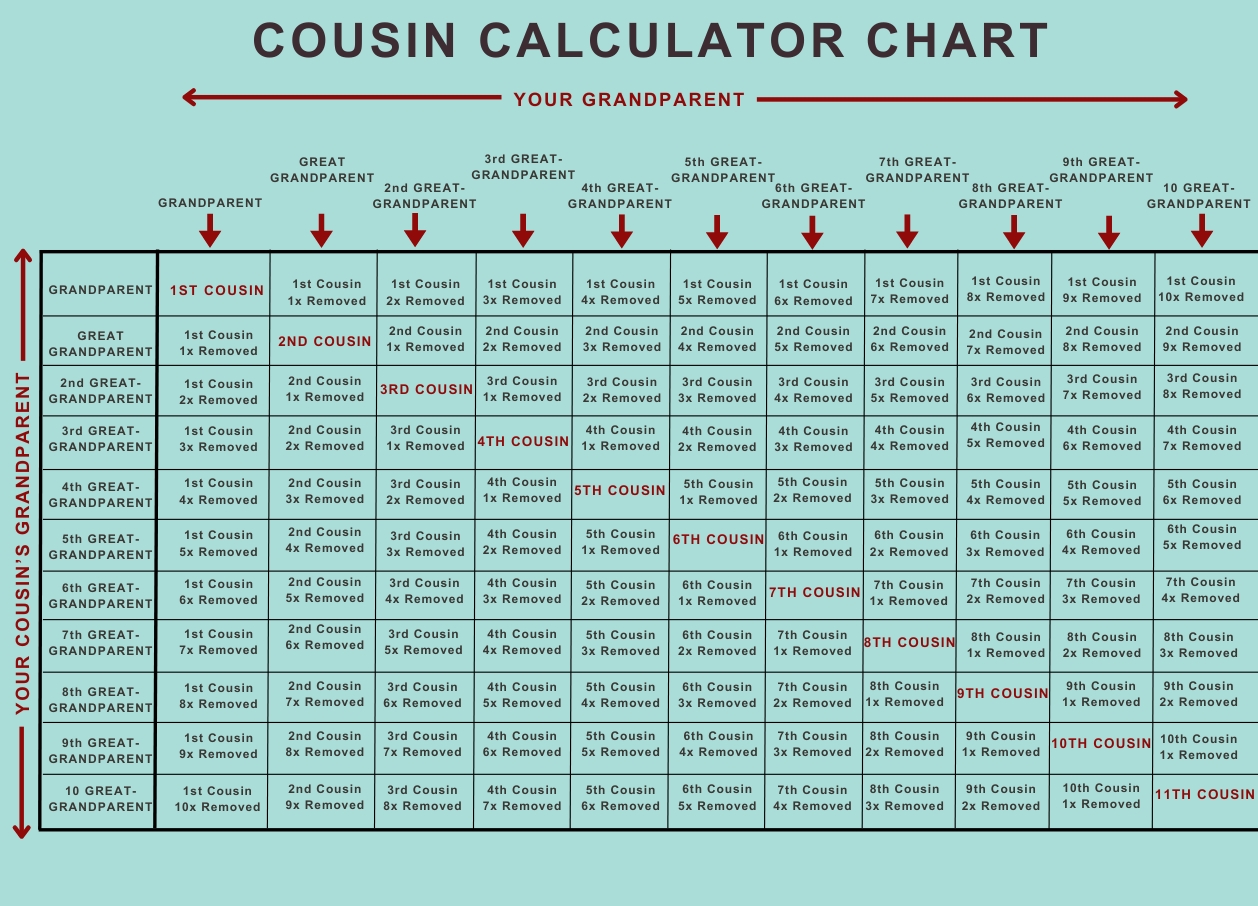
The connection traces through ten degrees of separation in total, counting five generations up to your shared ancestors and five generations back down to your fifth cousin. This considerable distance explains why most people never meet their fifth cousins in everyday life, yet the genealogical bond remains valid and documentable through proper family history research.
Discovering fifth cousins requires patience, thorough research, and often a combination of traditional genealogy methods and modern technology. Here are proven strategies for locating these distant relatives:
This journey often yields more than just names on a chart. Many people find that connecting with fifth cousins leads to sharing family stories, photographs, and documents that enrich understanding of shared heritage. These discoveries create a sense of belonging to something larger than your immediate family circle.
Also Read: What Is A Second Cousin? Explanation With Family Tree Chart
Fifth cousins are indeed considered distant cousins by most genealogical standards. The considerable generational gap between you and these relatives places them firmly in the category of extended family that most people never encounter during their lifetime. However, “distant” does not mean insignificant or unimportant.
The classification of cousin relationships into “close” and “distant” categories helps genealogists and researchers understand the practical implications of various family connections. While first, second, and sometimes third cousins often maintain active relationships and may even grow up together, fourth and fifth cousins typically exist only as entries in family trees until deliberate effort brings them to light.
The relationship between you and a fifth cousin spans ten degrees of separation total. This breaks down as five degrees ascending from you to your shared fourth great-grandparents, and five degrees descending from those ancestors to your fifth cousin. This measurement helps quantify the genealogical distance between relatives.
Understanding degrees of separation has practical applications in genealogy. It helps determine the likelihood of shared DNA, informs marriage legality questions, and guides expectations about what kind of relationship might be possible with discovered relatives. By the time you reach ten degrees of separation, the shared genetic material has diminished significantly compared to closer cousin relationships.
Despite this distance, fifth cousins remain valid blood relatives. The connection represents a genuine thread linking you to ancestors who lived many generations ago, and discovering these relationships can provide meaningful context for your place in family history.
Also Read: Cousin Calculator Chart: Understand Your Family Tree
While fifth cousins share a bloodline and occupy a legitimate place in your extended family network, it is quite possible you have never met them or even heard their names. In the vast branches of your family tree, these individuals represent connections that exist genetically and genealogically even when no personal relationship has ever developed.
Whether fifth cousins “count” as family depends largely on cultural context and individual perspective. Some families maintain extensive networks that include distant relatives, while others focus only on immediate and close extended family. Genealogists generally consider anyone with a documentable blood relationship to be family, regardless of how many generations separate them.
Understanding the significance of having fifth cousins can change how you view your family connections:
While they may feel removed from your daily life, fifth cousins form part of your wider family network. Recognizing this connection acknowledges the intricate web of relationships that constitutes who you are today, linking you to ancestors and relatives across time and geography.
Also Read: What Is A Fourth Cousin? How Are They Connected To You?
Yes, fifth cousins are indeed related by blood, though the connection is distant. You and your fifth-generation cousins share genetic material passed down from your common ancestors, even if that shared DNA represents only a tiny fraction of your total genetic makeup.
The blood relationship traces back through ten generations of inheritance. Starting from your fourth great-grandparents, genetic material passed down through each successive generation eventually reaches both you and your fifth cousin. While much of the original DNA has been diluted through recombination and independent assortment, small fragments remain detectable.
The average shared DNA between fifth cousins is approximately 0.05%, though individual cases vary considerably. Some fifth cousin pairs share no detectable DNA at all, while others may share slightly more. This variability occurs because DNA inheritance is random, and with each generation, the chances of inheriting the same segments decrease.
Despite the small percentage, this shared genetic material provides a tangible link to your ancestors. Family traditions and stories passed down through generations add another layer of connection beyond genetics. Many people find that understanding these blood relationships deepens their appreciation for their heritage and the continuity of family across time.
Even when familial ties appear diluted by time and distance, every genetic connection contributes to the vast story of human genealogy. Fifth cousins represent living proof of your ancestors’ legacy continuing through multiple branches of descendants.
Also Read: What Is My Cousin’s Cousin To Me? Find Out The Answer
Fifth cousins share great-great-great-great-grandparents as their most recent common ancestors. Understanding this connection requires recognizing how the numbering system for cousin relationships corresponds to the generations of shared ancestors.
The pattern follows a clear progression that helps identify exactly which ancestors connect various cousin relationships:
As the cousin number increases, so does the generational distance to the shared ancestors. Fifth cousins connect through ancestors who typically lived more than a century ago, assuming an average of twenty to thirty years per generation. This historical distance explains why fifth cousin relationships often remain undiscovered without active genealogical research.
When you encounter a fifth cousin in your family tree research or at a large family gathering, remember that you share ancestry tracing back to individuals who lived several generations ago. This represents a testament to your lineage’s continuity across time.
Also Read: What is a Cousin-In-Law?
The term “once removed” in cousin relationships indicates a generational difference between two people who would otherwise be fifth cousins. Understanding this concept helps clarify how family trees extend not just horizontally across generations but vertically between them.
A fifth cousin once removed is either your parent’s fifth cousin or the child of your fifth cousin. The “once removed” designation signals that there is one additional generation separating you from this relative compared to a standard fifth cousin relationship. Despite this generational gap, you still share common ancestors in your fourth great-grandparents.
The concept of “removed” cousins often confuses people new to genealogy, but it follows simple logic. The “removal” counts how many generations separate you from being in the same generation as your cousin. Understanding these relationships helps make sense of family trees that span many generations and include relatives of widely varying ages.
These vertical connections in family trees provide insight into how genetic material and family stories travel across time. A fifth cousin once removed might be significantly older or younger than you, yet you share genuine genealogical connections through your mutual ancestors.
Also Read: What Is A Step-Cousin? Are They Blood-Related?
When you encounter the term “fifth cousin twice removed,” it indicates a two-generation difference between you and someone who would otherwise be your fifth cousin. This relationship extends the concept of “removed” to span multiple generational gaps.
A fifth cousin twice removed could be two generations above you, such as your grandparent’s fifth cousin, or two generations below you, such as the grandchild of your fifth cousin. In either case, you both descend from the same fourth great-grandparents, but through family lines that diverged at different points in time.
Understanding these relationships requires thinking about family trees in three dimensions. While standard cousin relationships extend horizontally across the same generation, removed cousin relationships extend vertically, connecting relatives from different generations through shared ancestry. The “twice removed” designation quantifies exactly how many generations separate you from being in the same generation as your fifth cousin.
Genealogy research often uncovers these removed relationships when investigating family lines that had children at different times or when connecting with relatives through DNA testing who fall into unexpected generational categories. Recognizing these connections helps build a complete picture of your extended family network.
Understanding these intricate familial relationships connects us more deeply to our pasts and opens opportunities for engaging with family history across cultures and time periods. Each connection, no matter how removed, represents another thread in the story of your ancestry.
Also Read: What Is A Third Cousin? Explore The Family Connection
The concept of a “half-fifth cousin” introduces an important distinction in genealogy based on how many ancestors two people share. While full fifth cousins descend from the same pair of fourth great-grandparents, half-fifth cousins share only one common ancestor from that generation.
This situation typically arises when your fourth great-grandparent had children with different partners, creating half-siblings in your family tree. The descendants of these half-siblings become half-cousins because they share only one ancestor rather than the usual pair. This distinction matters primarily for genealogical accuracy and understanding the precise nature of family connections.
From a genetic perspective, half-fifth cousins share approximately half as much DNA as full fifth cousins, typically around 0.025% on average. This reduced genetic connection reflects having only one shared ancestor contributing DNA to both lines. However, from a family relationship standpoint, half-cousins are often considered equally valid relatives, especially in cultures where family bonds emphasize connection over genetic percentages.
Discovering half-cousin relationships in your family tree often reveals interesting family stories, including remarriages after the death of a spouse, blended families, or other historical circumstances that shaped your ancestors’ lives. These discoveries add depth to your understanding of family history.
Understanding these distinctions strengthens your grasp of genealogical concepts and deepens appreciation for the complex factors that shape family trees across generations.
Read Also: Ever Wondered Who is ‘Great Cousin’?
Yes, fifth cousins can marry legally in virtually all jurisdictions worldwide. The genetic distance between fifth cousins is significant enough that there are no legal restrictions on marriage. Cultural perspectives may vary, but genetic implications are negligible due to the distant familial relationship and minimal shared DNA.
Having fifth cousins is extremely common. Most people have hundreds or even thousands of fifth cousins scattered across the globe. Considering the exponential growth of family trees across generations, the worldwide distribution means you likely share DNA with many people you are unaware of. You are part of a vast extended family network.
The chances of inheriting the same traits or diseases from a fifth cousin are extremely low. Genetic similarities between fifth cousins are quite diluted, with only about 0.05% shared DNA on average. Disease risks and trait probabilities you share are significantly reduced compared to closer relatives. You are far more likely to inherit traits from immediate family than from distant kin like fifth cousins.
Yes, you can trace and find fifth cousins through multiple methods. Genealogy tools and family history research using online databases and historical records are excellent starting points. DNA testing services like AncestryDNA or 23andMe can reveal genetic matches corresponding to fifth cousin relationships. Family reunions and genealogy forums also provide opportunities to connect with distant relatives.
Fifth cousins are identified in a family tree by tracing back five generations from yourself to find shared great-great-great-great-grandparents. Once you identify these fourth great-grandparents, you follow their descendants down other branches to find individuals in the same generation as yourself. Genealogy software often includes cousin calculator features that can automatically identify these relationships.
Yes, fifth cousins are genuinely related. They share great-great-great-great-grandparents as common ancestors, making them distant blood relatives. While the genetic connection is minimal at approximately 0.05% shared DNA, this represents a real biological relationship. Modern DNA testing can often detect these distant connections, confirming the genuine family ties.
Not all fifth cousins will show as DNA matches because the amount of shared DNA can fall below testing thresholds. On average, about 50-70% of actual fifth cousin relationships will be detected by standard DNA tests. Some fifth cousins share no detectable DNA at all due to the randomness of genetic inheritance across ten generations.
Yes, fifth cousins can be significantly different ages. While fifth cousins are technically in the same generation relative to your shared ancestors, different family lines may have had children at different times. One branch might have had children early while another had them later, resulting in age differences of several decades between fifth cousins.
Fifth cousins represent a fascinating connection in the expansive landscape of family genealogy. Sharing great-great-great-great-grandparents as common ancestors, these distant relatives occupy a unique place in your family tree. While the genetic connection amounts to only about 0.05% of shared DNA, these relationships demonstrate the remarkable continuity of family lines across generations.
In 2026, discovering fifth cousins has become more accessible than ever through DNA testing services and online genealogy platforms. Whether you find these connections through ancestry research, family reunions, or genetic matching, each discovery adds another piece to your personal heritage puzzle. The stories, photographs, and documents that fifth cousins may share can illuminate branches of your family history otherwise lost to time.
Understanding fifth cousin relationships, along with concepts like “once removed” and “twice removed,” empowers you to navigate your genealogical journey with confidence. These distant connections remind us that family extends far beyond our immediate circles, linking us to a vast network of relatives across the globe. As you continue exploring your ancestry, remember that each cousin discovered, no matter how distant, represents another thread in the intricate tapestry of your heritage waiting to be explored.