Physical Address
304 North Cardinal St.
Dorchester Center, MA 02124
Physical Address
304 North Cardinal St.
Dorchester Center, MA 02124

Is 23andMe still worth your trust in 2026? This 23andMe Review examines one of the most recognizable names in direct-to-consumer genetic testing, but the landscape has shifted dramatically. While the company once stood as a pioneer in affordable DNA analysis, recent years have brought serious questions about its financial stability, data security practices, and long-term viability.
The genetic testing industry has evolved significantly since 23andMe’s early days. Once valued at $6 billion and celebrated as a breakthrough in personal genomics, the company has faced a dramatic implosion between 2024 and 2026. Understanding these changes is essential before you decide whether to share your most personal information—your DNA—with this service.
In this comprehensive review, I will walk you through everything 23andMe offers, from ancestry composition reports to health predisposition screenings. I will also address the uncomfortable questions many potential customers are asking: Is my genetic data safe? Will this company exist five years from now? And perhaps most importantly, should you trust them with your DNA given everything that has happened recently?
23andMe is a direct-to-consumer genetic testing company founded in 2006 that provides insights into both your ancestry and health based on your DNA. The company’s name references the 23 pairs of chromosomes found in a normal human cell, emphasizing its focus on comprehensive genetic analysis.
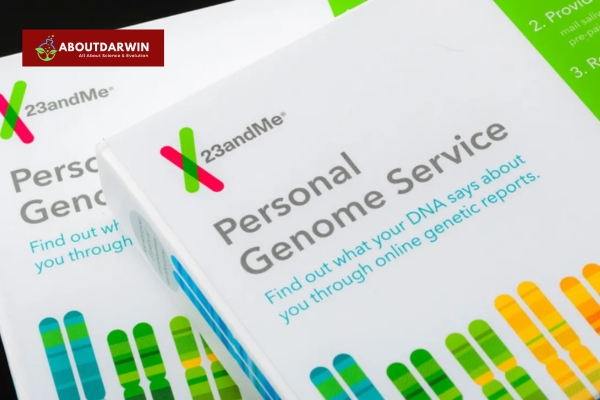
Over the years, 23andMe built an impressive portfolio of services. They pioneered affordable genetic testing that was once reserved for research institutions and medical facilities. In 2008, Time magazine named their testing kit “Invention of the Year,” recognizing the democratization of genetic information. The company gained FDA authorization for several genetic health risk reports, making it one of the few services legally allowed to provide certain health insights directly to consumers without physician involvement.
However, the company’s trajectory has changed dramatically. Between 2024 and 2026, 23andMe lost approximately 98% of its peak value. The company has faced layoffs, restructuring, and serious questions about its future. In mid-2025, 23andMe went private after being acquired by TTAM Research Institute, a significant shift that removed it from public market scrutiny but raised additional concerns about data stewardship.
Despite the corporate turmoil, 23andMe continues to offer several testing tiers and features:
The 23andMe testing process remains straightforward despite the company’s corporate challenges. Here is how it works from order to results:
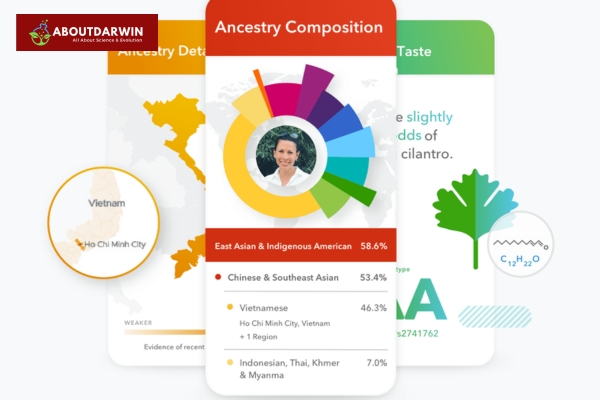
Once your results are available, understanding what they actually show becomes crucial. 23andMe presents information through several distinct report categories, each with different implications for your ancestry research and health awareness.
Your ancestry composition shows percentage estimates of your DNA matching reference populations from around the world. These results are organized hierarchically, showing broad continental ancestry first, then more specific regional breakdowns. For example, you might see 45% British and Irish, 25% French and German, 20% Scandinavian, and 10% Broadly Northwestern European.
The platform also provides haplogroup assignments, showing your deep ancestral origins on both maternal (mitochondrial DNA) and paternal (Y-DNA for males) lines. These trace your ancient migratory paths thousands of years ago, predating recorded history. Understanding how DNA tests can help build your family tree adds valuable context to these results.
Health predisposition reports indicate whether you have genetic variants associated with increased risk for certain conditions. These include well-known variants like BRCA1/BRCA2 for breast and ovarian cancer risk, APOE for late-onset Alzheimer’s, and variants for celiac disease, Parkinson’s disease, and type 2 diabetes. It is essential to understand that these reports show genetic predisposition, not destiny—many factors beyond genetics influence whether a condition develops.
Carrier status reports identify whether you carry one copy of a variant for certain recessive conditions like cystic fibrosis, sickle cell anemia, or Tay-Sachs disease. Carriers typically remain healthy but can pass the variant to children. If both parents are carriers of the same condition, each child has a 25% chance of inheriting the condition.
The DNA Relatives feature shows other 23andMe users who share DNA with you, estimating the relationship degree based on shared genetic material. Understanding how much DNA siblings and cousins share helps interpret these matches accurately. Close relatives (parents, siblings, half-siblings) share significant DNA amounts, while distant cousins may share only small segments.
This feature has helped many people find biological parents, unknown siblings, and extended family members. However, it has also led to difficult discoveries about non-paternity events, donor conception, and family secrets. Users should approach this feature with emotional preparedness for unexpected results.
23andMe has adjusted its pricing structure significantly in recent years, partly in response to financial pressures. Understanding the current costs and ongoing subscription requirements is essential before purchasing.
A critical consideration in 2026 is that 23andMe has shifted toward subscription-based access for many features that were previously included with one-time purchases. Users who bought tests years ago have found that accessing new reports or certain existing features now requires ongoing payments. This has generated significant customer complaints and should factor into your decision about whether the service represents good long-term value.
International pricing varies by region. In the United Kingdom, the Ancestry test costs approximately £79 and Health + Ancestry around £149. Canadian customers pay roughly C$249 for Ancestry and C$349 for the combined service. European Union pricing typically runs €99-€169 depending on the tier. Shipping costs are additional and vary by location, usually around $9.95 for return shipping within the United States.
Understanding the accuracy of 23andMe results requires distinguishing between different types of reports and their underlying methodologies. The company employs rigorous laboratory standards, but limitations exist that users should understand.
23andMe claims over 99% concordance between their genotyping results and sequencing methods, meeting FDA standards for genetic health risk assessments. The laboratory processing uses CLIA-certified methods, ensuring quality control comparable to clinical diagnostic laboratories. For ancestry composition, precision values exceed 90% for most populations with robust reference datasets, though accuracy decreases for populations with less genetic representation in their databases.
However, several accuracy limitations deserve attention. Ancestry estimates reflect statistical probabilities based on current reference populations, which can shift as databases expand. Health predisposition reports show genetic associations, not certainties—most conditions result from complex interactions between genetics, environment, and lifestyle that DNA tests cannot fully capture. Carrier status reports are highly accurate for the specific variants tested, but they do not screen for all possible disease-causing variants.
Experts consistently recommend consulting healthcare professionals for comprehensive interpretation of genetic results. 23andMe provides educational resources, but genetic counseling offers personalized guidance that automated reports cannot match, particularly for concerning health findings or complex family histories.
The privacy implications of genetic testing extend far beyond typical online services. Your DNA contains uniquely identifying information that cannot be changed if compromised. Understanding 23andMe’s privacy practices, recent security failures, and your rights regarding genetic data has become essential for any potential customer.
In October 2023, 23andMe suffered a significant data breach affecting approximately 6.9 million users—roughly half their customer base. Attackers accessed users’ ancestry information, health-related reports, and in some cases, raw genetic data. The breach occurred through credential stuffing attacks, where hackers used previously compromised passwords from other websites to access 23andMe accounts where users had reused credentials.
The fallout extended beyond individual accounts. Due to the DNA Relatives feature, attackers could access information about users’ genetic relatives who had not been directly compromised. This raised serious questions about the security architecture of interconnected genetic databases and the cascading privacy implications of shared family genetic information.
23andMe has historically partnered with pharmaceutical companies, using aggregated, de-identified genetic data for drug development research. While the company maintains that individual identities remain protected in these partnerships, the concept of “de-identified” genetic data is increasingly questioned by privacy experts. Genetic information is inherently identifying—your DNA is unique to you in ways that make true anonymization technically difficult.
In 2026, with the company’s uncertain financial future, additional concerns arise about what happens to stored genetic data if 23andMe faces bankruptcy or acquisition. Genetic data represents a valuable asset that could theoretically be sold as part of corporate restructuring. While privacy policies theoretically restrict such sales, corporate realities may create pressure to monetize data assets during financial distress. Following privacy best practices for DNA testers becomes even more critical given these risks.
Users retain certain rights regarding their genetic data, though exercising them requires active effort. You can request deletion of your 23andMe account and associated data through your account settings or by contacting customer service. However, understand that deleted data may persist in backup systems for some time, and information already shared with research partners or relatives cannot be fully retracted.
Users who participated in research programs should review consent agreements to understand what data rights they may have retained or surrendered. Some research programs require ongoing data retention for study validity, potentially limiting deletion options. Reading privacy policies carefully before testing—and periodically reviewing them as terms change—is essential for informed consent.
Evaluating 23andMe requires balancing its scientific capabilities against corporate instability and privacy risks. Here is an honest assessment of the advantages and significant drawbacks in 2026:
Choosing a DNA testing service requires comparing options beyond just 23andMe. Understanding how it stacks against major competitors helps determine which service best fits your specific goals. Our detailed 23andMe vs AncestryDNA comparison provides deeper analysis of the two market leaders.
AncestryDNA represents 23andMe’s primary competitor, with the two services occupying different niches despite overlapping features. AncestryDNA maintains a substantially larger database specifically focused on genealogy, with over 25 million tested individuals compared to 23andMe’s approximately 14 million. For pure ancestry research and family tree building, AncestryDNA generally provides more matches and deeper historical records integration.
However, 23andMe dominates in health-related testing. AncestryDNA offers limited health insights, primarily through partnerships rather than direct genetic analysis. Users seeking comprehensive health predisposition and carrier status reports will find 23andMe superior, assuming they accept the privacy and corporate stability trade-offs. AncestryDNA also avoided the major data breaches that have plagued 23andMe, offering greater security confidence.
MyHeritage DNA offers competitive ancestry testing with strong international representation, particularly valuable for users with European, Jewish, or Middle Eastern heritage. Their DNA matching and chromosome browser tools are sophisticated, often preferred by serious genetic genealogists. MyHeritage also offers health testing expansion for users who initially purchased ancestry-only tests, providing flexibility 23andMe lacks.
MyHeritage’s health reports, while expanding, currently do not match 23andMe’s FDA-authorized depth. The company has also faced its own privacy scrutiny, though not on the scale of 23andMe’s 2023 breach. For users prioritizing genetic genealogy tools and international databases, MyHeritage often outperforms 23andMe. For health-focused testing, 23andMe remains stronger. Our guide to the best genetic genealogy websites covers additional alternatives worth considering.
FamilyTreeDNA caters to serious genealogists with advanced Y-DNA and mitochondrial DNA testing that 23andMe does not offer. Their surname projects and deep ancestry analysis appeal to users building comprehensive family histories spanning generations. The company has also maintained a more transparent stance on privacy, allowing users to opt-out of law enforcement matching by default.
However, FamilyTreeDNA’s health testing capabilities are minimal compared to 23andMe. Their autosomal DNA database is smaller, potentially limiting relative matching opportunities. Users primarily interested in health insights or simple ancestry composition will find 23andMe more suitable, while serious genealogists may prefer FamilyTreeDNA’s specialized tools.
Deciding whether 23andMe fits your needs requires honest assessment of your goals, risk tolerance, and alternatives. The service excels for some users while being inappropriate for others.
The user experience of 23andMe in 2026 reflects both its historical strengths and current corporate challenges. While the technical platform remains functional, customer service degradation and trust erosion have fundamentally altered how users interact with the service.

The website and mobile app maintain their characteristic clean interface. Report navigation remains intuitive, with ancestry composition, health reports, and DNA relatives organized in clearly labeled sections. New users will find onboarding straightforward, with educational pop-ups explaining genetic concepts without overwhelming technical jargon. The platform successfully democratizes complex genetic information for general audiences.
However, user reports from 2024-2026 reveal significant friction points. Customer service response times have increased dramatically following corporate layoffs. Users report difficulty reaching representatives, extended resolution times for account issues, and frustration with subscription billing disputes. Trustpilot reviews show declining satisfaction, with recurring complaints about unexpected charges and difficulty canceling services.
The shadow of the 2023 data breach hangs over current user experience. Many long-term customers report discomfort knowing their genetic data was compromised, with some choosing to delete accounts despite losing access to their results. The DNA Relatives feature, while scientifically valuable, now carries privacy anxieties that did not exist before the breach demonstrated how interconnected genetic data creates cascading exposure risks.
Subscription model changes have generated particular resentment. Users who purchased tests years ago expecting lifetime access to their results now face paywalls for certain features. The transition from one-time purchase to recurring revenue model has alienated a segment of the customer base who feel the company changed terms retroactively. This business model evolution reflects financial desperation rather than user-centered design.
This 23andMe Review reveals a company at a crossroads. The genetic testing technology remains scientifically sound, with FDA-authorized health reports and robust ancestry analysis that accurately analyze your DNA. For users primarily seeking health predisposition insights, 23andMe still offers capabilities competitors cannot match.
However, the context surrounding that technology has fundamentally changed. The 2023 data breach demonstrated serious security vulnerabilities. Corporate instability following the loss of 98% of company value raises profound questions about data stewardship. The shift to subscription models has alienated customers who expected one-time purchase benefits. These are not minor concerns when dealing with your most personal, unchangeable information—your genetic code.
Whether 23andMe is right for you depends on your risk tolerance and priorities. If comprehensive health insights outweigh privacy concerns, and you accept that your data may face ongoing security risks, the service provides valuable information. If data security, corporate stability, or avoiding recurring fees matter more, competitors like AncestryDNA, MyHeritage, or FamilyTreeDNA may better serve your needs. Explore our guide to genetic genealogy alternatives for a comprehensive view of your options.
The genetic testing industry will continue evolving, but your DNA cannot be changed if things go wrong. Make your decision with clear eyes about both the benefits and the genuine risks this 23andMe Review has outlined.