Physical Address
304 North Cardinal St.
Dorchester Center, MA 02124
Physical Address
304 North Cardinal St.
Dorchester Center, MA 02124

Choosing between 23andMe and AncestryDNA is one of the most common dilemmas for anyone exploring their genetic heritage. These two services dominate the at-home DNA testing market, but they take fundamentally different approaches to genetic genealogy. Your choice will determine not just what you learn about yourself, but how you can use that information in the years to come.
This isn’t just about spit in a tube and waiting for results. In 2026, the decision between these services requires careful consideration of 23andMe’s significant security challenges and business uncertainty, versus AncestryDNA’s genealogical power that comes with subscription costs. Both services can reveal surprising truths about your ancestry and health, but their strengths, limitations, and long-term viability vary dramatically.
Let me cut through the confusion with a straightforward verdict: if you want the most comprehensive health insights available to consumers and don’t mind recent security concerns, 23andMe remains unmatched. However, if your priority is building family trees, connecting with living relatives, and exploring genealogy with the largest possible database, AncestryDNA is the clear winner despite its additional costs. The right choice depends entirely on your goals, budget, and comfort level with data privacy.
Before diving into the details, here’s a side-by-side look at how these DNA testing giants stack up across the most important factors.
| Feature | 23andMe | AncestryDNA |
|---|---|---|
| Primary Focus | Health reports + ancestry | Genealogy + family trees |
| Database Size | 12+ million customers | 27-28 million customers |
| Starting Price | Ancestry + Traits: $99 Health + Ancestry: $199 | Ancestry test: $99 Features require subscription |
| Sample Type | Saliva (larger sample required) | Saliva (smaller sample required) |
| Turnaround Time | 2-4 weeks (often 1 week) | 2-8 weeks (often 2-3 weeks) |
| Health Reports | FDA-approved, comprehensive 150+ reports included | Discontinued in 2020 Not available |
| Ancestry Regions | 47 regions, 2,000+ groups | 107 regions, 3,000+ groups |
| Unique Features | Y-DNA & mtDNA haplogroups, chromosome painting, Neanderthal ancestry | ThruLines, SideView, DNA Communities, family tree integration |
| Subscription Required | No | Yes for full features ($20-50/month) |
| Raw Data Download | Yes | Yes |
| Privacy Concerns | MAJOR: 2023 data breach affecting 7M users, 2025 bankruptcy filing | No major breaches to date |
23andMe pioneered the direct-to-consumer DNA testing industry and maintains its position as the go-to service for health-conscious consumers. Founded in 2006, the company built its reputation on making genetic information accessible to everyday people. Their testing approach combines ancestral exploration with FDA-approved health reports that no competitor can match in depth or breadth.
What sets 23andMe apart is its comprehensive health reporting. While other DNA services focus primarily on ancestry, 23andMe provides detailed insights into genetic health risks, carrier status, wellness traits, and even physical characteristics. Your results can reveal predispositions to conditions like late-onset Alzheimer’s, Parkinson’s disease, and certain cancers—all from a simple saliva sample. This health-first approach has made 23andMe the preferred choice for anyone wanting actionable genetic information beyond family history.
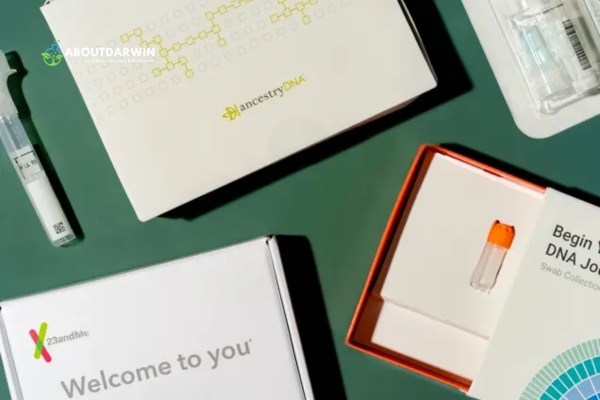
The testing experience with 23andMe is straightforward but requires attention to detail. Unlike many competitors, 23andMe demands a substantial saliva sample—you must fill the collection tube to a marked line, which can prove challenging for some users. However, this rigorous collection standard ensures sufficient DNA for comprehensive analysis. Most users receive results within 2-4 weeks, often in as little as one week, making it one of the faster options available.
Beyond health reports, 23andMe offers technical depth that appeals to genetics enthusiasts. Their service includes maternal and paternal haplogroup tracking through mtDNA and Y-DNA analysis, chromosome painting that shows exactly which segments of your DNA come from which regions, and even estimates of your Neanderthal ancestry. This level of technical detail is unmatched in the consumer market and provides fascinating insights for those interested in deep ancestry exploration.
The health reporting capability is undoubtedly 23andMe’s crown jewel. With over 150 reports covering genetic health risks, carrier status, wellness traits, and physical characteristics, no other consumer DNA service comes close. For couples planning families, the carrier status screening can identify potential genetic conditions that might affect future children. For health-conscious individuals, reports on genetic predispositions to conditions like celiac disease, age-related macular degeneration, and hereditary thrombophilia provide valuable information for preventive healthcare discussions with medical professionals.
23andMe also excels in technical granularity. Their chromosome browser allows users to see exactly which segments of their DNA originate from which ancestral regions, providing visual proof of genetic inheritance patterns. The haplogroup reports trace maternal and paternal lineages back thousands of years, connecting users to deep ancestral migration patterns. For those fascinated by human evolution, the Neanderthal ancestry estimate reveals what percentage of your DNA comes from our ancient evolutionary cousins—a feature exclusive to 23andMe.
The interface deserves mention as well. 23andMe’s website and mobile app provide clean, intuitive access to all reports without requiring additional subscriptions. Once you pay for the test, everything is included—no surprise fees for accessing premium features or detailed breakdowns. This transparency in pricing is refreshing compared to competitors who lock essential features behind subscription paywalls.
No discussion of 23andMe in 2026 would be complete without addressing the significant challenges that have shaken user trust. In October 2023, 23andMe experienced a massive data breach that affected approximately 7 million users—nearly half of their entire customer base. Hackers accessed personal information through credential stuffing attacks, compromising names, birth years, ancestry reports, and health-related data. Unlike traditional password breaches, this incident exposed highly sensitive genetic information that cannot be changed or protected through password updates.
Even more concerning for long-term users, 23andMe filed for Chapter 11 bankruptcy in February 2025 after failing to secure additional funding. While the company continues operations under new ownership following a court-supervised sale, this bankruptcy created uncertainty about data security, service continuity, and future support. Users invested in the 23andMe ecosystem face legitimate questions about whether their genetic data will remain secure, whether health reports will be maintained, and what happens if the company ceases operations entirely.
Smaller but still frustrating issues affect the user experience as well. 23andMe’s database of 12+ million customers, while substantial, lags significantly behind AncestryDNA’s 27-28 million. This smaller pool of testers means fewer DNA relative matches and less effective family tree building. Many users report low response rates from DNA matches—some wait over a year for responses, if they receive any at all. The platform’s family matching features are less sophisticated than competitors, making it harder to identify exact relationship types or collaborate with genetic relatives.
For genealogists, 23andMe’s lack of integration with historical records and family tree software represents a significant limitation. Unlike AncestryDNA, which connects seamlessly to billions of historical documents, 23andMe operates as a closed system focused on genetic data rather than documentary evidence. This approach works for health-focused users but frustrates those trying to solve family history mysteries or extend their family trees beyond living memory.
23andMe makes the most sense for health-conscious individuals who want comprehensive genetic insights beyond ancestry alone. If you’re planning a family and want carrier status screening, if you’re interested in understanding genetic health risks, or if you want detailed trait reports about everything from sleep patterns to genetic weight predisposition, 23andMe is essentially your only option among major DNA testing services. The FDA-approved health reports provide information that simply isn’t available through AncestryDNA or most other competitors.
Technical enthusiasts and those fascinated by deep ancestry will also appreciate 23andMe’s unique features. The chromosome browser, haplogroup tracking, and Neanderthal ancestry estimates appeal to users who want to understand their genetic makeup at a molecular level. If you’re less interested in connecting with living relatives and more interested in understanding ancient migration patterns and genetic inheritance, 23andMe’s technical depth provides value that competitors can’t match.
However, you must be comfortable with the security risks and business uncertainty. Users who proceed with 23andMe in 2026 should understand that their genetic data was compromised in the 2023 breach and that the company’s future ownership and direction remain less certain than more financially stable competitors. For some users, particularly those focused on health information rather than genealogy, these trade-offs are acceptable. For others, particularly those with serious privacy concerns, these issues may be deal-breakers.
AncestryDNA dominates the genealogical landscape with the largest DNA database of any consumer testing service. Backed by Ancestry.com’s massive collection of historical records and family trees, the service takes a fundamentally different approach than 23andMe—focusing exclusively on ancestry and genealogy rather than health reports. This specialization has made AncestryDNA the preferred choice for serious family historians, adoptees seeking biological family, and anyone interested in building extensive family trees.
The sheer scale of AncestryDNA’s database changes everything about genetic genealogy. With 27-28 million people tested, you’re far more likely to find meaningful DNA matches than with any competitor. For adoptees searching for biological family, people with unknown parentage, or anyone trying to break through brick walls in family research, this larger database significantly increases the odds of making connections that matter. More testers means more cousin matches, more shared ancestor hints, and more opportunities to collaborate with genetic relatives who can help solve family history mysteries.
AncestryDNA’s testing process is designed for accessibility rather than technical depth. The saliva collection requires a smaller sample than 23andMe, making it easier for many users to provide sufficient material. Results typically arrive within 2-8 weeks, though many users in 2026 report receiving results in as little as 2-3 weeks. The focus throughout is on simplicity—AncestryDNA wants genetic testing to be accessible to everyone, regardless of technical expertise or genetics knowledge.
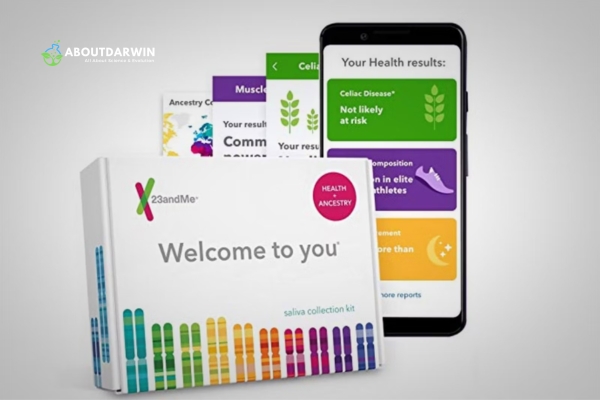
What truly sets AncestryDNA apart is the integration with Ancestry.com’s broader ecosystem. Your DNA results connect directly to family trees, historical records, and other genealogical tools that transform raw genetic data into actionable family history insights. This integration creates something greater than the sum of its parts—DNA matches that appear alongside family trees, document hints that confirm genetic relationships, and collaborative features that make genealogy a social rather than solitary pursuit.
ThruLines represents perhaps AncestryDNA’s most powerful innovation for genealogists. This feature analyzes your DNA matches alongside their family trees to predict how you might be related to people further back in your family tree. Instead of just showing you fourth cousins and leaving you to figure out the connection yourself, ThruLines suggests specific ancestors you likely share and visualizes the potential relationship paths.
The practical impact is enormous. For users trying to extend their family tree beyond what documentary evidence can confirm, ThruLines provides genetic validation of suspected relationships. It can help you identify the parents of a brick-wall ancestor, confirm that a great-great-grandparent is actually your ancestor, or discover previously unknown branches of your family tree. The feature leverages both DNA evidence and family tree data to create hypotheses about relationships that you can then verify through traditional genealogical research.
ThruLines works best when your DNA matches have well-documented family trees, which is increasingly common as more genealogists test with AncestryDNA. The larger the database grows, the more effective ThruLines becomes at identifying distant relationships and suggesting ancestral connections. For anyone serious about family history research, this feature alone makes AncestryDNA worth the investment—no other service offers anything comparable in terms of automated relationship prediction and visualization.
Beyond ThruLines, AncestryDNA offers several features that enhance genealogical research. SideView technology separates your DNA into maternal and paternal sides, helping you identify which side of the family a DNA match comes from even without parental testing. This feature proves invaluable when trying to sort matches from different branches of your family tree, particularly for those whose ancestors lived in the same geographic regions for generations.
AncestryDNA’s ethnicity estimates cover 107 regions and 3,000+ genetic groups, significantly more than 23andMe’s 47 regions and 2,000+ groups. This finer granularity provides more specific ethnic breakdowns—where 23andMe might simply report “British & Irish,” AncestryDNA might separate England, Wales, Scotland, and Ireland into distinct regions. For users with heritage from well-studied populations like Europe, this specificity provides fascinating insights into regional migration patterns within ethnic groups.
The DNA Communities feature goes a step further by connecting you to groups of people who share similar DNA patterns and likely ancestors from specific time periods and locations. You might discover that your DNA matches a community of people whose ancestors immigrated from Ireland to Boston between 1850-1875, or that you belong to a community of Acadians who settled in Louisiana after the Grand Dérangement. These historical connections transform abstract ethnicity percentages into meaningful stories about migration and settlement.
AncestryDNA’s most significant limitation is its subscription model. While the DNA test itself costs a reasonable $99, accessing the full power of the platform requires an active subscription to Ancestry.com. Without a subscription, you can view your ethnicity estimate and basic DNA matches, but features like viewing family trees of matches, accessing historical records, and using advanced tools remain locked behind a paywall.
Subscriptions range from $20-50 per month depending on the level of access and features included. Over time, these costs can substantially exceed the initial price of the DNA test. For casual users who just want ethnicity estimates and a quick look at DNA matches, the required subscription feels like an unnecessary burden. For serious genealogists who understand the value of integrated access to billions of historical records, the subscription cost represents a reasonable investment—but it’s still an investment that 23andMe doesn’t require.
Another frustration is that many DNA matches have private or empty family trees, which limits the utility of genetic matching. When you can’t see how a potential cousin relates to you, the DNA match becomes far less useful for genealogical research. This isn’t AncestryDNA’s fault—privacy settings are user-controlled—but it does mean that the theoretical value of the larger database isn’t always realized in practice. Building family trees through DNA matching often requires patience and persistence as you wait for matches to respond to messages or update their trees.
Users seeking health information will also be disappointed. AncestryDNA discontinued health reports in 2020 and shows no indication of returning to the health testing market. If genetic health insights matter to you, AncestryDNA simply cannot provide what you need—this is purely a genealogy service. The absence of haplogroup testing, chromosome browsers, and other technical features that appeal to genetics enthusiasts further limits the platform’s appeal for users whose interests extend beyond family tree building.
AncestryDNA is the obvious choice for anyone focused on genealogy and family history. If you want to build extensive family trees, connect with living relatives, or solve family history mysteries, the larger database and integrated genealogical tools make AncestryDNA far more effective than 23andMe. Adoptees searching for biological family, people with unknown parentage, or anyone trying to identify biological ancestors will benefit from the increased odds of finding meaningful matches.
People who already use Ancestry.com for genealogical research will find seamless integration between their existing family trees and new DNA results. The combination of genetic and documentary evidence creates powerful research capabilities that neither approach can provide alone. If you’re serious about family history and willing to invest in a subscription for access to historical records and advanced features, AncestryDNA offers the most comprehensive genealogical package available.
Users who prioritize data security and company stability may also prefer AncestryDNA. Unlike 23andMe, AncestryDNA has not experienced major security breaches or bankruptcy filings. For users concerned about the long-term protection of sensitive genetic data, this stability provides peace of mind that 23andMe’s recent troubles have undermined. If you’re uncomfortable with the idea that your genetic information could be exposed in a data breach, AncestryDNA’s cleaner security record makes it the safer choice.
Both 23andMe and AncestryDNA use similar microarray-based genotyping technology and provide highly accurate ancestry estimates. However, accuracy in DNA testing is more nuanced than a simple percentage—different services may produce different results because they use different reference populations and analytical algorithms. Your ethnicity estimate from 23andMe might show 25% Irish while AncestryDNA shows 35% British & Irish, yet both could be accurate based on how each company defines and measures these categories.
That said, users generally find 23andMe more precise for well-defined populations, particularly within Europe where the company has invested heavily in regional specificity. 23andMe separates England, Wales, Scotland, and Ireland into distinct categories, while AncestryDNA sometimes groups these regions more broadly. For users with ancestry from well-studied populations, 23andMe’s granularity often feels more accurate and specific.
AncestryDNA excels for underrepresented populations and ethnic groups that have been historically marginalized in genetic studies. The company’s larger database includes more diverse samples, which improves ethnicity estimates for African, Asian, and Indigenous American ancestry. Users with heritage from these populations often report that AncestryDNA provides more meaningful and accurate ethnicity breakdowns than 23andMe or competitors with smaller, less diverse databases.
For DNA matching and relationship identification, accuracy depends primarily on database size rather than testing technology. AncestryDNA’s larger database means more accurate identification of distant cousins and more opportunities to confirm relationships through multiple shared matches. Both services reliably identify close relationships (parents, siblings, first cousins) with near-perfect accuracy. For more distant relationships, the larger database gives AncestryDNA an edge in accuracy and utility.
The database size difference between these services is substantial and has practical implications for users. 23andMe’s database of 12+ million customers represents a significant pool of potential genetic matches, but it pales in comparison to AncestryDNA’s 27-28 million. For perspective, if every person with a certain rare ancestor tested with both companies, you’d be more than twice as likely to find that connection through AncestryDNA.
This advantage compounds over time. As AncestryDNA’s database grows larger relative to competitors, the network effects become more pronounced—more people test because their relatives tested, which creates even more matches, which attracts even more testers. For genealogical purposes, database size matters tremendously, and AncestryDNA’s dominance in this area creates a self-reinforcing advantage that 23andMe cannot easily overcome.
However, database quality matters as much as quantity. AncestryDNA’s user base tends to be more focused on genealogy and family tree building, meaning matches are more likely to have useful family trees and respond to collaboration requests. 23andMe users often test primarily for health information and may have less interest in genealogical collaboration. For users whose main goal is connecting with relatives, the engaged genealogy-focused community at AncestryDNA may prove more valuable than simply having a larger number of total matches.
The privacy and security landscape between these services represents perhaps their most significant difference. 23andMe’s 2023 data breach exposed sensitive genetic and personal information for approximately 7 million users. Unlike password breaches where you can simply change credentials, genetic data cannot be changed—once exposed, it remains vulnerable permanently. This breach affected nearly half of 23andMe’s customer base and has understandably shaken user trust.
The 2025 bankruptcy filing and subsequent ownership change created additional uncertainty about data protection and service continuity. While the company continues operations, bankruptcy proceedings and court-supervised sales create questions about long-term data security, user agreements, and what happens to genetic information if the company ceases operations entirely. Users who entrusted 23andMe with highly sensitive genetic information now face legitimate concerns about whether that data will remain secure under new ownership or potential future corporate restructuring.
AncestryDNA, by contrast, has not experienced major security breaches or bankruptcy proceedings. The company maintains what appears to be more robust data security practices and has not faced the same level of public controversy regarding data protection. While no online service can guarantee perfect security, AncestryDNA’s cleaner track record provides peace of mind that 23andMe’s recent troubles have undermined. For users concerned about genetic privacy and long-term data protection, this stability represents a significant advantage.
Both services allow users to download raw DNA data and delete their accounts, which provides some control over genetic information. However, deletion requests don’t necessarily remove data that has already been shared with research partners or law enforcement. Users concerned about genetic privacy should carefully review both companies’ privacy policies and understand that DNA testing inherently involves trading some privacy for genetic insights—regardless of which service you choose.
On the surface, both services price their basic tests similarly at $99 for ancestry-only testing. However, the true cost comparison requires looking beyond the initial test price. 23andMe’s Health + Ancestry service costs $199 but includes all features without additional subscriptions—once you pay, everything is accessible. AncestryDNA’s $99 test is just the beginning, as meaningful use of the platform requires an active subscription that costs $20-50 monthly.
For health-focused users, 23andMe provides better value. The comprehensive health reports would cost thousands of dollars through medical genetic testing services, making 23andMe’s $199 price remarkably reasonable. There’s simply no way to get comparable health insights through AncestryDNA at any price—the service doesn’t offer health reports.
For genealogy-focused users, the value calculation is more complex. AncestryDNA’s subscription model can feel expensive, but it provides access to billions of historical records that would cost far more to access through other sources. Serious genealogists often spend thousands of dollars on record subscriptions, courthouse visits, and professional researchers. AncestryDNA’s integrated access to these resources represents genuine value despite the recurring cost. Casual users who just want ethnicity estimates, however, may find the required subscription feels like an unnecessary burden.
Many experienced genealogists ultimately test with both companies to maximize relative matches and access different features. If you’re serious about family history and health insights, budgeting for both services (approximately $300 upfront plus Ancestry’s subscription costs) provides the most comprehensive genetic picture. For most users, however, choosing the service that best matches your primary goals—health with 23andMe or genealogy with AncestryDNA—provides better value than paying for both.
Both services use similar genotyping technology and provide accurate results, but accuracy depends on what you’re measuring. 23andMe tends to be more precise for well-defined European populations with better regional specificity. AncestryDNA often provides more accurate ethnicity estimates for underrepresented populations like African, Asian, and Indigenous American ancestry due to its larger and more diverse database. For DNA matching, AncestryDNA’s larger database makes it more effective at finding and confirming relationships with distant relatives.
23andMe did not shut down, but the company filed for Chapter 11 bankruptcy in February 2025 and subsequently underwent a court-supervised sale to new owners. The company continues operations under new ownership, but the bankruptcy created uncertainty about data security, service continuity, and future direction. Combined with a major 2023 data breach that affected 7 million users, these events have significantly shaken user trust in the company.
AncestryDNA currently appears more trustworthy from a security perspective, as it has not experienced major data breaches or bankruptcy proceedings like 23andMe. The company maintains a cleaner security record and more stable ownership structure. However, both services have been operating for over a decade and have processed tens of millions of tests. Trustworthiness ultimately depends on what matters to you: if data security is your priority, AncestryDNA has the advantage; if comprehensive health reporting is more important than security concerns, 23andMe remains the only viable option for FDA-approved genetic health insights.
No direct integration exists between 23andMe and AncestryDNA—these are completely separate databases run by different companies. You cannot automatically transfer your results or matches between services. However, you can manually download your raw DNA data from 23andMe and upload it to third-party services like FamilyTreeDNA, MyHeritage, or GEDmatch for additional matching and analysis. These uploads can help you find additional genetic relatives even if you don’t test directly with multiple companies.
No, AncestryDNA discontinued health reports in 2020 and no longer offers health testing as part of its DNA service. The company now focuses exclusively on ancestry and genealogy. If you want genetic health insights, carrier status screening, or wellness reports, 23andMe is the only major direct-to-consumer DNA service that provides FDA-approved health information. AncestryDNA made this decision to focus on their core genealogy market and avoid the regulatory complexity that comes with health-related genetic testing.
The decision between 23andMe and AncestryDNA ultimately comes down to your primary goals and comfort with risk. If health insights are your priority, 23andMe remains the only viable choice despite its security challenges. The FDA-approved health reports, carrier status screening, and trait reports provide information that simply isn’t available through any other consumer DNA testing service. For users planning families, managing health risks, or simply curious about their genetic makeup, 23andMe’s comprehensive health reporting justifies the cost and privacy risks.
If genealogy and family history are your focus, AncestryDNA is the clear winner. The larger database, ThruLines feature, and integration with historical records create capabilities that 23andMe cannot match. For adoptees searching for biological family, people building extensive family trees, or anyone interested in connecting with genetic relatives, AncestryDNA’s advantages are overwhelming. The subscription model adds cost, but the value received through access to records and advanced genealogical tools justifies the investment for serious users.
Data security concerns should push cautious users toward AncestryDNA. The 2023 data breach and 2025 bankruptcy at 23andMe represent serious red flags for anyone concerned about genetic privacy. If you’re uncomfortable with the idea that your genetic information might be exposed or that the company might undergo ownership changes, AncestryDNA’s more stable security record provides peace of mind that 23andMe’s recent troubles have undermined.
For many users, the ideal solution involves testing with both services over time. Start with the service that matches your primary goal, then add the second service later if you want to expand your genetic relative matches or access additional features. Many serious genealogists and health-conscious individuals eventually test with multiple companies to get the most comprehensive picture of their genetic heritage.
The most important thing is to make an informed decision based on your specific needs. 23andMe vs AncestryDNA isn’t a choice with a universal right answer—it’s a decision that depends on what you hope to learn from genetic testing and how much risk you’re willing to accept to get that information. Choose based on your priorities, test with confidence, and use your genetic insights to better understand who you are and where you come from.
Also Read: 23andMe vs FamilyTreeDNA for a deeper dive into Y-DNA and mtDNA testing options, or check out our detailed reviews of AncestryDNA and 23andMe for comprehensive looks at each service.
