Physical Address
304 North Cardinal St.
Dorchester Center, MA 02124
Physical Address
304 North Cardinal St.
Dorchester Center, MA 02124

Genetic genealogy has transformed how we explore family history in 2026, yet misconceptions about DNA testing continue to spread faster than accurate information. Whether you are considering your first DNA test or have already explored your ethnicity estimates, understanding what your results actually mean can save you from costly misunderstandings. This guide addresses the most persistent DNA myths while highlighting facts that every family history researcher should know.
The popularity of at-home DNA testing has surged over the past decade, with millions of people submitting samples to uncover their ancestral origins. However, many test-takers walk away with confusion rather than clarity. Questions about changing results, unexpected DNA matches, and privacy concerns have left some wondering if they made the right choice. By separating fact from fiction, you can approach genetic genealogy with realistic expectations and better research strategies.
Throughout this guide, we will explore everything from basic inheritance patterns to advanced concepts like genetic recombination. You will learn why siblings receive different DNA results, how reference populations affect your ethnicity percentages, and why DNA testing works best alongside traditional paper trail research. Let us begin by examining the most common myths that mislead genealogy enthusiasts today.
Exploring DNA and genealogy often involves navigating through several myths and misconceptions. Let us debunk some of the most common myths that persist in the genetic genealogy community.
Genealogy can be time-consuming, but many online resources offer free access to records. Tools like genealogy software aid in organizing research efficiently. Joining societies and online communities provides invaluable support at minimal cost. Libraries often provide free access to premium databases like Ancestry.com and Fold3, making quality research accessible without subscription fees.
Not all records are digitized. Many essential documents reside in physical archives, libraries, and repositories. Online resources are valuable, but offline efforts may uncover crucial information. Courthouses maintain wills and probate records that rarely appear online. Church archives hold baptism and marriage records that predate civil registration. Cemetery offices and historical societies often possess unique materials unavailable digitally.
DNA testing offers insightful data, yet it is not exhaustive. It complements traditional research by providing genetic links but does not replace historical records and documents. Combining both yields comprehensive results. While a DNA test might indicate you have Irish ancestry, only paper records can reveal the specific county, townland, or parish where your ancestors lived. DNA identifies biological relationships; documents explain the stories behind those connections.
Many beginners expect DNA results to instantly generate a complete family tree. The reality requires patience and skill. DNA matches provide clues, but you must research those connections using census records, birth certificates, and immigration documents to verify relationships. For those seeking to find biological relatives, DNA can open doors, but traditional research methods remain essential for building accurate family histories. Learn more about finding birth family through DNA testing to understand the full process.
Immigration officers at Ellis Island did not typically change surnames. Name changes usually occurred later as immigrants assimilated. Original passenger manifests usually reflect accurate entries. The myth persists because name changes happened frequently during the naturalization process or when immigrants chose to Americanize their names for social or economic reasons. Ellis Island officials worked from ship manifests prepared at the port of departure, making arbitrary name changes at arrival unlikely.
Also Read: MyHeritage Family Tree Guide: Simplify Genealogy Research
In the realm of DNA and genealogy, myths abound, often misleading people on vital aspects of this fascinating science. Let us debunk some of these prevalent myths with current insights from genetic genealogy.

Many assume online family trees are infallible. However, this belief is far from the truth. The accuracy of online family trees can vary considerably. It is crucial to evaluate the sources and evidence of such trees critically. User-generated content on platforms like Ancestry.com and MyHeritage ranges from meticulously researched lineages to completely fabricated connections copied without verification.
Whenever possible, verify the information using primary sources. For instance, examining birth, marriage, and death records can provide more reliable data than user-generated entries. Look for trees that cite specific documents rather than other online trees. The genealogical proof standard requires multiple independent sources to establish facts. Cross-referencing census records, military documents, and church registers helps confirm that a relationship in a family tree reflects biological reality rather than wishful thinking.
The perception of DNA testing being prohibitively expensive is outdated. In 2026, basic ancestry DNA tests typically range between $49 and $99 during regular periods, with frequent sales bringing prices down to $39-$59 during holidays like DNA Day in April, Black Friday, and Mother’s Day. Health-related add-ons increase costs, but the core genealogical testing remains accessible to most budgets.
Additionally, many online platforms grant free access to genealogical records, offering an economical way to delve into family history. Tools like genealogy software also help track and organize research efficiently, minimizing costs further. Public libraries increasingly provide free DNA test consultation services and research assistance. Once you test with one company, you can often download your raw DNA data from AncestryDNA and upload it to other databases for free, expanding your match list without additional testing costs.
A surprisingly common misconception is that DNA results are static once delivered. Many test-takers express confusion or even anger when their ethnicity estimates update after several months or years. These changes are not errors; they reflect scientific improvements that benefit your results. As testing companies analyze more samples from diverse global populations, their reference databases become more precise.
When AncestryDNA or 23andMe updates your ethnicity percentages, they are applying better algorithms to the same DNA data you originally submitted. A region that once showed as “Broadly European” might refine to “Scottish Highlands” as more reference samples become available. Similarly, genetic groups and communities can appear or disappear as the science advances. These updates represent progress in genetic genealogy, not mistakes in your original analysis.
Many people expect full siblings to see identical ethnicity estimates and DNA match lists. The reality of genetic inheritance proves more complex. During reproduction, chromosomes undergo recombination, meaning each child receives a unique mix of DNA from parents. Full siblings typically share about 50% of their DNA, not 100%.
This genetic recombination explains why one sibling might show 15% Irish ancestry while another shows 22%. It also accounts for why your sister might have DNA matches you do not share, even from the same side of the family. The random nature of inheritance means each child gets different segments of DNA from grandparents. Learn more about how children can inherit ethnicity markers differently than their siblings or even show ethnicity their parents do not appear to have.
Privacy concerns represent one of the most significant barriers preventing people from testing. While valid considerations exist, the reality is less alarming than sensational headlines suggest. Reputable testing companies employ encryption and data protection measures. Most allow you to delete your data or opt out of law enforcement matching databases.
The true privacy consideration involves your relatives. When you test, you reveal genetic information about your entire family tree, including those who have not consented to testing. However, the genetic genealogy community has established strong norms around contacting matches respectfully. Understanding your testing company’s privacy policy and data sharing options empowers you to make informed decisions about your genetic information.
Genealogy research holds value for all age groups. The misconception that this pursuit is for the elderly overlooks the growing interest among younger generations. Today’s technology-savvy youth often engage in genealogy through digital platforms and social media, exploring their roots in ways not available to previous generations.
Younger researchers bring fresh perspectives and technical skills to family history. They excel at navigating online databases, using DNA matching tools, and connecting with distant cousins through social media. Many millennials and Gen Z family historians have successfully broken through brick walls that stumped previous generations using genetic genealogy techniques their grandparents never had access to.
A common myth is that cancer is strictly inherited. In reality, while genetics do play a role in cancer predisposition, not all cancers stem from inherited genes. Environmental factors, lifestyle choices, and random cellular changes significantly impact cancer development. Identifying family medical history helps, but it is just one part of a broader picture.
Only about 5-10% of cancers result directly from inherited genetic mutations. The vast majority develop due to a combination of aging, environmental exposures, and lifestyle factors. Genetic counseling can help families with strong cancer histories understand their risks, but a family history of cancer does not guarantee an individual will develop the disease. Similarly, many people without any family history of cancer still develop it through random mutations during their lifetime.
Believing in the existence of a perfect genome ignores the complexity of human genetics. All humans possess mutations and genetic variations that contribute to individual uniqueness. There is no flawless genome; instead, diversity in genetic makeup enriches our species. Understanding this helps dispel the myth of genetic perfection and accept that variations are natural and widespread.
Genetic mutations occur naturally and constantly. Some variations provide advantages in certain environments, while others remain neutral. The concept of a perfect genome ignores the reality that genetic diversity drives human adaptation and survival. Every person carries thousands of genetic variants, most of which have no impact on health or appearance.
Also Read: Download Raw Data from AncestryDNA: Easy, Fast How-To!
DNA carries the genetic blueprint for all living organisms. It is central to genetics and genealogy, revealing ancestral lineage and biological relationships. Understanding the different types of DNA testing and how they apply to genealogical research helps you choose the right approach for your family history goals.
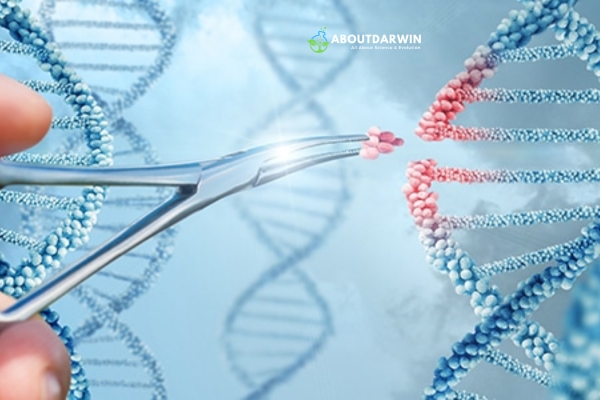
Combining DNA testing with traditional research elucidates genetic connections. Y-DNA, mtDNA, and autosomal DNA tests provide insights into different lineage paths. For instance, Y-DNA traces paternal lines, mtDNA follows maternal lines, while autosomal DNA offers information from both parents.
Autosomal DNA testing remains the most popular choice for genealogy because it examines chromosomes inherited from both parents. This test type identifies DNA matches across all family lines within approximately five to seven generations. Y-DNA testing follows the direct paternal line from father to son, useful for surname research and deep ancestral origins. Mitochondrial DNA (mtDNA) traces the direct maternal line, passed from mothers to all children regardless of gender.
| Test Type | Inheritance Pattern | Generations Covered | Best Used For |
|---|---|---|---|
| Autosomal DNA | Both parents (50% from each) | 5-7 generations | Finding cousins, ethnicity estimates |
| Y-DNA | Father to son only | Direct paternal line | Surname research, haplogroups |
| mtDNA | Mother to all children | Direct maternal line | Maternal ancestry, deep origins |
| X-DNA | Mother to all, father to daughters | Variable | Specific relationship predictions |
Choosing the right DNA test depends on your research goals. Autosomal testing works best for most beginners seeking to build family trees and find recent relatives. Y-DNA and mtDNA tests provide deeper historical insights but require more specific research questions. Advanced genetic genealogists often combine all test types for comprehensive analysis of challenging research problems.
Genetic mutations are changes in the DNA sequence. While some mutations lead to genetic disorders, others have no significant impact. These mutations accumulate over generations, making them vital markers in genetic genealogy. For instance, certain mutations pinpoint ancestral origins through haplogroup identification.
In genealogy, mutations help distinguish between different family lines. Y-DNA and mtDNA testing specifically look for these accumulated changes to estimate how closely related two individuals are. More mutations typically indicate a more distant common ancestor. Understanding mutation rates helps genetic genealogists estimate time to most recent common ancestor (TMRCA) when analyzing DNA matches.
Effective genealogy research blends various methods. Document analysis examines birth, marriage, and death certificates for vital information. Census records reveal familial connections across decades, showing household compositions and relationships. Local archives contain regional documents unavailable in national databases, including probate records and land deeds.
DNA evidence integrates with these traditional methods through the genealogical proof standard. This framework requires reasonably exhaustive research, complete and accurate source citations, analysis and correlation of information, resolution of conflicting evidence, and a written conclusion. DNA matches provide hints, but traditional records prove the relationships suggested by genetic evidence.
Several tools and resources ensure precise family tree construction. Genealogical databases like Ancestry.com and MyHeritage offer vast collections of records. For a detailed guide on building your tree, see our MyHeritage Family Tree Guide. DNA testing services including 23andMe and FamilyTreeDNA provide comprehensive genetic analysis. Software programs like Family Tree Maker help organize and visualize family trees.
Beyond commercial platforms, free resources provide substantial research value. FamilySearch offers billions of records at no cost. The National Archives and Records Administration provides census, military, and immigration documents. State archives, historical societies, and university special collections house unique materials relevant to specific regions or populations. Cyndi’s List serves as a comprehensive directory of online genealogy resources organized by topic and location.
By leveraging these facts and resources, constructing an accurate genealogy becomes an achievable goal. The combination of DNA evidence and traditional research methods creates a robust foundation for exploring your family history with confidence.
Also Read: How To Find Your Birth Family with a DNA Test?
Approximately 2% DNA ethnicity typically represents ancestry from around 6 to 8 generations back, or roughly 150-200 years. This corresponds to a great-great-great-great-grandparent (5th great-grandparent) who contributed that specific genetic component to your ancestry.
DNA testing companies estimate relationships based on shared centimorgans. Full siblings share about 50% of their DNA, which falls within the same range as half-siblings, grandparents/grandchildren, or avuncular relationships. AncestryDNA provides probability estimates rather than definitive answers. Additional analysis of shared matches and traditional genealogy research helps confirm the actual relationship.
Commercial DNA testing for genealogy purposes is restricted in France under the Bioethics Law. The French government maintains these restrictions to protect privacy and prevent potential misuse of genetic information. However, French citizens can legally take DNA tests abroad and use international testing companies, though they cannot purchase tests marketed within France itself.
DNA tests for genealogy are highly accurate at detecting biological relationships and shared ancestry. The DNA matching technology correctly identifies relatives with extremely high confidence. However, ethnicity estimates have margins of error and should be viewed as statistical approximations rather than precise measurements. The science behind relationship predictions and genetic matching is well-established and reliable.
AncestryDNA has faced various legal challenges related to data privacy, data breaches, and terms of service changes. Lawsuits have addressed concerns about how genetic data might be used by third parties, including law enforcement access. Users should review current terms of service and privacy policies, understanding that genetic data involves unique privacy considerations affecting entire families, not just the individual tester.
DNA tests do not provide wrong ancestry information, but results are estimates based on reference populations and statistical modeling. Ethnicity percentages change as science improves and databases grow. A DNA test correctly identifies biological connections but cannot definitively name specific ancestors or locations without supporting traditional records. Results should be interpreted as genetic probabilities rather than absolute facts.
No, genealogy can be a fascinating and rewarding hobby for people of all ages. With the advent of online tools and DNA testing, younger generations are increasingly participating in genealogical research. Younger researchers often bring technical skills and fresh perspectives that complement traditional research methods.
DNA can reveal ancestral lineage, help construct accurate family trees, and identify previously unknown relatives. It is a powerful tool when combined with traditional genealogy research methods. DNA testing breaks through brick walls when paper records are missing or destroyed, and helps verify family connections suggested by historical documents.
Yes, environmental factors play a significant role in the development of cancer. While genetics can contribute to cancer risk through inherited mutations, lifestyle choices and environmental exposures often have greater influence. Only 5-10% of cancers result from inherited genetic mutations, while the majority develop due to aging, environmental factors, and random cellular changes.
No, DNA ethnicity results do not skip generations. Each individual inherits a mix of DNA from their parents, which can represent a combination of ethnic backgrounds. However, genetic recombination means children receive different portions of DNA from each grandparent, so siblings may show different ethnicity percentages even with the same parents.
Also Read: Download Raw Data from AncestryDNA: Easy, Fast How-To!
Genetic genealogy in 2026 offers unprecedented opportunities to explore family history, but success requires understanding both the power and limitations of DNA testing. By separating DNA myths from facts, you can approach your research with realistic expectations and effective strategies. DNA testing serves as a powerful tool when integrated with traditional genealogy methods, not as a replacement for them.
The myths we have debunked address concerns ranging from privacy and cost to scientific accuracy and inheritance patterns. Remember that ethnicity estimates evolve as science advances, siblings naturally receive different DNA results, and no DNA test can replace the value of historical records. Whether you are just beginning your genetic genealogy journey or refining your research approach, combining DNA evidence with traditional paper trail methods will yield the most comprehensive and accurate family history results.
Start your journey with clear expectations, verify information through multiple sources, and embrace the fascinating complexity of genetic inheritance. Your DNA holds valuable clues to your past, but the full story emerges only when genetic evidence meets historical documentation.