Physical Address
304 North Cardinal St.
Dorchester Center, MA 02124
Physical Address
304 North Cardinal St.
Dorchester Center, MA 02124

Learning how to find your birth family with a DNA test has transformed from a distant dream into an achievable reality for thousands of adoptees and individuals with unknown parentage. Whether you were adopted through a closed adoption, separated from biological relatives by circumstance, or simply curious about your genetic roots, DNA testing offers a powerful pathway to answers that were once impossible to obtain. The process combines scientific precision with the deeply personal journey of discovering where you come from and who shares your bloodline.
The landscape of adoptee DNA testing has evolved dramatically in recent years. What began as simple ethnicity estimates has grown into sophisticated tools capable of identifying biological parents, siblings, and extended family members with remarkable accuracy. For many, the moment that email arrives announcing “DNA matches found” marks the beginning of a life-changing journey. But success requires more than just submitting a saliva sample. It demands understanding which tests to take, how to interpret complex genetic data, and how to navigate the emotional and practical challenges of connecting with biological relatives.
This comprehensive guide walks you through every stage of using DNA testing to find your birth family. From selecting the right testing company and understanding your results to reaching out to biological relatives and handling the complex emotions that arise along the way, you will find actionable steps and essential resources. Whether you are just beginning your search or have already received your DNA results and need help interpreting them, this guide provides the knowledge and tools to move forward with confidence.
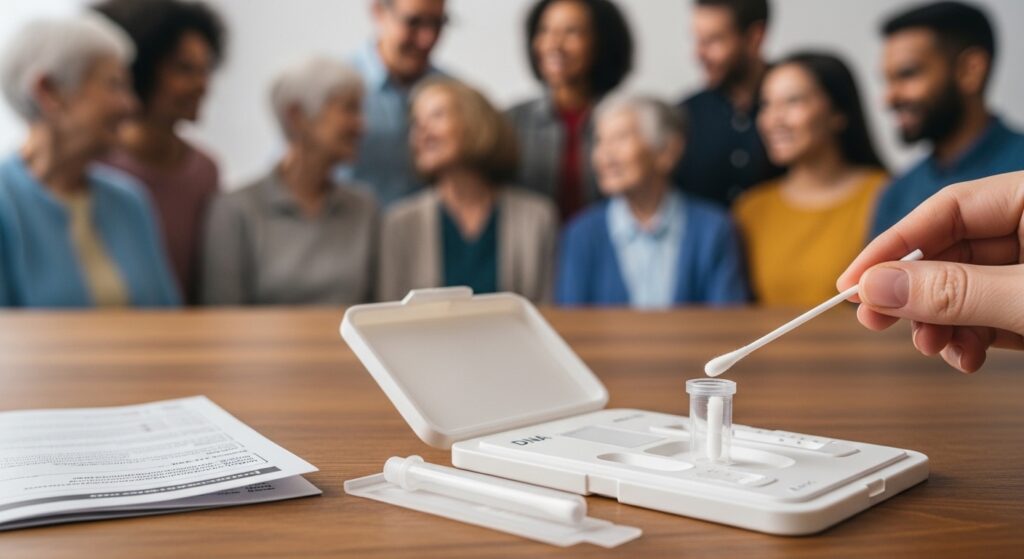
DNA testing for unknown parentage operates on a simple but powerful principle. Every person inherits approximately half their DNA from their biological mother and half from their biological father. When you submit a DNA sample to a testing company, they analyze hundreds of thousands of genetic markers scattered across your genome. These markers serve as unique signatures that can be compared against millions of other tested individuals in the company’s database.
The magic happens when the algorithm identifies segments of DNA that match between you and another tester. The more DNA you share with someone, the closer your biological relationship likely is. For adoptees and those seeking birth parents, this means that even if your biological father or mother has never tested, you may match with their siblings, cousins, or other relatives who have. These matches become the starting points for building backwards toward your unknown parentage.
Three primary types of DNA tests serve different purposes in family history research. Understanding these differences helps you choose the right approach for your specific situation.
Selecting the right DNA testing company significantly impacts your chances of success. Database size, match tools, and pricing vary considerably between providers. The following comparison helps you make an informed decision based on what matters most for finding birth family.
| Company | Database Size | Accepts Uploads | Key Features for Adoptees | Approximate Cost |
|---|---|---|---|---|
| AncestryDNA | 25+ million | No | Largest database, ThruLines, extensive family trees | $99-119 |
| 23andMe | 15+ million | No | Chromosome browser, health reports, relative finder | $99-199 |
| MyHeritage | 7+ million | Yes | Accepts uploads, chromosome browser, theory of family relativity | $79-99 |
| Family Tree DNA | 2+ million | Yes | Advanced Y-DNA and mtDNA tests, chromosome browser | $79-359 |
For most adoptees seeking birth family, the optimal strategy involves testing with AncestryDNA first due to their unmatched database size, then uploading results to MyHeritage and Family Tree DNA to maximize match potential without paying for additional tests. Testing with multiple companies significantly increases your chances of finding close relatives.
Also Read: Ancestry DNA Review – Exploring Your Genetic Heritage
Also Read: 23andMe vs AncestryDNA [Which DNA Test is Better?]
Also Read: Best Genetic Genealogy Websites: Your Ultimate Guide
Before embarking on your journey to find your birth family, proper preparation ensures you get the most accurate results and can interpret them effectively. This section covers the essential steps from selecting testing companies to completing the sampling process.
For adoptees and those with unknown parentage, the recommended testing strategy maximizes your exposure to potential matches across all major databases. Start by ordering an autosomal DNA test from AncestryDNA since their database contains over 25 million testers, giving you the highest probability of finding close relatives. Once your results arrive, download your raw DNA data and upload it to MyHeritage, Family Tree DNA, and GEDmatch at no additional cost. This strategy places your DNA profile in front of potential matches across multiple platforms without requiring separate tests for each service.
Key factors to evaluate when selecting your initial test include database size, privacy policies, and available tools. AncestryDNA offers the largest match pool but restricts access to some advanced features like chromosome browsers. 23andMe provides detailed health insights alongside ancestry results. MyHeritage excels at accepting uploads from other services and offers powerful analysis tools for working with your matches.
Order your DNA test kit directly from the company’s official website or authorized retailers to ensure authenticity. Upon receiving your kit, complete the online registration immediately using the unique code printed on the tube or sample container. Registration links your physical sample to your account and is essential for processing. Without proper registration, your sample cannot be analyzed and results cannot be delivered.
During registration, you will create an account and agree to terms of service. Pay close attention to privacy settings at this stage. Most companies offer options regarding whether your profile appears in match lists and whether your results can be used for research. For birth family searches, you must opt into the matching service to see relatives, though you can use pseudonyms if you prefer initial anonymity.
Collecting your DNA sample is straightforward and painless. Most companies use either a saliva collection tube or a cheek swab. For saliva samples, avoid eating, drinking, smoking, or brushing your teeth for at least 30 minutes before collection. Fill the tube to the indicated line with saliva only, not bubbles. For cheek swabs, rub the provided swab firmly against the inside of each cheek for the recommended duration, typically 30-60 seconds per side.
Follow the included instructions carefully to avoid contamination. Seal the sample according to directions and use the prepaid packaging to mail it back promptly. Most companies process samples within 4-8 weeks, though AncestryDNA and 23andMe often deliver results faster, typically within 2-4 weeks. You will receive an email notification when your results are ready for viewing.
Also Read: Should I Take DNA Test for My Genealogy? Find Out Now!
Once your DNA results arrive, the real work begins. Understanding what your results mean and how to systematically analyze your matches separates successful searches from frustrating dead ends. This section provides a structured approach to interpreting your genetic data and identifying your birth family connections.
Your results will include two primary components: ethnicity estimates and a DNA match list. While ethnicity estimates showing your ancestral origins can provide fascinating insights into your heritage, they are estimates that vary between companies and should not be treated as definitive truths. For finding birth family, the DNA match list holds the real value.
DNA matches are other testers who share segments of DNA with you, indicating biological relatedness. The match list ranks these individuals by the amount of DNA shared, with closest relatives appearing first. For adoptees, the goal is to identify which matches connect to your biological mother versus your biological father, then build out family trees from those matches to identify your unknown parents.
Also Read: What is DNA Ethnicity Estimates? Learn Your Heritage
Centimorgans (cM) measure the amount of DNA shared between two individuals. This metric helps predict the likely relationship between you and your matches. Higher centimorgan values indicate closer relationships. Understanding these ranges helps prioritize which matches to investigate first and what type of relative you may be looking for.
| Shared DNA (cM) | Possible Relationships | Search Priority |
|---|---|---|
| 1,300-3,700 cM | Parent, child, full sibling | Immediate identification likely |
| 800-1,300 cM | Grandparent, aunt/uncle, half-sibling | Very high priority |
| 400-800 cM | First cousin, great-aunt/uncle | High priority |
| 100-400 cM | Second cousin, first cousin once removed | Moderate priority |
| 40-100 cM | Third cousin, second cousin once removed | Building trees required |
| 6-40 cM | Distant cousin (4th-8th) | Clustering analysis needed |
When searching for birth parents, matches sharing 800+ centimorgans often represent close enough relatives that identifying your parent becomes achievable within days or weeks. Matches in the 100-400 cM range require more traditional genealogical research to build out their family trees and find where your biological parent fits in.
Systematic analysis of your DNA matches transforms random names into family connections. Follow this proven workflow used by genetic genealogists and search angels to identify unknown parents:
This methodical approach works regardless of whether you are searching for a birth father, birth mother, or both. The key is patience and careful documentation as you work through each generation.
Also Read: How to Organise Your DNA Matches: Step-by-Step Guide
Beyond the testing companies’ built-in tools, several third-party resources enhance your ability to analyze DNA matches and identify birth family:
By combining company tools with third-party resources, you maximize your analytical capabilities and increase the likelihood of successfully identifying your birth family.
Also Read: What is DNA Painter? – Unraveling Genealogy with Precision
Finding your birth family through DNA testing represents only half the journey. Making contact with biological relatives requires sensitivity, preparation, and respect for everyone involved. The way you approach these connections can determine whether they become treasured relationships or painful missed opportunities.
When you identify potential birth family members through DNA testing, initiating contact requires careful consideration. Most DNA testing platforms offer secure messaging systems allowing initial communication without revealing personal contact information. Use these systems for your first outreach rather than immediately sharing phone numbers or social media profiles.
Craft your initial message thoughtfully. Introduce yourself briefly, explain that DNA testing has revealed a genetic connection, and express interest in learning more about the relationship. Keep the first message concise and non-demanding. Some relatives may need time to process unexpected contact, while others may respond enthusiastically. Avoid overwhelming them with lengthy life stories or immediate requests for information.
Remember that your biological relatives may not know about your existence. In cases of closed adoption or unknown parentage, contacting a birth parent or half-sibling may reveal family secrets. Approach these conversations with empathy and without judgment. Their initial reaction may range from joy to shock to hesitation, and their feelings deserve respect regardless of your own hopes.
Privacy concerns affect both you and your biological relatives throughout the contact process. You control what information you share and when. Start with minimal personal details and increase sharing as trust develops. Similarly, respect the privacy preferences of your matches. Some may prefer limited contact or may only want to confirm the relationship without ongoing communication.
Setting realistic expectations protects your emotional wellbeing. Not all DNA discoveries lead to happy family reunions. Some biological relatives may decline contact entirely. Others may engage briefly then withdraw. Still others may become important ongoing relationships. Preparing for multiple outcomes helps you navigate whatever response you receive.
Consider working with an adoption counselor or therapist as you navigate contact. Professional support provides a safe space to process complex emotions including rejection, grief, excitement, and identity shifts. Many adoptees find that support groups specifically for DNA discoveries offer invaluable peer understanding.
Searching for birth family through DNA testing raises significant legal and ethical questions that deserve careful attention. Understanding your rights, respecting the rights of others, and navigating the complex moral landscape of genetic discovery ensures your search proceeds responsibly.
Legal frameworks governing adoption records and birth parent contact vary dramatically by jurisdiction. Some states and countries maintain closed adoption records that remain sealed even to adult adoptees. Others provide open access to original birth certificates. Research the specific laws in your birth location to understand what documentation you can legally access and whether any restrictions apply to contacting biological relatives.
DNA testing itself is legal and unregulated in most jurisdictions. However, how you use the information may have legal implications. Some locations have stalking or harassment laws that could theoretically apply to unwanted persistent contact attempts. While biological relatives can generally be contacted through DNA platforms without legal issues, respecting requests to cease contact protects you legally and ethically.
For adoptees from international or indigenous backgrounds, additional legal and ethical considerations may apply. Some countries have specific laws protecting cultural heritage and family privacy. Indigenous adoptees may face complex questions about tribal enrollment and cultural connection that intersect with genetic discovery.
Ethical responsibilities in birth family searches center on consent, truthfulness, and respect for autonomy. Your DNA test reveals not only your own genetic information but also information about biological relatives who may not have consented to genetic testing. When you match with someone, you gain knowledge about their genetic relationships that they may not have known or wanted to know.
Be honest about your intentions when contacting matches. Misrepresenting who you are or why you are reaching out damages trust and can close doors permanently. If you are an adoptee seeking birth parents, say so clearly. If you have discovered unexpected parentage through testing, approach the situation with sensitivity to the complex family dynamics involved.
Respect the privacy and choices of your biological relatives even when their decisions disappoint you. A birth parent who placed a child for adoption through a closed adoption made a decision within a specific historical and social context. They may have spent decades keeping that chapter private. Their choice not to engage with DNA discoveries reflects their autonomy and does not diminish your worth or the validity of your search.
One of the most challenging outcomes in DNA searching occurs when biological relatives decline contact or respond negatively to outreach. This rejection stings deeply, especially after the emotional investment of searching. However, understanding and processing this outcome is essential for your emotional health.
If a birth parent or sibling indicates they do not wish to communicate, respect that boundary explicitly. Send a brief, gracious message acknowledging their decision and expressing that the door remains open if they ever change their mind. Then cease contact attempts. Continuing to message, call, or attempt connection after being asked to stop violates their autonomy and may cause them distress.
Focus on what you have gained even without direct contact. DNA testing has provided you with genetic identity, ethnicity information, and often extended family matches who may be more open to connection. Many adoptees build meaningful relationships with half-siblings, aunts, uncles, or cousins even when birth parents remain unavailable. Your genetic story belongs to you regardless of whether biological relatives participate in sharing it.
Seek support to process grief around rejected contact. Adoption-competent therapists, support groups for DNA discoveries, and online communities understand this specific pain. Connecting with others who have walked the same path provides validation and coping strategies. Remember that a biological relative’s choice not to engage reflects their circumstances and limitations, not your value as a person.
You do not have to navigate DNA searching alone. Numerous free resources exist specifically to help adoptees and individuals with unknown parentage identify biological family through genetic testing. These volunteer organizations and communities provide expertise, support, and practical assistance.
Search Angels are trained volunteers who specialize in helping adoptees find birth family using DNA results. These dedicated individuals typically work through organizations like DNA Detectives, Search Squad, or Adoption Angels. They possess advanced skills in genetic genealogy, including clustering analysis, triangulation, and mirror tree building.
DNA Detectives, founded by genetic genealogist CeCe Moore, operates as one of the most well-known volunteer networks assisting with unknown parentage cases. Their volunteer search angels have helped thousands of adoptees identify biological parents at no cost. The organization also trains new search angels, expanding the pool of available assistance.
Search Squad, primarily operating through Facebook, provides another robust volunteer network. Their structured approach assigns cases based on volunteer expertise and availability. Many search angels have personal experience with adoption or DNA discovery, bringing empathy alongside technical skills to their assistance.
Beyond one-on-one search assistance, online communities offer peer support and education. Facebook groups dedicated to adoptee DNA searching, such as DNA Detectives, NPE Gateway, and various adoption-specific communities, provide spaces to ask questions, share experiences, and learn from others further along in their journey.
Educational resources like RootsTech, the National Genealogical Society, and ISOGG (International Society of Genetic Genealogy) offer free classes, webinars, and articles on genetic genealogy techniques. Understanding the methodology behind DNA matching empowers you to participate actively in your search rather than remaining entirely dependent on volunteer assistance.
Support groups specifically for NPE (non-paternal event) or MPE (misattributed parentage event) discoveries provide understanding for those whose DNA results revealed unexpected parentage. Organizations like NPE Gateway and DNA Secrets offer community for individuals processing the shock of genetic discovery alongside practical search help.
Before beginning your DNA search, understanding both the benefits and potential drawbacks helps you make an informed decision and prepare emotionally for possible outcomes. DNA testing offers remarkable opportunities for connection and identity, but it also carries risks worth considering.
Weighing these pros and cons helps you decide whether DNA testing aligns with your current readiness and support resources. The decision to test is deeply personal and valid either way.
Finding birth parents through DNA involves testing with a major company like AncestryDNA, then analyzing your match list for close relatives. Work backwards from shared matches by building family trees to identify common ancestors. Use the Leeds method to cluster matches by grandparent lines. Once you identify the ancestral couple, research their descendants to find your biological parent based on age, location, and other clues.
The timeline varies dramatically. Some adoptees identify birth parents within days if close relatives like first cousins or siblings have tested. Others require months of building trees and analyzing clusters. Complex cases with only distant matches may take a year or more. Working with search angels and uploading to all available databases speeds the process significantly.
Yes, DNA testing readily identifies full and half-siblings. Full siblings share approximately 2,300-3,400 centimorgans of DNA, while half-siblings share roughly 1,300-2,300 cM. Sibling matches appear high on your match list, often just below parents or children. Testing with multiple companies increases the chance of finding siblings who may have tested with different services.
Respect their decision completely. Send one brief, gracious message acknowledging their boundary and stating the door remains open if they change their mind. Then cease contact attempts. Focus on what you have gained through genetic identity and potential connections with extended family. Consider working with a therapist to process grief around this rejection.
No, AncestryDNA does not test for or report on MTHFR genetic variants. MTHFR testing requires health-focused genetic tests. While 23andMe provides some health-related genetic information, consult a healthcare provider for specific MTHFR testing if medically indicated. AncestryDNA focuses exclusively on ancestry and genealogical matching.
Siblings inherit different combinations of DNA from their parents, so they can have noticeably different ethnicity estimates. While full siblings share approximately 50% of their DNA, the specific segments inherited vary. One sibling might receive more DNA from a particular grandparent, resulting in different ethnic percentages. However, their DNA match lists will show significant overlap in relatives.
Learning how to find your birth family with a DNA test opens doors that remained locked for generations of adoptees. The combination of advanced genetic science and growing testing databases has created unprecedented opportunities for connection and identity discovery. Whether you find immediate family members or distant cousins, each match brings pieces of your genetic story into focus.
Success requires patience, methodical analysis, and emotional preparation. Start by testing with the largest databases, upload your results to multiple platforms, and systematically work through your matches using the workflow outlined in this guide. Remember that resources exist to help you. Search angels, DNA Detectives, and online communities stand ready to assist when you feel overwhelmed.
Above all, approach your search with compassion for yourself and respect for the biological relatives you may discover. DNA reveals genetic facts, but relationships require mutual consent and emotional readiness. Some searches end in joyful reunions while others conclude with quiet self-knowledge. Both outcomes represent success because both bring truth where mystery once stood. Your genetic story belongs to you, and DNA testing provides the tools to finally read its chapters.
Also Read: Can DNA Tests Build Your Family Tree? The Truth Unveiled
Also Read: How Much DNA Do Siblings Share? Cousin DNA Sharing


